Why the Great Migration Never Follows an Exact Calendar?
August 25, 2026
The Animals That Participate in the Great Migration
August 26, 2026
How Wildebeest Know When It Is Time to Move?
How Wildebeest Know When It Is Time to Move? This question reveals one of Africa’s most fascinating wildlife mysteries. Every year, huge herds of wildebeest move across Tanzania and Kenya. Their journey follows changing grass, water, weather, and breeding opportunities. The animals do not follow a human calendar. Instead, their movement responds to environmental signals across the Serengeti-Mara ecosystem.
The Great Migration remains one of the finest experiences on Tanzania safaris. It also creates exceptional opportunities for Tanzania wildlife safaris throughout the year. Visitors can watch enormous herds spread across open plains, river valleys, and woodland areas. Furthermore, each season creates different wildlife encounters. Therefore, understanding the migration helps travelers choose the right safari period.
Wildebeest movement does not happen because one animal gives the herd an instruction. Instead, thousands of animals respond to similar environmental conditions. Rain changes the landscape, while fresh grass provides valuable nutrients. Water availability also influences where herds can survive. Consequently, the migration becomes a continuous search for the best combination of food and water.
At Terenga Africa Safaris and Travels Ltd, we view the migration as more than a spectacular wildlife event. It represents a complex relationship between animals, climate, vegetation, predators, rivers, and communities. This understanding helps us design meaningful Tanzania safari experiences for travelers worldwide.
How Wildebeest Know When It Is Time to Move?
The answer begins with rainfall and fresh vegetation. Wildebeest depend heavily on grasslands for food. When rainfall reaches particular areas, dormant grass quickly responds. Fresh shoots then provide better feeding opportunities for large herds. Consequently, the animals gradually move toward areas with improved grazing.
Rainfall does not always fall evenly across the Serengeti. One region may receive useful rain while another remains dry. Therefore, herds can begin moving toward distant areas after detecting favorable conditions. Their movement may appear sudden, yet several environmental factors often influence it.
Scientists and wildlife observers associate migration movements with seasonal changes in rainfall and vegetation. The animals also respond to water availability and nutritional conditions. These factors work together rather than acting as one simple trigger.
This explains why How Wildebeest Know When It Is Time to Move? has no single answer. Their movement results from several natural signals. Rain, grass quality, water, breeding cycles, and herd behavior all contribute. This natural system allows the migration to continue across changing landscapes.
Rain Becomes a Natural Migration Signal
Rain plays a major role in the movement of wildebeest across the Serengeti. Storms can transform dry grasslands within a relatively short period. Fresh rain encourages new vegetation and creates better grazing opportunities. As a result, herds gradually seek areas offering more nutritious forage.
Wildebeest possess strong environmental awareness. They can respond to changes within their surroundings without depending on human guidance. Dark clouds, rainfall patterns, grass conditions, and moisture availability can influence movement decisions.
However, rain alone does not explain every movement. Some storms may produce limited grazing opportunities. Other rainfall events may occur too far from the main herd. Therefore, wildebeest respond to the broader environmental situation.
During Tanzania wildlife safaris, travelers can observe this relationship between weather and wildlife. Green plains often attract large concentrations of grazers. Dry landscapes can encourage animals to search for better feeding areas. This seasonal rhythm creates constantly changing safari experiences.
Fresh Grass Drives the Great Migration
Grass quality provides another major reason behind the migration. Wildebeest need substantial quantities of vegetation to support their large bodies. The Serengeti ecosystem produces different grass conditions throughout the year.
The southern Serengeti plains become especially important during the calving period. Volcanic soils contribute nutrients that support highly productive short-grass plains. These conditions provide valuable nourishment for pregnant females and young calves.
After calving, nutritional demands remain high. Mothers need enough food to support milk production. Young calves also require rapid growth and strong development. Therefore, the herd continues responding to changing grazing conditions.
The migration essentially follows a moving food supply. As one area becomes heavily grazed, other areas become more attractive. Consequently, movement helps the herd access fresh vegetation while reducing pressure on exhausted grazing grounds.
This relationship explains How Wildebeest Know When It Is Time to Move? They respond to changing ecological opportunities. The herd does not need a fixed timetable. Nature constantly changes the conditions around them.
Water Influences Wildebeest Movement
Water remains essential throughout the migration cycle. During wetter periods, temporary water sources can support large herds. During dry periods, permanent rivers and waterholes become increasingly important.
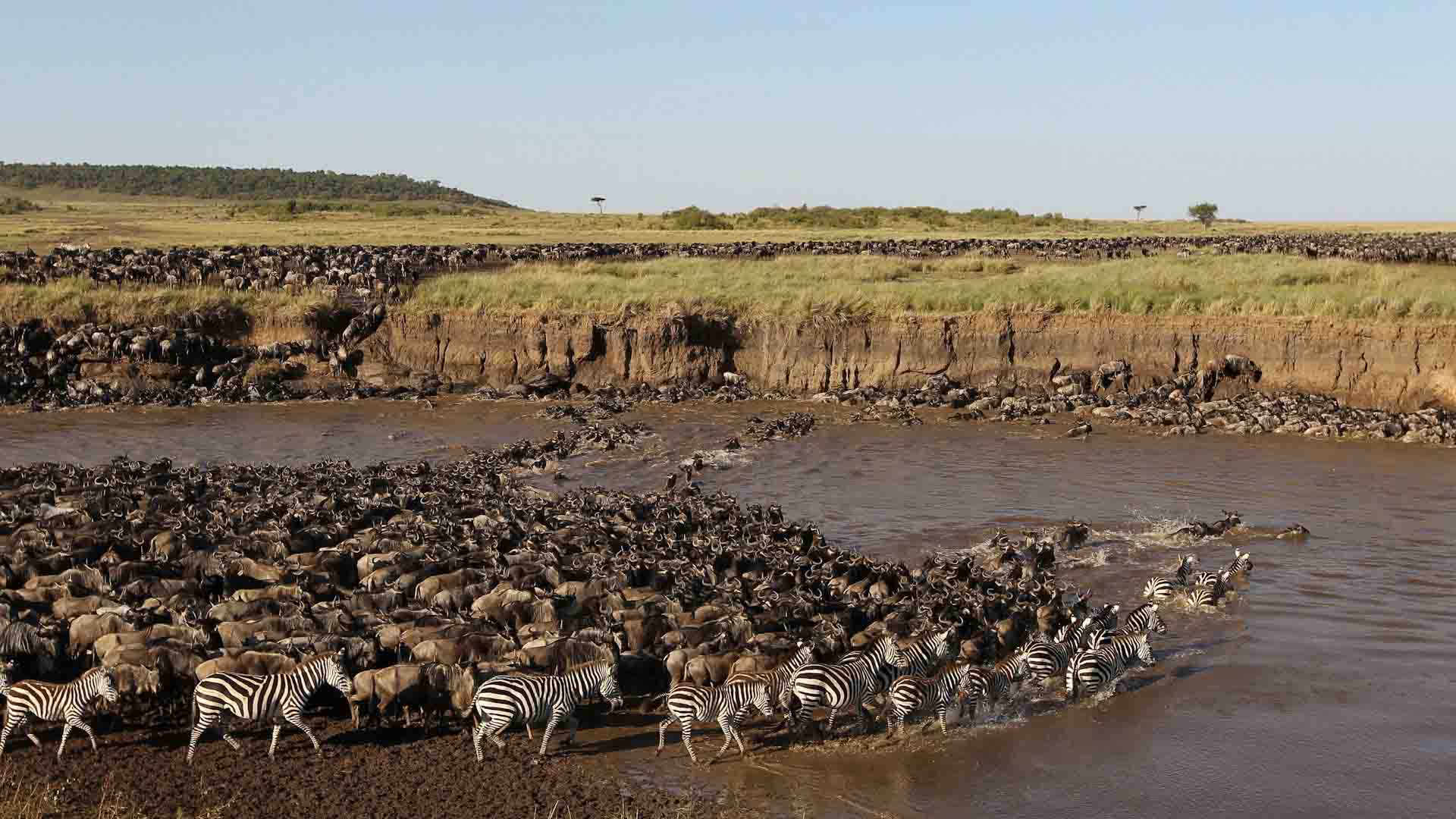
The Mara River provides critical dry-season water within the wider migration ecosystem. However, river crossings involve considerable risks. Strong currents, steep banks, crocodiles, panic, and overcrowding can create dangerous conditions.
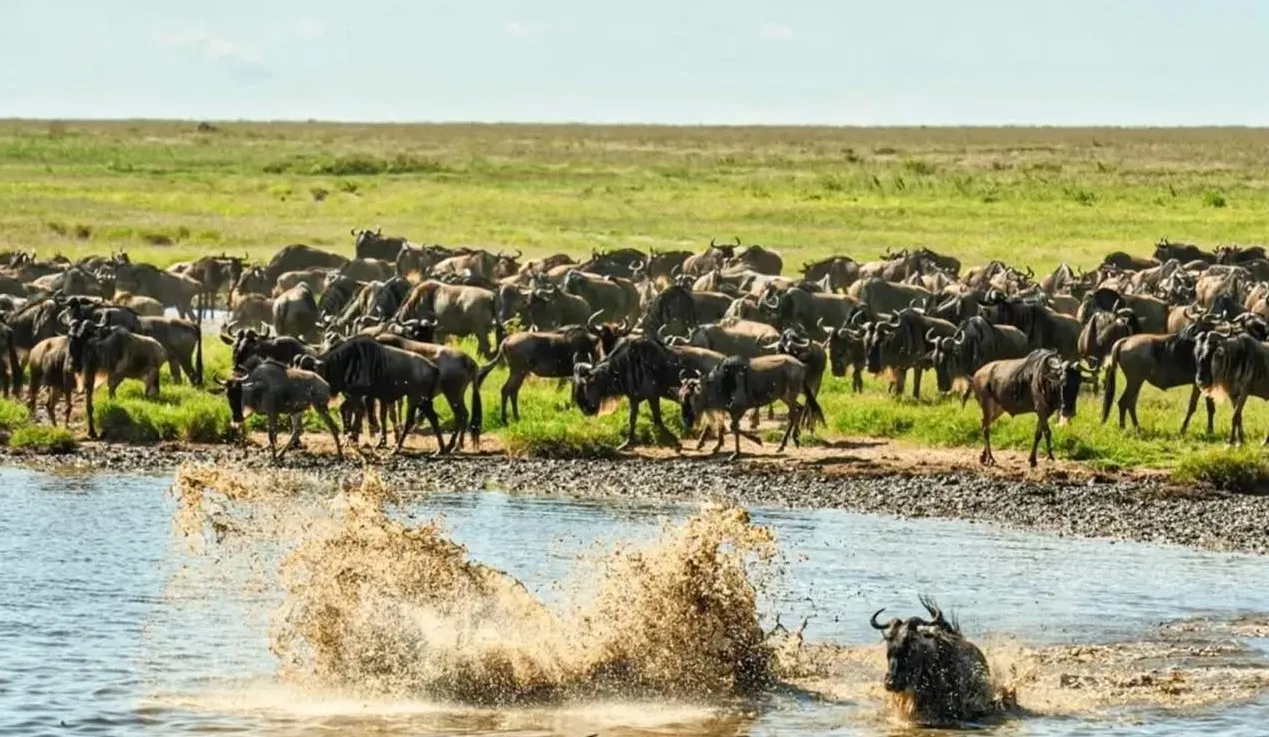
Importantly, wildebeest do not cross rivers simply because they reach a specific date. Environmental conditions influence their movements. Herds may gather for extended periods before making a crossing. They can also move along riverbanks while searching for suitable opportunities.
This uncertainty makes Tanzania wildlife tours especially exciting. Travelers cannot guarantee a specific crossing at a precise hour. Instead, experienced guides interpret animal behavior and environmental conditions. That expertise can improve the chances of witnessing important migration moments.
How Wildebeest Know When It Is Time to Move?
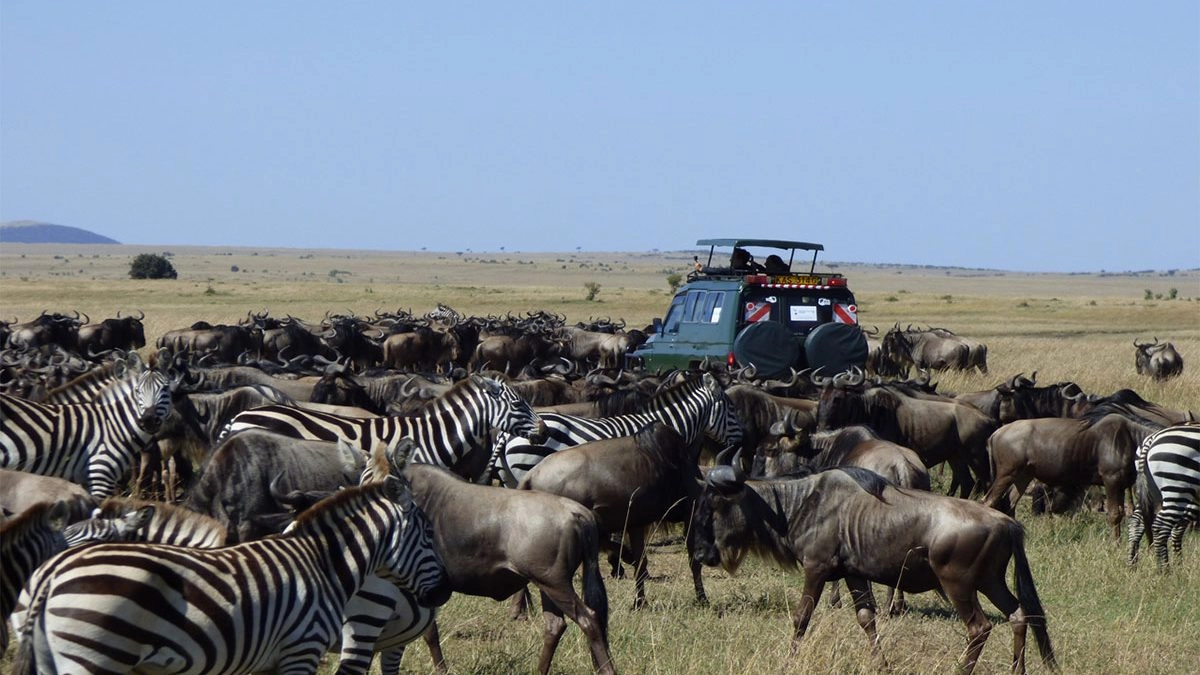
Another important factor involves social behavior within the herd. Wildebeest travel in large groups, sometimes numbering hundreds of thousands. Individual animals respond to nearby movements, creating collective behavior.
One group may begin moving toward fresh grazing. Nearby animals then respond to the movement. More animals follow, and the group gradually develops a strong directional flow. This process can create spectacular mass movements across the plains.
The herd therefore functions as a dynamic social system. No single wildebeest controls the entire migration. Instead, countless individual responses combine into large-scale movement.
This collective behavior also provides safety. Large groups make it harder for predators to isolate individual animals. However, huge concentrations can create risks at rivers and narrow passages.
For travelers, this behavior creates unforgettable scenes. A quiet plain can suddenly become filled with thousands of moving animals. Dust rises behind the herd while hoofbeats spread across the landscape.
Breeding Cycles Also Shape Movement
Reproduction adds another important dimension to the migration. Wildebeest follow seasonal breeding patterns that connect closely with environmental conditions.
The annual calving period usually occurs on the southern Serengeti plains. Many calves arrive within a relatively concentrated period. This timing gives mothers access to nutritious grazing during a critical stage.
Calves develop quickly after birth. Young wildebeest need to become mobile soon after arriving in the world. Strong mobility improves their ability to remain with the moving herd.
The breeding cycle therefore connects directly with rainfall, grass, and survival. Nature synchronizes several ecological processes within the migration system.
For visitors planning Tanzania adventure safaris, the calving season offers a different experience from river crossings. Travelers can witness newborn calves, protective mothers, predators, and large breeding herds. Each period tells a different story about survival in the Serengeti.
Predators Add Pressure to the Migration
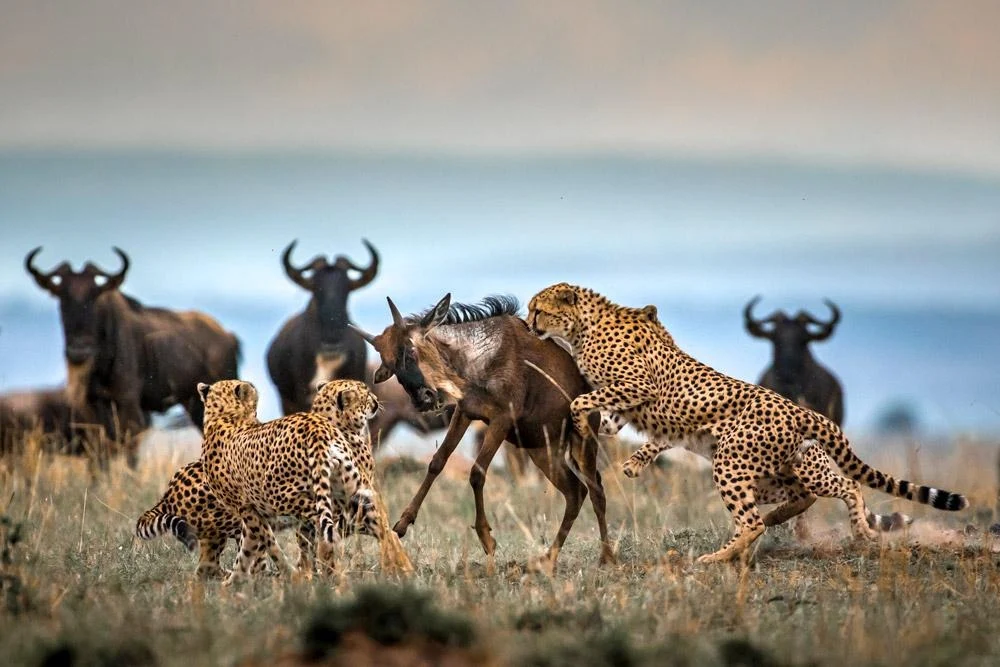
Predators also influence the migration landscape. Lions, cheetahs, hyenas, crocodiles, and other predators depend on abundant prey. The movement of wildebeest therefore creates seasonal opportunities for carnivores.
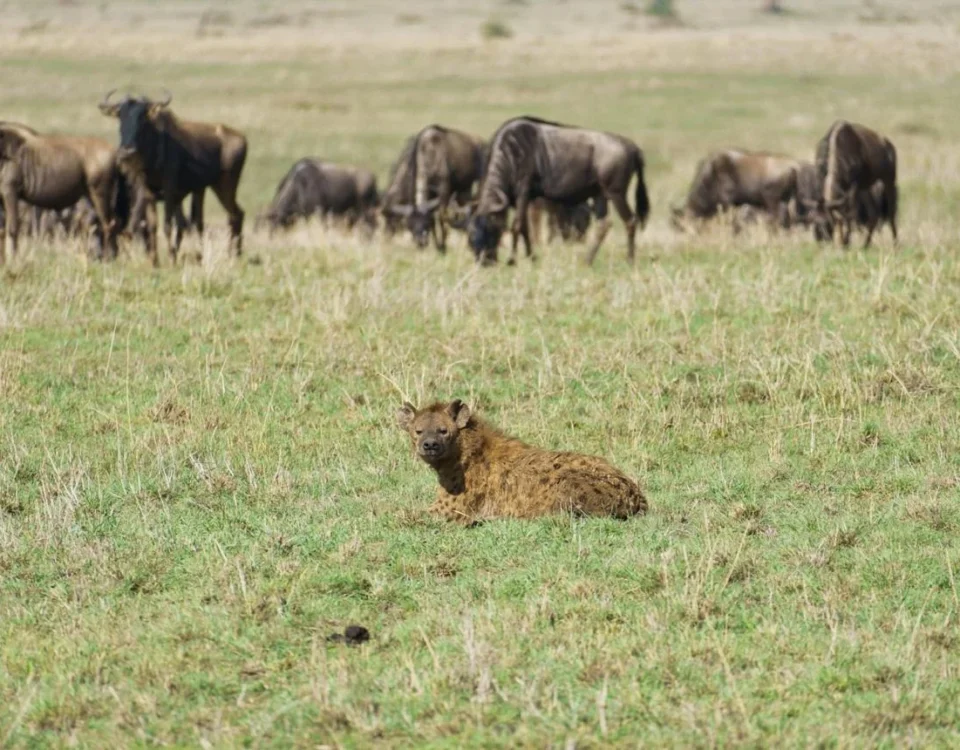
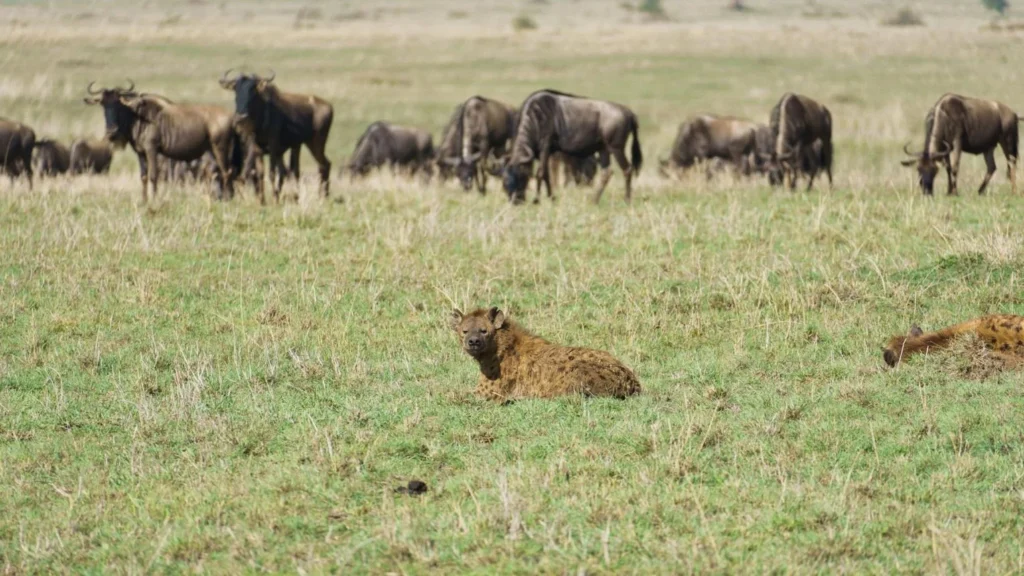
Predators often concentrate around areas containing large numbers of grazers. River crossings can become particularly dramatic because crocodiles occupy strategic waterways. Lions and hyenas may also follow herds across the grasslands.
Nevertheless, predators do not control the migration. Their presence adds pressure to an already complex ecological system. Wildebeest must balance feeding opportunities with safety.
This predator-prey relationship makes Tanzania wildlife safaris exceptionally rewarding. A single game drive can reveal several connected ecological events. Travelers may see grazing herds, stalking predators, scavengers, and birds interacting within one landscape.
How Wildebeest Know When It Is Time to Move?
The migration also demonstrates the importance of instinct. Wildebeest inherit behavioral tendencies that help them respond to recurring environmental patterns. Young animals encounter migration movements while following experienced adults.
However, instinct does not mean the animals follow an exact route every year. Environmental conditions can alter movement patterns. Rainfall may vary, grass growth may change, and water availability can shift.
Therefore, the migration remains flexible. This flexibility helps wildebeest respond to changing ecological conditions.
Such adaptability makes the Great Migration one of Africa’s most remarkable natural systems. It also explains why every Tanzania safari can feel different. The same landscape can produce completely different wildlife encounters across different seasons.
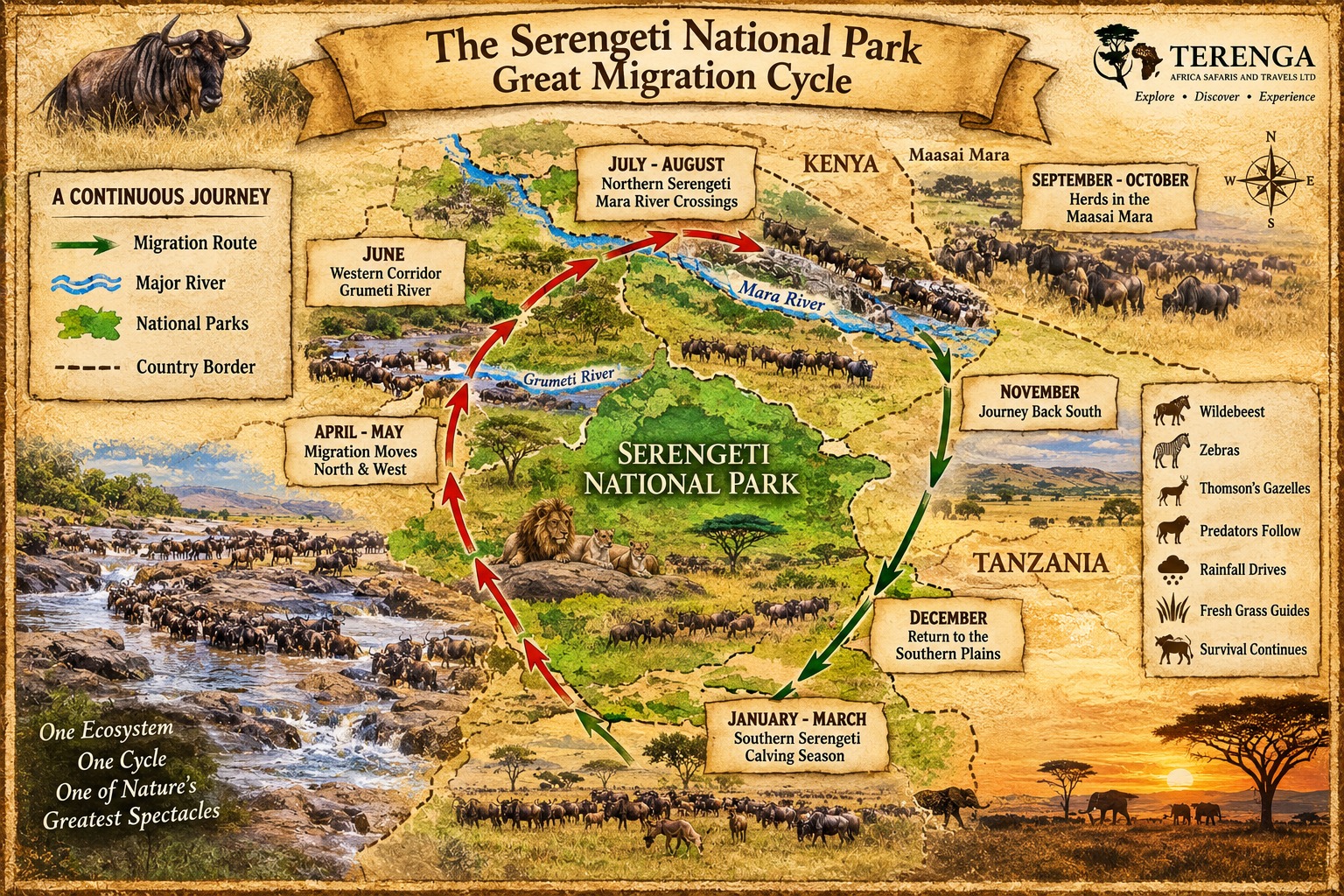
Complete Serengeti Great Migration Cycle Explained
The Migration Is a Year-Round Natural Cycle
Many travelers associate the Great Migration only with river crossings. However, the migration continues throughout the year. Different regions become important during different periods.
Calving generally dominates the southern plains during the early months. Herds then gradually move toward central and western areas. Later, many animals travel toward northern Serengeti and the Kenya border. Eventually, the cycle turns south again as rainfall patterns change.
This year-round movement makes Tanzania safaris valuable beyond the famous crossing season. Visitors can choose different periods based on their interests.
For example, photographers may prefer dramatic river scenes. Families may prefer the calving season. Wildlife enthusiasts may enjoy large herds and predator activity. Each period offers its own advantages.
Consequently, travelers should not plan solely around popular photographs. A knowledgeable safari planner can match travel dates with realistic wildlife expectations.
How Wildebeest Know When It Is Time to Move?
Understanding How Wildebeest Know When It Is Time to Move? helps travelers appreciate the migration beyond its visual spectacle. The journey represents an ecological response to changing environmental conditions.
Rain creates fresh vegetation. Grass provides energy. Water supports survival. Breeding creates the next generation. Predators create pressure. Social behavior connects individual animals into massive moving herds.
Together, these forces create the migration cycle.
The ecosystem also benefits from the movement. Wildebeest grazing influences vegetation growth and nutrient distribution. Their dung returns nutrients to the soil. Other animals benefit from grazing patterns created by the herds. TANAPA identifies wildebeest as a keystone species within the wider ecosystem.
Thus, the migration does not only move animals from one destination to another. It continuously shapes the Serengeti ecosystem.
Cultural Experiences Around Serengeti Safari Lodges
A Tanzania wildlife tour can offer much more than game drives. Travelers can also explore cultural experiences around safari lodges and camps near the Serengeti.
Maasai Cultural Encounters
Maasai communities offer travelers opportunities to learn about traditional East African pastoral culture. Visitors can experience traditional dances, crafts, livestock practices, and community stories.
These experiences should encourage respectful interaction. Travelers should follow community guidelines and support locally owned cultural initiatives.
Traditional Craft Experiences
Beadwork provides another meaningful cultural experience. Skilled artisans create colorful jewelry and decorative pieces using traditional techniques. Travelers can purchase authentic crafts while supporting community livelihoods.
Local Food Experiences
Some safari properties arrange cultural meals or cooking experiences. These activities can introduce visitors to local ingredients and preparation methods. Such experiences complement wildlife viewing with authentic culinary encounters.
Community and Conservation Experiences
Some communities participate in conservation and tourism programs. These initiatives demonstrate how wildlife protection can connect with local livelihoods.
Terenga Africa Safaris and Travels Ltd encourages travelers to approach cultural tourism with respect. Responsible tourism should benefit communities while protecting their cultural identity.
Why Choose Tanzania for a Wildebeest Safari?
Tanzania provides exceptional opportunities to experience the Great Migration. Serengeti National Park forms the central stage of this remarkable ecosystem. The park also supports diverse wildlife beyond wildebeest.
Visitors can encounter lions, elephants, leopards, buffaloes, cheetahs, giraffes, zebras, and numerous antelope species. Birdlife further enriches the safari experience. TANAPA highlights the Serengeti’s diverse wildlife, landscapes, and Great Migration as major attractions.
Furthermore, Tanzania offers diverse safari circuits beyond Serengeti. Travelers can combine Serengeti with Ngorongoro Conservation Area and Tarangire National Park. Different landscapes then create a broader Tanzania wildlife safari experience.
Tarangire also demonstrates how seasonal water availability influences wildlife movement. During dry periods, animals concentrate around the Tarangire River and associated habitats.
Best Way to Experience the Migration
The best migration safari depends on the experience you want. Travelers seeking calving should consider the southern Serengeti season. Visitors interested in river crossings should target the northern Serengeti period.
However, migration timing can change with rainfall. Therefore, travelers should avoid treating migration calendars as guaranteed schedules.
A professional safari operator can build flexibility into the itinerary. Experienced guides can also monitor recent wildlife movements and local conditions.
For photographers, patience remains essential. River crossings can happen unexpectedly. Herds may gather for hours before crossing. They may also change direction without warning.
This uncertainty creates the authentic beauty of Tanzania adventure safaris. Nature controls the schedule rather than human expectations.
How Wildebeest Know When It Is Time to Move?
Ultimately, How Wildebeest Know When It Is Time to Move? can be answered through the combined influence of nature’s signals.
Wildebeests respond to rainfall. Wildebeests follow nutritious grazingseek water. They reproduce according to seasonal conditions and react collectively to herd movements. They remain alert to predators and environmental changes.
No single factor controls every movement. Instead, the migration emerges from multiple connected ecological processes.
That complexity makes the Great Migration more than a wildlife attraction. It represents one of Earth’s most impressive examples of animal adaptation and ecosystem interdependence.
Responsible Tourism and the Future of the Migration
Protecting the migration requires responsible tourism and strong conservation practices. The Serengeti-Mara ecosystem faces pressures from habitat changes, drought, human activity, disease, and other environmental threats.
Travelers can contribute by choosing responsible safari operators. They should respect park rules, maintain safe distances, and avoid disturbing wildlife.
Supporting community-based tourism can also strengthen conservation outcomes. Local communities form an important part of the broader East African conservation landscape.
Sustainable tourism should protect wildlife while creating meaningful economic opportunities. This approach helps ensure future generations can experience the migration.
How Wildebeest Know When It Is Time to Move?
The mystery becomes clearer when we look at the Serengeti as one connected ecosystem. Wildebeest move because conditions change around them.
Rain arrives. Grass grows. Water becomes available. Nutritional needs shift. Predators create pressure. Herd behavior amplifies individual decisions.
Consequently, How Wildebeest Know When It Is Time to Move? reflects a much deeper story about nature. The animals respond to their environment through instinct, experience, social behavior, and ecological opportunity.
For travelers, witnessing this process creates a powerful connection with Africa. It transforms an ordinary game drive into an educational wildlife experience.
At Terenga Africa Safaris and Travels Ltd, we believe every Tanzania safari should combine adventure, knowledge, comfort, and responsible travel. Our goal remains simple: help travelers experience Africa with confidence while understanding the landscapes they visit.
Safari Inclusions
- Airport transfers
- Safari transportation
- Professional English-speaking safari guide
- Accommodation
- Meals as stated in itinerary
- National park entry fees
- Game drives
- Migration viewing opportunities
- Cultural experiences
- Bottled drinking water
- Safari vehicle
- Government taxes
- Selected lodge activities
Safari Exclusions
- International flights
- Visa fees
- Travel insurance
- Personal expenses
- Alcoholic beverages
- Laundry services
- Tips
- Souvenirs
- Optional activities
- Personal communications
- Additional accommodation
- Medical expenses
- Any services not listed under inclusions
Plan Your Tanzania Wildlife Safari With Terenga
A successful Tanzania safari requires more than choosing famous destinations. Timing, routing, accommodation, wildlife expectations, and seasonal conditions all matter.
Whether you want a Tanzania wildlife tour focused on the Great Migration or a broader Tanzania adventure safari, careful planning creates better results.
Terenga Africa Safaris and Travels Ltd brings African destination knowledge, safari planning expertise, and a commitment to responsible tourism. We help international travelers discover Tanzania through carefully designed safari experiences.
How Wildebeest Know When It Is Time to Move? becomes more meaningful when you experience the migration firsthand. Watch the plains change, follow the herds, and discover the powerful rhythms of wild Africa.
How Wildebeest Know When It Is Time to Move? is ultimately a story about survival, adaptation, and nature’s remarkable timing.
How Wildebeest Know When It Is Time to Move? also reveals why the Serengeti remains one of Africa’s most extraordinary safari destinations.
How Wildebeest Know When It Is Time to Move? is not simply a question about animal behavior. It opens a window into the intricate relationship between wildlife and the African landscape.
Why Trust Terenga Safaris With a Serengeti Safari Holiday?
How Wildebeest Know When It Is Time to Move? offers every traveler a reason to explore Tanzania with greater curiosity, respect, and appreciation.
How Wildebeest Know When It Is Time to Move? continues to inspire travelers because every migration season creates a different story.
How Wildebeest Know When It Is Time to Move? reminds us that Africa’s wildlife follows nature’s rhythm, not the human clock.
How Wildebeest Know When It Is Time to Move? therefore remains one of the most fascinating questions for anyone planning Tanzania safaris.
How Wildebeest Know When It Is Time to Move? becomes an unforgettable lesson when experienced across the Serengeti with a knowledgeable safari team.
How Wildebeest Know When It Is Time to Move? captures the essence of Tanzania wildlife safaris: unpredictable, powerful, educational, and deeply connected to nature.
How Wildebeest Know When It Is Time to Move?
About Terenga Africa Safaris and Travels Ltd
Terenga Africa Safaris and Travels Ltd creates memorable African journeys across Uganda, Tanzania, Rwanda, Kenya, and other East African destinations. Our safari experiences combine wildlife, culture, conservation, comfort, and professional planning.
Travel in comfort. Explore in style. Experience the adventure of a lifetime with Terenga Safaris.