
Cheetahs Hunting During the Great Migration Calving Season
October 21, 2026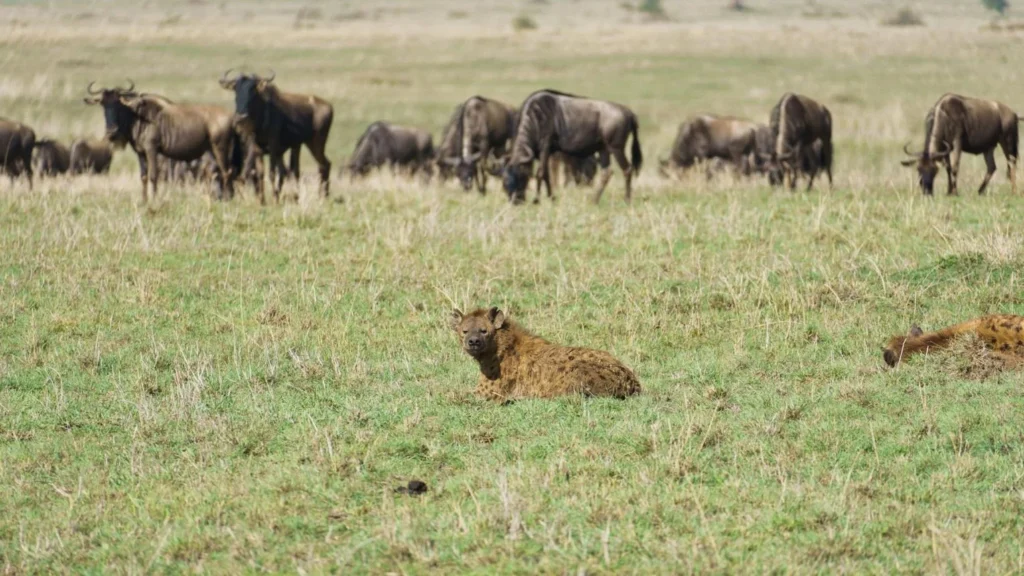
Hyenas and Newborn Wildebeest in the Serengeti: A Remarkable Great Migration Safari
Hyenas and Newborn Wildebeest in the Serengeti also represent an opportunity to experience nature without artificial staging or guaranteed encounters. Spotted hyenas are intelligent, social carnivores that use their senses, stamina, and knowledge of their surroundings to locate potential prey. Newborn wildebeest, meanwhile, face a vulnerable period immediately after birth, when standing, following their mothers, and keeping pace with the herd become essential survival skills. Scientific research on wildebeest populations indicates that predation can be particularly intense during the early weeks of calving, when young animals are vulnerable.
1. Why Do Hyenas Follow Newborn Wildebeest During the Calving Season?

2. What Happens When Wildebeest Give Birth in the Serengeti?
Hyenas and Newborn Wildebeest in the Serengeti become especially significant during the annual calving season, when large numbers of young wildebeest enter the world within a relatively short period. The southern Serengeti and nearby Ndutu area are well known for this natural spectacle, usually from December through March, with much of the calving concentrated around January and February. Exact timing varies with rainfall, grazing conditions, and herd movements.
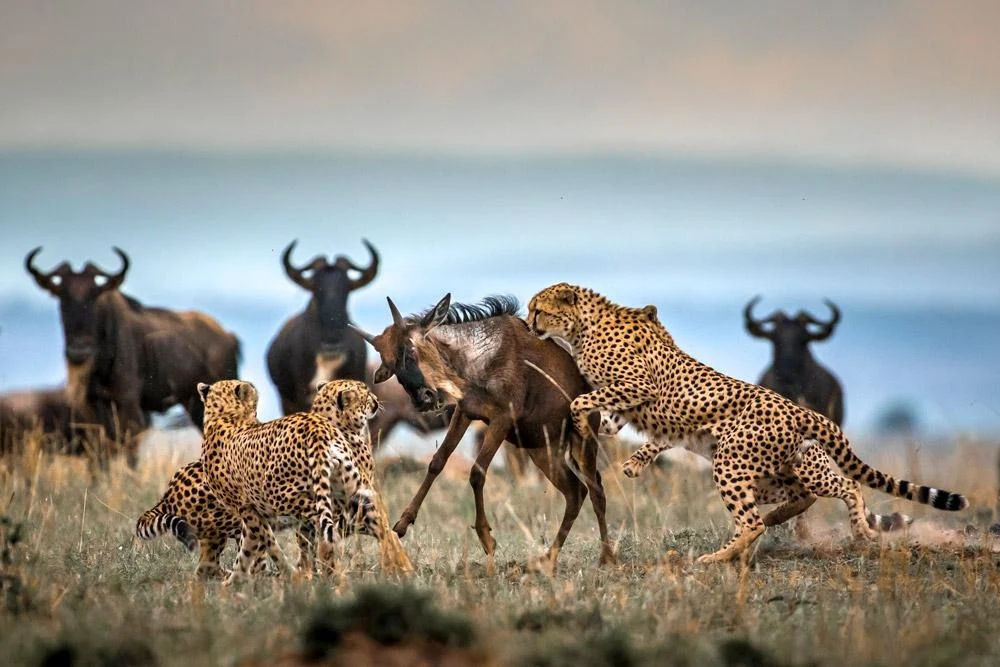
As fresh grass develops across the plains, mothers find valuable nourishment to support late pregnancy and nursing. After giving birth, a wildebeest calf must stand and begin moving surprisingly quickly. Staying close to its mother improves its chances of receiving milk, maintaining contact with the herd, and avoiding danger. Large gatherings may appear chaotic to an inexperienced observer, yet the animals continuously respond to familiar calls, movement, and nearby herd members. The presence of so many vulnerable calves also attracts predators, including spotted hyenas, lions, cheetahs, and jackals. Their hunting methods differ, making the calving season an opportunity to learn how separate species occupy ecological niches. While Hyenas and Newborn Wildebeest in the Serengeti can involve intense scenes, many game drives reveal quieter moments of maternal care, nursing, grooming, and first steps. Green landscapes, distant kopjes, wide skies, and moving herds create excellent photographic settings. For visitors planning Tanzania Safaris, a journey during the calving period offers a distinctive combination of wildlife education, natural beauty, and opportunities to observe the beginnings of life within an immense migratory ecosystem.

3. Where Can You See Hyenas and Newborn Wildebeest in the Serengeti?
Hyenas and Newborn Wildebeest in the Serengeti are most closely associated with the southern plains during the main calving season. Areas around Ndutu and the southern Serengeti grasslands can attract large concentrations of wildebeest when fresh grazing becomes available. Ndutu lies within the wider Serengeti–Ngorongoro ecosystem, so the precise location of wildlife viewing may involve both Serengeti National Park and the Ngorongoro Conservation Area. Understanding this distinction matters when choosing accommodation, planning park access, and calculating applicable conservation fees. The southern plains generally provide broad views, open grassland, and seasonal concentrations of migrating wildlife. Meanwhile, central Serengeti remains valuable for year-round wildlife viewing, including resident predators, diverse habitats, and other large mammals. An effective safari itinerary should therefore account for the seasonal location of the herds rather than assume that every region offers identical sightings.
Travellers interested in Hyenas and Newborn Wildebeest in the Serengeti should consider staying near the areas expected to hold the migration during their chosen dates. Seasonal tented camps can reduce driving time, while permanent lodges may suit visitors who prefer established facilities. Road conditions, recent rainfall, camp operating dates, and the latest wildlife reports also influence the best route. Terenga Africa Safaris & Travel Ltd can help organise Tanzania Tours around these factors, balancing wildlife opportunities with realistic travel times and accommodation preferences. A knowledgeable guide can then adjust daily game drives in response to current sightings. Such flexibility is important because the Great Migration is a natural movement, not a scheduled performance. Proper planning improves the chances of excellent viewing without promising encounters that no responsible operator can guarantee.
4. What Are the Expectations on a Hyenas and Newborn Wildebeest in the Serengeti Safari?
A safari centred on Hyenas and Newborn Wildebeest in the Serengeti usually involves early departures, extended game drives, and careful searching across open plains. Mornings can provide attractive light for photography, while late afternoon often brings another productive period for observing wildlife. Between drives, guests may relax at their lodge or tented camp, enjoy meals, and learn about the day’s sightings with their guide. Depending on the season and location, the experience may include large wildebeest herds, newborn calves, spotted hyenas, lions, cheetahs, gazelles, zebras, and impressive birdlife. However, wildlife distribution changes daily, and predator activity depends on natural circumstances. A hyena may rest in the grass, travel with members of its clan, investigate a herd, or hunt beyond the visitor’s view. Similarly, a newborn calf may be visible beside its mother, hidden among a dense group of animals, or absent from the immediate area.
Guests should approach these moments with patience and realistic expectations. Photographers can prepare for varying distances, shifting light, and movement, while families may appreciate guides who explain animal behaviour in engaging, age-appropriate language. Many Tanzania Adventures also combine calving-season viewing with other landscapes or wildlife areas when the itinerary allows. A well-planned visit to Hyenas and Newborn Wildebeest in the Serengeti is therefore not simply about witnessing a hunt. It is an opportunity to observe interactions, understand ecological relationships, enjoy Tanzania’s scenery, and appreciate the unpredictability that makes wild places special. Respectful viewing, careful listening, and sufficient time in the field often create a more rewarding experience than rushing between sightings.
5. When Is the Best Time for Hyenas and Newborn Wildebeest in the Serengeti?
Hyenas and Newborn Wildebeest in the Serengeti are most closely associated with the southern plains from December to March, when the migration commonly gathers for calving. January and February are particularly popular with travellers hoping to see newborn calves and increased predator activity. February is often considered a peak calving month, although rainfall and grass conditions can shift the timing from one year to another.
The short rains can bring greener scenery and support fresh pasture, while changing weather may affect road conditions and daily schedules. Visitors should bring clothing suitable for warm daytime temperatures, cooler early mornings, dust, and occasional rain. March may still offer excellent wildlife viewing, but rain becomes more influential in some areas. Travellers with flexible schedules should discuss recent migration reports with their safari operator before finalising specific locations. Those who visit outside the primary calving period can still enjoy many wildlife experiences, but the large gatherings of newborn wildebeest may be less predictable.
The Serengeti’s different regions provide varied opportunities throughout the year, including migration movement and northern river-crossing seasons. For guests specifically seeking Hyenas and Newborn Wildebeest in the Serengeti, however, a carefully planned January or February safari often aligns well with the main calving period. Terenga Africa Safaris & Travel Ltd recommends matching travel dates with the desired wildlife experience, available accommodation, budget, and preferred travel style. Early reservations are helpful for popular seasonal camps, especially when travellers want accommodation close to the southern plains. Most importantly, remember that no month guarantees a specific predator encounter; choosing the appropriate season simply improves your chances of witnessing the behaviour you hope to observe.
6. Why Choose Terenga Africa Safaris & Travel Ltd for This Safari?
Hyenas and Newborn Wildebeest in the Serengeti deserve thoughtful planning, knowledgeable guidance, and realistic advice about what wildlife viewing can involve. Terenga Africa Safaris & Travel Ltd focuses on helping travellers make informed decisions about Tanzania Safaris, accommodation, transport, and seasonal wildlife experiences. Before departure, a well-prepared itinerary should consider travel dates, the likely location of the herds, preferred accommodation standards, available time, and the interests of everyone travelling. These details influence whether a journey works best as a dedicated calving-season safari or as part of a wider Tanzania Tours itinerary. Guests may prefer a private vehicle for flexibility, a small-group arrangement for shared costs, or a luxury camp close to seasonal wildlife areas. Clear communication about inclusions, exclusions, park fees, transfers, meals, and accommodation helps travellers understand the value of their selected package.
During the journey, a professional guide can interpret wildlife behaviour, explain local landscapes, and adjust game-drive plans where conditions allow. Responsible viewing remains central: vehicles should follow park regulations, avoid obstructing animals, and maintain appropriate distances during sensitive encounters. Hyenas and Newborn Wildebeest in the Serengeti can involve emotionally powerful scenes, so guides should present such moments accurately and respectfully rather than encourage disturbance for photographs. Trustworthy safari planning also means acknowledging uncertainty, since migration movements and predator sightings cannot be guaranteed. By combining practical preparation with an appreciation of conservation, Terenga Africa Safaris & Travel Ltd aims to create Tanzania Adventures that are informative, comfortable, and memorable. Travellers can discuss their preferred dates, travel style, accommodation level, and other destinations when requesting a tailor-made safari proposal.
7. What Should You Pack for Hyenas and Newborn Wildebeest in the Serengeti?
Packing thoughtfully for Hyenas and Newborn Wildebeest in the Serengeti can make early game drives and long hours outdoors more comfortable. Neutral-coloured clothing in shades of khaki, brown, olive, and beige works well for practical safari wear. A light fleece or warm layer is useful during chilly mornings, while breathable shirts and trousers suit warmer afternoons. Because weather can change, a compact waterproof jacket is worth carrying during the green season. Comfortable walking shoes are helpful around lodges and camps, although most game viewing takes place from a safari vehicle. Sun protection should include a wide-brimmed hat, sunglasses, and high-SPF sunscreen. For photography, bring a camera, spare batteries, memory cards, and a suitable telephoto lens if you have one. Binoculars help reveal animal behaviour at a distance and are especially valuable when a hyena is resting far from the vehicle.
A refillable water bottle, personal medication, insect repellent, and a small daypack are also useful. Visitors should follow their healthcare professional’s advice on travel health and carry any required medication in its original packaging. Since Hyenas and Newborn Wildebeest in the Serengeti may involve moving vehicles and changing light, a lens cloth and protective camera bag can help keep equipment ready. Avoid packing unnecessary valuables or oversized luggage, particularly when domestic flights form part of the itinerary because baggage restrictions can be strict. Finally, remember that patience is one of the most valuable things to bring. Staying attentive, listening to your guide, and allowing wildlife to behave naturally will enrich your safari far more than carrying excessive equipment.
8. How Can You Observe Predators Responsibly During This Safari?
Responsible wildlife viewing makes Hyenas and Newborn Wildebeest in the Serengeti more meaningful for visitors and less disruptive for animals. Predators and newborn calves are involved in natural survival processes that should be observed without interference. Guests should remain inside authorised safari vehicles whenever required, follow their guide’s instructions, and avoid shouting, feeding animals, or attempting to attract their attention. Drivers should respect park rules, maintain appropriate distances, and never position a vehicle in a way that blocks an animal’s movement or separates a calf from its mother. When several vehicles gather around a sighting, patience and considerate positioning can make a considerable difference.
Photographers should avoid using flash where prohibited and resist the temptation to request closer approaches simply for a better picture. During sensitive encounters, quiet observation gives animals space to feed, rest, nurse, or move naturally. Guides can explain why a hyena is approaching a herd, why a mother is staying close to her calf, or why predators sometimes abandon a hunt. These explanations help visitors understand Hyenas and Newborn Wildebeest in the Serengeti as a complex ecological relationship rather than a staged spectacle. Responsible travel also includes respecting park regulations, reducing litter, using water thoughtfully, and supporting legitimate local tourism businesses. Conservation depends on protected habitats, ongoing wildlife management, and communities that experience fair benefits from tourism. By travelling with informed expectations and following professional guidance, visitors contribute to a culture of respect for Tanzania’s natural heritage. The most rewarding safari is not necessarily the one with the most dramatic encounter; it is one that leaves travellers with a stronger appreciation of wildlife and the importance of protecting it.
9. Frequently Asked Questions About Hyenas and Newborn Wildebeest in the Serengeti
Can I see a hyena hunting a newborn wildebeest?
Hyenas and Newborn Wildebeest in the Serengeti can involve predator-prey encounters, particularly during the calving season. However, sightings depend on natural behaviour, location, timing, and luck. A hunt is never guaranteed, and many visits feature grazing herds, nursing calves, or hyenas travelling and resting.
How many days should I spend on this safari?
For Hyenas and Newborn Wildebeest in the Serengeti, a stay of three to four nights in the southern Serengeti or nearby Ndutu area can provide valuable time for repeated game drives. Longer itineraries allow additional areas and experiences to be included, depending on your budget and interests.
Is the safari suitable for families?
Yes. Families can enjoy Hyenas and Newborn Wildebeest in the Serengeti when the itinerary suits the children’s ages, patience, and comfort needs. Travellers should ask about minimum ages, drive duration, family accommodation, and each camp’s policies before booking.
Can I combine this experience with other Tanzania Safaris?
Absolutely. Hyenas and Newborn Wildebeest in the Serengeti can be combined with other destinations, such as Ngorongoro Crater, Tarangire National Park, or Lake Manyara, depending on the season, journey length, and preferred pace. Your operator can advise which combination is most practical for your dates.
Are sightings guaranteed?
No. Hyenas and Newborn Wildebeest in the Serengeti depend on wild animals moving freely through a vast ecosystem. Experienced guides can use seasonal patterns and local information to plan game drives, but no responsible operator can promise a particular sighting or hunting event.
Plan Your Serengeti Safari with Terenga Africa Safaris & Travel Ltd
Hyenas and Newborn Wildebeest in the Serengeti offer an unforgettable window into Tanzania’s Great Migration and the relationship between vulnerable young animals and skilled predators. From the seasonal calving grounds to the open grasslands where hyenas patrol, this experience combines wildlife observation, photography, learning, and a deeper appreciation of nature.
Terenga Africa Safaris & Travel Ltd can help you plan a Tanzania safari around your travel dates, budget, preferred accommodation, and wildlife interests. Whether you are planning your first African safari or returning for a more focused migration experience, a carefully designed itinerary can help you make the most of your time in the wilderness.
Start planning your Tanzania adventure: visit www.terengasafaris.com to enquire about a tailor-made Serengeti safari.