How Wildebeest Know When It Is Time to Move?
August 25, 2026
Wildebeest, Zebras and Gazelles
August 26, 2026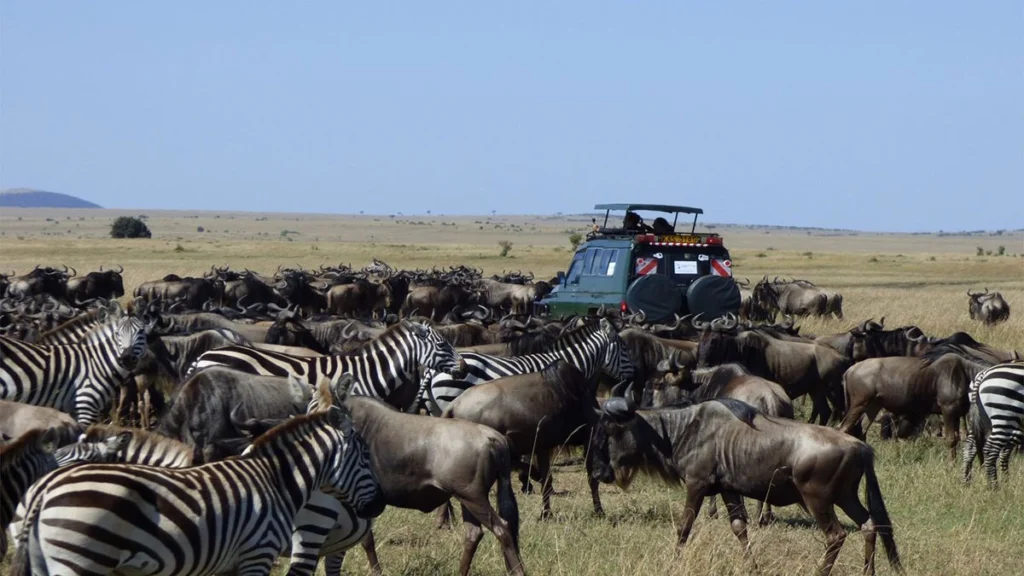
The Animals That Participate in the Great Migration
The Animals That Participate in the Great Migration create one of Africa’s greatest wildlife spectacles. Millions of animals move through the Serengeti-Mara ecosystem each year. Their journey connects Tanzania and Kenya through a remarkable natural cycle. The migration follows seasonal rainfall, fresh grass, water availability, and breeding patterns.
Wildebeest form the largest group within this extraordinary movement. However, several other species travel alongside them. Zebras, gazelles, eland, antelope, predators, and scavengers all contribute to the migration story. Each species plays a different role within this interconnected ecosystem.
Therefore, understanding The Animals That Participate in the Great Migration adds greater meaning to every Tanzania safari. Travelers can observe more than moving herds. They can witness predator-prey relationships, competition for food, breeding activity, survival strategies, and ecological change.
The migration also demonstrates how closely African wildlife depends on healthy habitats. Grasslands, rivers, woodlands, and seasonal wetlands support thousands of animals. Consequently, conservation remains essential for protecting this natural cycle.
At Terenga Africa Safaris and Travels Ltd, we design safari experiences around meaningful wildlife encounters. Our approach combines destination knowledge, professional guiding, responsible tourism, and practical safari planning. We help travelers experience Tanzania wildlife safaris with realistic expectations and deeper ecological understanding.
Best Trending Tanzania Safari Holidays for 2027/2028
- 12-Day Tanzania Wildlife Safari
- 10-Day Tanzania Wildlife Safari & Zanzibar
- 10-Day Best Tanzania Honeymoon Luxury Safari and Zanzibar Beach Getaway
- 9-Day Ultimate Tanzania Wildlife Safari
- 9-Day Tanzania Adventure Safari
- 8-Day Tanzania Mid-Range Safari
- 8-Day Tanzania Northern Circuit Safari
- 7-Day Tanzania Wildlife Safari
- 7-Day Tanzania Wildlife Wonders Experience Tour
- 6-Day Majestic Tanzania Wildlife Luxury Safari
- 13-Day Tanzania Wildlife Tour & Zanzibar Beach Holiday
- 12-Day Tanzania Wildlife Safari Itinerary
- 11-Day Tanzania & Zanzibar Safari Adventure
- 11 Days Magical Kenya and Tanzania Safari
- 4-Day Tanzania Safari Extension Itinerary
- 5-Day Tanzania Safari Extension
- 9-Day Tanzania Wildlife Safari Adventure
- 7 Days Tanzania Safari Holiday
- 8 Days Tanzania Safari Holiday Itinerary
The Animals That Participate in the Great Migration: Wildebeest
The Main Travelers
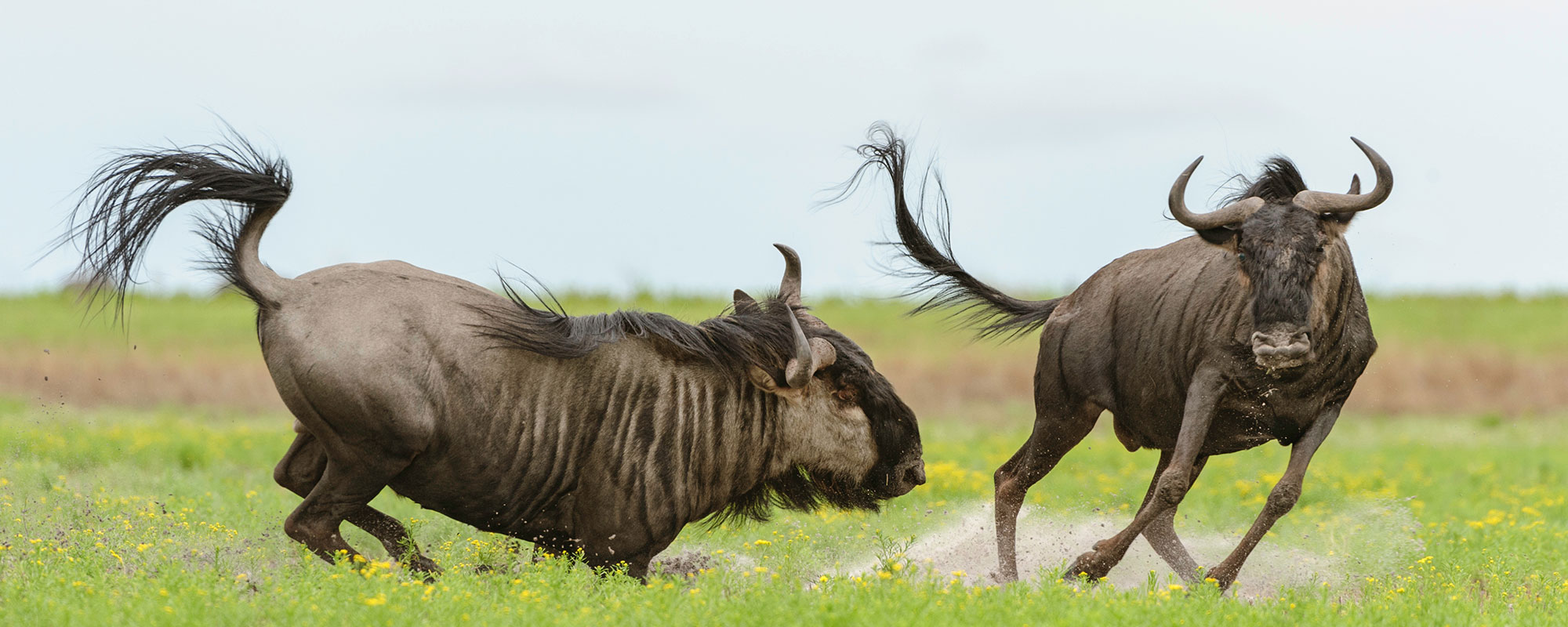
Wildebeest dominate The Animals That Participate in the Great Migration. More than a million wildebeest take part in the annual movement. Their journey covers vast areas across the Serengeti ecosystem.
These powerful grazers depend heavily on nutritious grass. Rainfall creates fresh grazing, which attracts large herds. As grass quality changes, the animals continue searching for better feeding grounds.
Wildebeest also reproduce according to seasonal environmental conditions. The calving period creates one of the most dramatic wildlife experiences. Thousands of calves arrive within a relatively concentrated period.
Newborn calves must develop quickly. They learn to follow the herd soon after birth. Their survival depends on mobility, nutrition, and protection from predators.
Furthermore, wildebeest provide an important food source for carnivores. Lions, hyenas, cheetahs, and crocodiles benefit from their seasonal abundance. Their movement therefore influences many other species.
For travelers, watching wildebeest move across the plains creates unforgettable moments. Huge herds can stretch across the horizon. Dust rises beneath thousands of hooves as animals move toward fresh grazing.
Zebras Join the Great Migration
The Striped Travelers
Zebras form another important part of The Animals That Participate in the Great Migration. Large numbers of plains zebras move through the Serengeti alongside wildebeest.
Their grazing behavior differs from that of wildebeest. Zebras often consume taller grasses before wildebeest exploit shorter vegetation. This relationship creates a useful ecological partnership.
Consequently, zebras can help prepare grazing areas for other herbivores. Their movement also provides predators with additional hunting opportunities.
Zebras possess strong social bonds. Families usually remain together within larger groups. Their striped appearance creates an impressive visual scene across open grasslands.
During Tanzania wildlife safaris, travelers can often encounter zebras with wildebeest. These mixed herds create excellent photographic opportunities.
The presence of zebras also adds diversity to the migration. Their movement demonstrates that the Great Migration involves more than one species.
Thomson’s Gazelles Follow the Seasonal Movement
Small Antelope With a Big Role
Thomson’s gazelles contribute to The Animals That Participate in the Great Migration. These agile antelopes thrive across open grasslands.
Their smaller size allows them to exploit vegetation differently from larger grazers. They also provide important prey for cheetahs and other predators.
Thomson’s gazelles often move according to rainfall and food availability. Their movements may overlap with larger herbivore concentrations.
Cheetahs frequently hunt in areas supporting gazelles. Therefore, travelers seeking predator encounters can benefit from understanding these ecological connections.
A Tanzania wildlife tour can reveal these relationships during carefully planned game drives. Experienced guides understand how prey distribution influences predator activity.
This knowledge creates a richer safari experience. Instead of viewing each animal separately, travelers begin seeing the ecosystem as one connected system.
Grant’s Gazelles and the Migration Ecosystem
Adapted for Dry Conditions
Grant’s gazelles also feature among The Animals That Participate in the Great Migration. They possess impressive adaptations for surviving dry environments.
These gazelles can tolerate conditions that challenge many other herbivores. Their ability to survive with limited water helps them occupy wider areas.
Grant’s gazelles do not follow the same movement pattern as every wildebeest herd. However, their seasonal movements overlap with the broader ecosystem.
They contribute to the food chain by supporting predators. Lions, cheetahs, leopards, and hyenas can all prey on smaller antelope.
For visitors, seeing different gazelle species provides valuable insight into Tanzania’s biodiversity. Each species occupies a specific ecological niche.
Eland and Other Antelopes
Larger Grazers Across the Plains
Eland and other antelope species also contribute to The Animals That Participate in the Great Migration. Their movements often respond to seasonal food and water conditions.
Antelope diversity makes the Serengeti ecosystem particularly impressive. Different species use different vegetation types and habitats.
Some animals prefer open plains. Others favor woodland edges or areas near water. This diversity reduces direct competition for resources.
As a result, travelers can experience multiple herbivore species within one safari landscape. Each sighting contributes to a broader understanding of Tanzania’s wildlife.
Tanzania safaris therefore offer much more than the famous migration photographs. They provide opportunities to understand ecological relationships across different habitats.
The Animals That Participate in the Great Migration
Predators Follow the Great Migration
Lions and Seasonal Opportunities
Predators form an essential part of The Animals That Participate in the Great Migration. Lions often follow large concentrations of herbivores.
The arrival of huge prey populations creates seasonal feeding opportunities. However, hunting remains challenging despite abundant prey.
Lions must approach carefully. Wildebeest remain alert and can move rapidly when threatened. Young calves become particularly vulnerable during the calving season.
Furthermore, large herds can attract several predator species. Competition between lions, hyenas, and other carnivores can create dramatic encounters.
Travelers should always observe predators responsibly. Maintaining appropriate distances protects both animals and visitors.
Cheetahs and the Open Plains
Speed Meets Opportunity
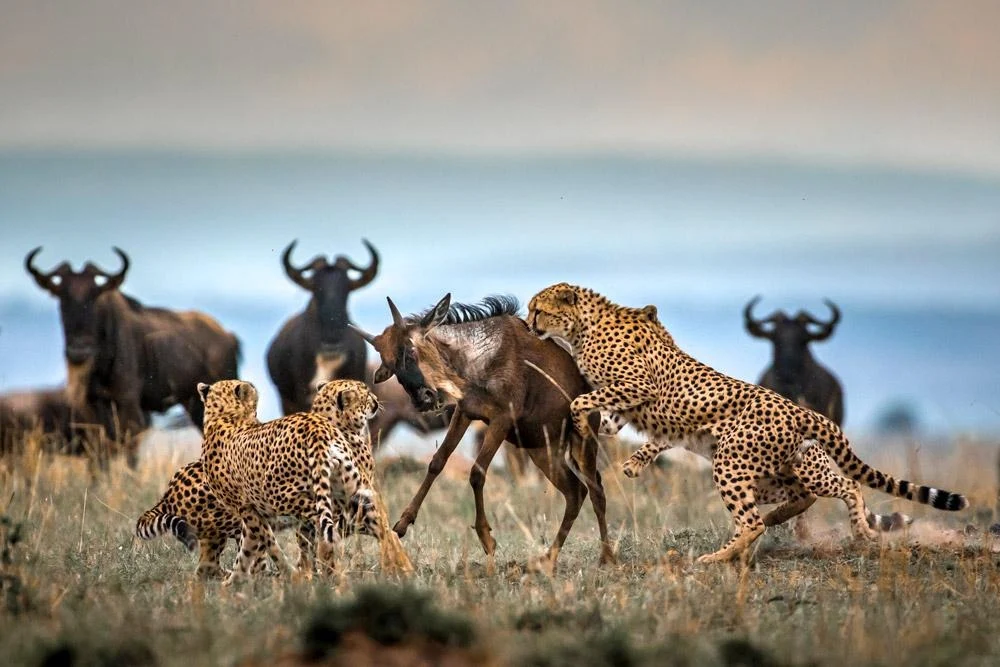
Cheetahs also feature within The Animals That Participate in the Great Migration. They thrive in open landscapes where speed provides a hunting advantage.
Thomson’s gazelles provide important prey for these fast predators. Young wildebeest can also become targets.
Cheetahs require clear space for high-speed pursuits. The open Serengeti plains therefore provide suitable hunting environments.
However, successful hunts remain uncertain. A predator may stalk prey for several minutes before abandoning the attempt.
This unpredictability makes Tanzania adventure safaris especially exciting. Nature controls the outcome, while travelers simply observe.
Hyenas and the Migration
Powerful Social Hunters
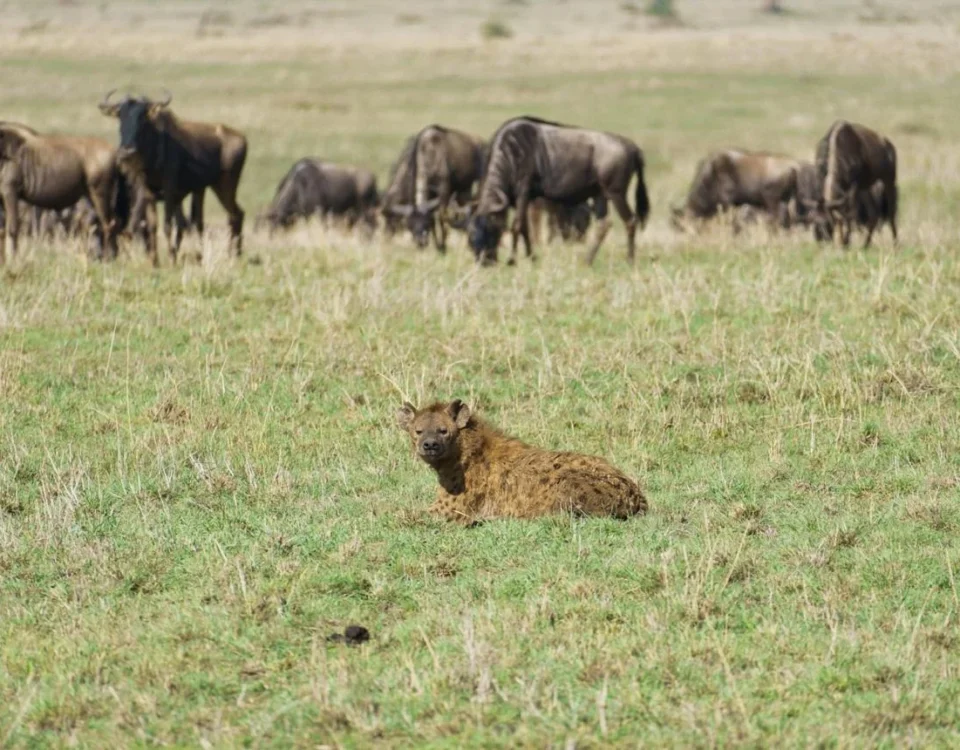
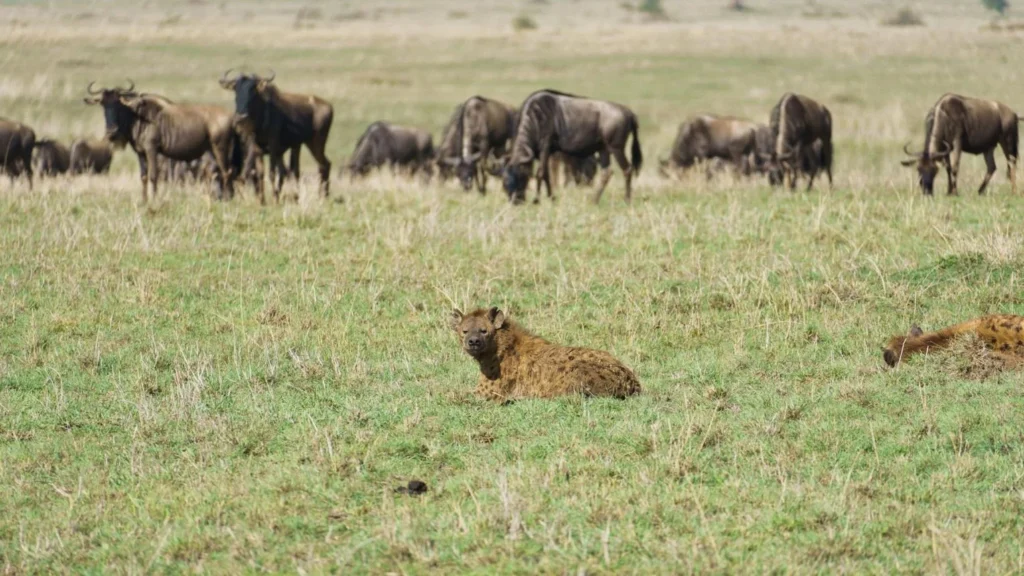
Spotted hyenas play a significant role among The Animals That Participate in the Great Migration. They combine hunting skills with powerful scavenging abilities.
Large herbivore concentrations create valuable feeding opportunities. Hyenas can hunt young animals, weakened individuals, and other available prey.
Their social structure also makes them fascinating subjects during wildlife safaris. Large clans cooperate during territorial and feeding activities.
Hyenas contribute to ecosystem health by consuming carcasses and reducing organic waste. Their role extends far beyond scavenging.
Therefore, seeing hyenas during a Tanzania wildlife safari offers valuable ecological insight. They represent an important link within the food chain.
Crocodiles Wait at Migration Rivers
Ancient River Predators
Nile crocodiles become important during certain stages of The Animals That Participate in the Great Migration. They concentrate around rivers used by migrating herds.
The Mara River provides one of the most famous crossing locations. Crocodiles can remain motionless for long periods while waiting for opportunities.
River crossings can become dangerous for migrating animals. Strong currents, steep banks, overcrowding, and predators create serious risks.
Importantly, not every herd crosses immediately. Animals may gather along riverbanks before finding suitable crossing points.
This uncertainty creates some of the most dramatic experiences during Tanzania safaris. Visitors must remain patient because wildlife controls the timing.
Birds Benefit From the Great Migration
Scavengers and Opportunistic Species
Birds also form an important part of The Animals That Participate in the Great Migration. Vultures, eagles, storks, and other species benefit from seasonal wildlife activity.
Vultures play an especially important ecological role. They locate carcasses and consume remains that could otherwise attract disease.
Other birds feed on insects disturbed by moving herbivores. Grassland birds also benefit from grazing patterns.
Consequently, birdwatching can complement a Tanzania wildlife tour. Travelers can observe both large mammals and smaller ecosystem specialists.
The migration therefore supports a much broader wildlife community than most visitors initially expect.
The Role of Scavengers
Nature’s Clean-Up Team
Scavengers contribute greatly to the ecosystem surrounding The Animals That Participate in the Great Migration. They process remains left by predators and natural deaths.
Vultures, hyenas, jackals, and other scavengers help return nutrients to the environment. Their activities support the continuous ecological cycle.
Without scavengers, carcasses would remain longer within the environment. Their work therefore supports ecosystem cleanliness and nutrient recycling.
This role highlights the importance of every species. Even animals that receive less attention contribute to healthy ecosystems.
A professional Tanzania wildlife safari should help travelers appreciate these less celebrated species.
The Animals That Participate in the Great Migration and Their Relationships
A Connected Ecosystem
The Animals That Participate in the Great Migration do not exist independently. Their survival depends on complex ecological relationships.
Wildebeest depend on grass. Predators depend on herbivores. Scavengers depend on carcasses. Birds depend on insects, seeds, and wildlife activity.
Rainfall connects many of these relationships. It determines grass growth, water availability, and animal distribution.
Consequently, changes within one part of the ecosystem can affect other species.
This interdependence explains why conservation remains essential. Protecting one species requires protecting its habitat and ecological relationships.
The Importance of the Calving Season
New Life Across the Plains
The calving season provides one of the best opportunities to experience The Animals That Participate in the Great Migration.
Large numbers of wildebeest give birth across the southern Serengeti. Zebras and gazelles also occupy nearby grasslands.
Predators recognize the increased availability of vulnerable young animals. Lions, cheetahs, hyenas, and other carnivores become highly active.
At the same time, thousands of adult animals remain alert. Mothers protect calves while keeping pace with the herd.
This period creates excellent opportunities for travelers seeking wildlife behavior. A well-planned Tanzania safari can combine calving experiences with broader Serengeti exploration.
The Importance of River Crossings
Nature’s Most Dramatic Moments
River crossings attract international attention because they create spectacular wildlife scenes. They also represent a dangerous stage within The Animals That Participate in the Great Migration.
Herds may gather along riverbanks for extended periods. Eventually, one animal may enter the water. Others can quickly follow.
The resulting movement can involve thousands of animals. Crocodiles wait below while predators may remain nearby.
Nevertheless, travelers should understand that crossings cannot follow an exact timetable. Wildlife movement depends on environmental conditions and animal behavior.
Experienced safari guides can improve viewing opportunities through local knowledge. Still, nature always determines the final outcome.
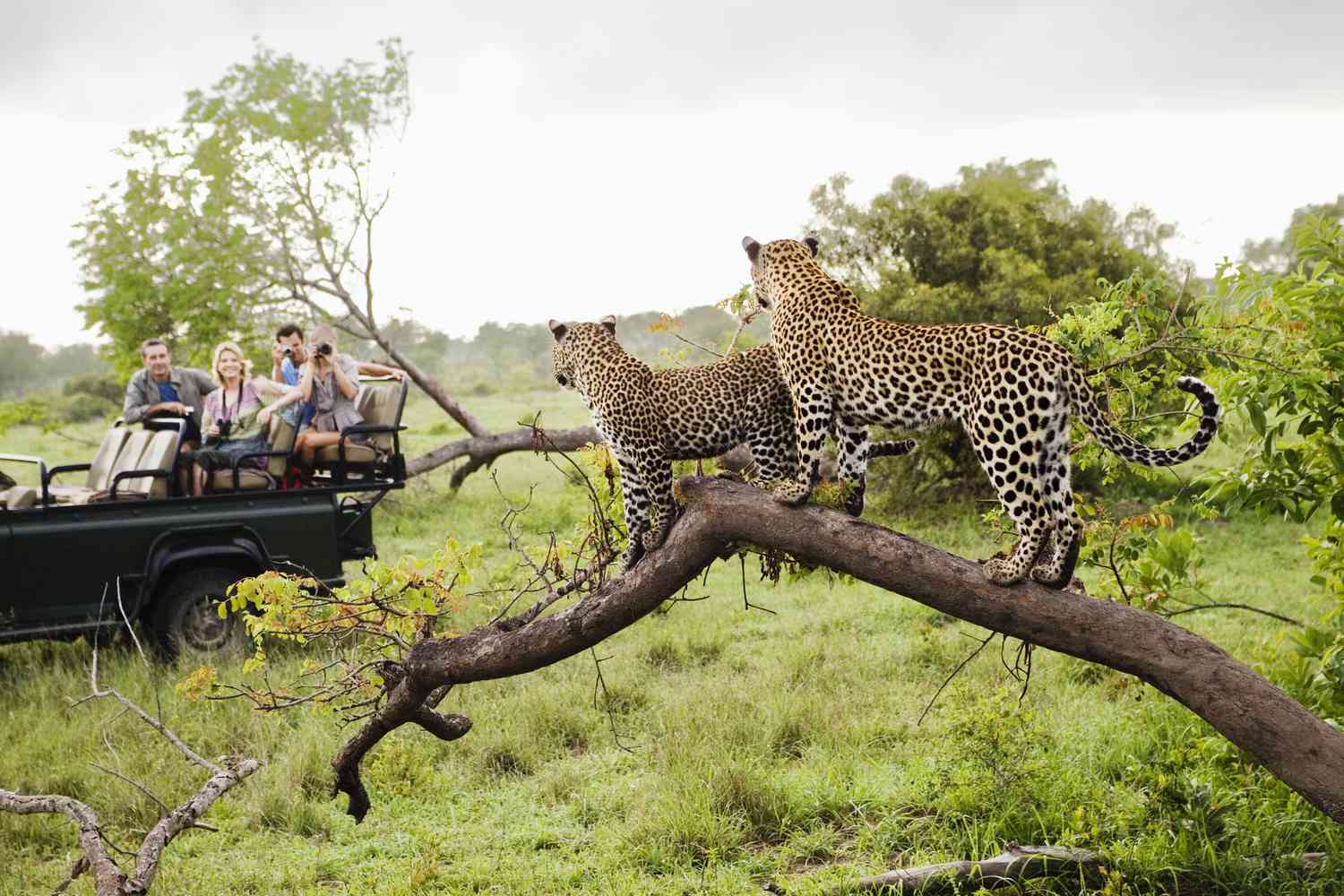
The Animals That Participate in the Great Migration
Cultural Experiences Near Serengeti Safari Lodges
Maasai Community Visits
A Tanzania safari can include meaningful cultural experiences near Serengeti safari lodges. Maasai communities offer opportunities to learn about pastoral traditions.
Travelers can experience traditional dances, beadwork, local crafts, and community activities. Such visits create valuable connections between tourism and local livelihoods.
Responsible cultural tourism requires respect. Visitors should follow community guidelines and support legitimate local initiatives.
Traditional Beadwork
Maasai beadwork offers a memorable cultural experience. Local artisans create colorful jewelry using traditional techniques.
Travelers can purchase handmade products and support community-based businesses. These purchases can contribute directly to local household incomes.
Local Food Experiences
Some safari lodges arrange local food experiences for guests. These activities introduce travelers to regional ingredients and cooking traditions.
Visitors can enjoy a different side of Tanzania beyond wildlife viewing. Food creates another meaningful connection with local culture.
Community Conservation Activities
Some communities participate in conservation initiatives around protected landscapes. Travelers can learn how tourism supports environmental protection and local development.
These experiences help explain the broader value of responsible tourism.
Why Tanzania Is Ideal for Great Migration Safaris
Tanzania provides outstanding opportunities to experience The Animals That Participate in the Great Migration.
Serengeti National Park forms the heart of the migration ecosystem. Its grasslands support enormous herbivore populations and diverse predators.
The wider northern Tanzania circuit adds further attractions. Travelers can combine Serengeti with Ngorongoro and Tarangire.
Such combinations create a broader Tanzania wildlife safari. Visitors can experience different landscapes, wildlife communities, and cultural environments.
Tanzania also provides varied accommodation options. Travelers can choose luxury lodges, tented camps, mid-range properties, or budget-friendly facilities.
The right choice depends on travel style, budget, season, and preferred location.
Planning Your Tanzania Safari
Choose Your Season Carefully
Understanding The Animals That Participate in the Great Migration helps travelers choose suitable travel periods.
Calving experiences suit travelers interested in newborn animals and predator activity. Northern Serengeti trips suit travelers seeking potential river crossings.
Other periods provide excellent general wildlife viewing. Therefore, travelers should avoid focusing exclusively on one migration event.
Choose the Right Safari Area
Different Serengeti areas provide different wildlife opportunities. Southern areas suit calving experiences during the appropriate season.
Central Serengeti provides strong year-round wildlife opportunities. Northern Serengeti becomes particularly important during later migration movements.
A professional itinerary should consider these seasonal differences.
Use an Experienced Safari Operator
Safari planning requires destination knowledge. Route selection, accommodation location, park regulations, seasonal conditions, and driving distances all matter.
Terenga Africa Safaris and Travels Ltd focuses on practical planning and personalized safari experiences.
Our approach prioritizes realistic expectations, responsible tourism, and meaningful wildlife encounters.
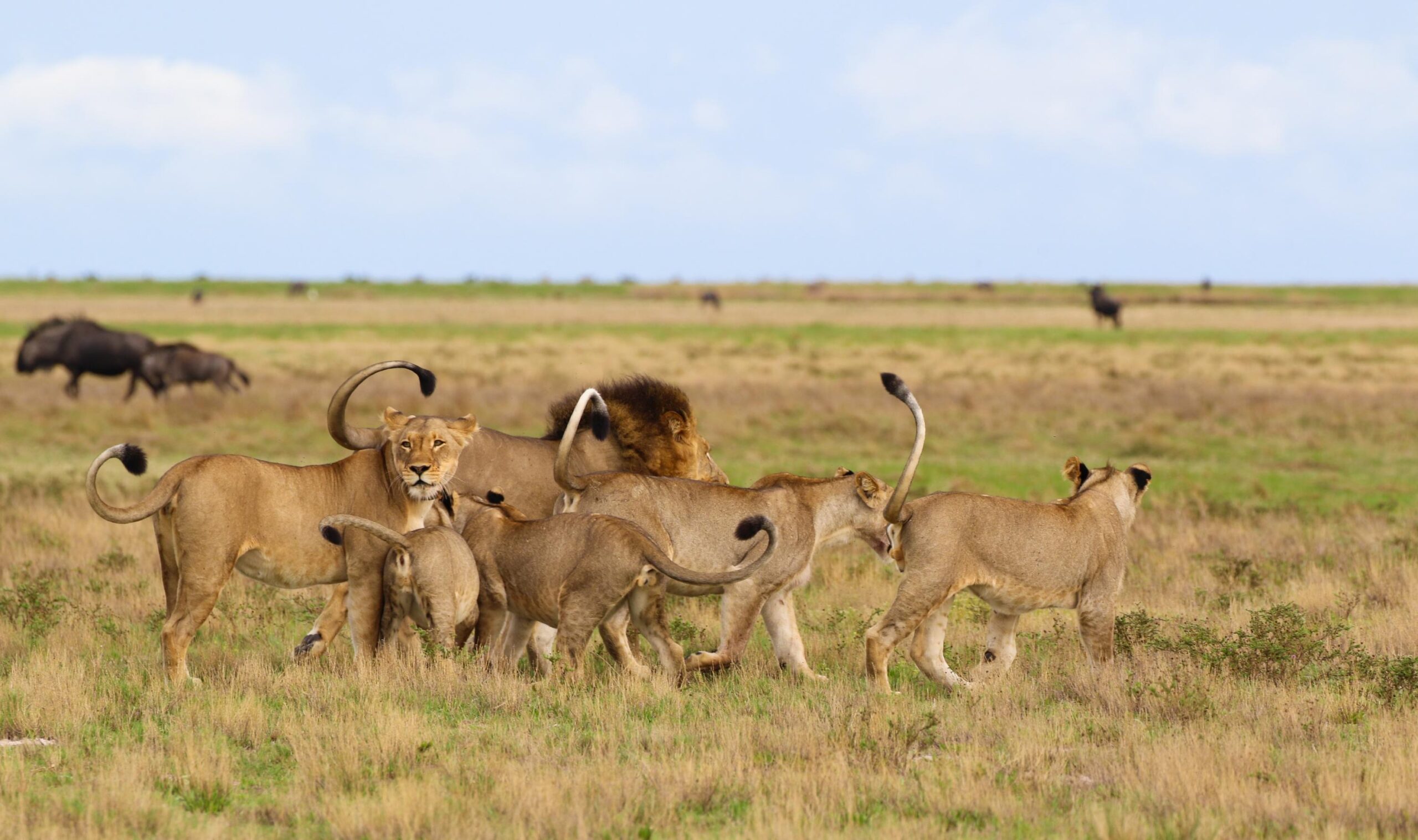
The Animals That Participate in the Great Migration
Responsible Tourism and Wildlife Conservation
Protecting The Animals That Participate in the Great Migration requires responsible tourism. Visitors should respect wildlife distances and follow national park regulations.
Safari vehicles should avoid unnecessary pressure around animals. Travelers should also avoid feeding wildlife or leaving waste within protected areas.
Supporting local communities strengthens conservation. Community-based tourism can create economic incentives for protecting wildlife habitats.
Furthermore, travelers can choose operators committed to responsible practices.
Sustainable tourism protects ecosystems while supporting local livelihoods. This balance creates better outcomes for wildlife and people.
The Animals That Participate in the Great Migration
The Animals That Participate in the Great Migration create an ecosystem rather than a single wildlife event.
Wildebeest provide the largest moving population. Zebras complement their grazing patterns. Gazelles occupy different feeding niches.
Lions, cheetahs, hyenas, and crocodiles respond to seasonal prey availability. Vultures and other scavengers complete important ecological processes.
Together, these animals create one of Earth’s most impressive natural systems.
Understanding these relationships transforms a simple game drive into an educational experience. Travelers begin to see how every species contributes to ecosystem balance.
The Animals That Participate in the Great Migration: Final Thoughts
The Animals That Participate in the Great Migration represent the extraordinary biodiversity of the Serengeti-Mara ecosystem.
The migration depends on rainfall, grass, water, breeding cycles, predator activity, and animal behavior. These factors constantly interact across a vast landscape.
Therefore, every Tanzania safari offers a different experience. No two migration seasons follow exactly the same pattern.
For international travelers, the Great Migration offers adventure and education. It also creates opportunities to understand conservation and African culture.
At Terenga Africa Safaris and Travels Ltd, we believe responsible travel should inspire deeper appreciation. Our Tanzania wildlife safaris combine expert planning with authentic experiences.
Whether you seek a Tanzania wildlife tour, Tanzania adventure safaris, or a classic Tanzania safari, we can help shape your journey.
The Animals That Participate in the Great Migration deserve protection for generations to come. Their survival depends on healthy habitats, responsible tourism, and strong conservation.
Safari Inclusions
- Airport transfers
- Safari transportation
- Professional safari guide
- Accommodation
- Meals
- Drinking water
- National park fees
- Game drives
- Migration viewing
- Cultural experiences
- Safari vehicle
- Government taxes
- Lodge activities
Safari Exclusions
- International flights
- Visa fees
- Travel insurance
- Personal expenses
- Alcoholic beverages
- Laundry
- Tips
- Souveni-rs
- Optional activities
- Personal communications
- Medical expenses
- Additional accommodation
- Services not listed under inclusions
About Terenga Africa Safaris and Travels Ltd
Terenga Africa Safaris and Travels Ltd creates memorable journeys across East Africa. Our destinations include Tanzania, Uganda, Kenya, Rwanda, and other remarkable African destinations.
We combine destination expertise, professional planning, responsible tourism, and personalized service. Our goal remains simple and powerful.
Travel in comfort. Explore in style. Experience the adventure of a lifetime with Terenga Safaris.