The Animals That Participate in the Great Migration
August 26, 2026
How Many Animals Take Part in the Great Migration?
August 27, 2026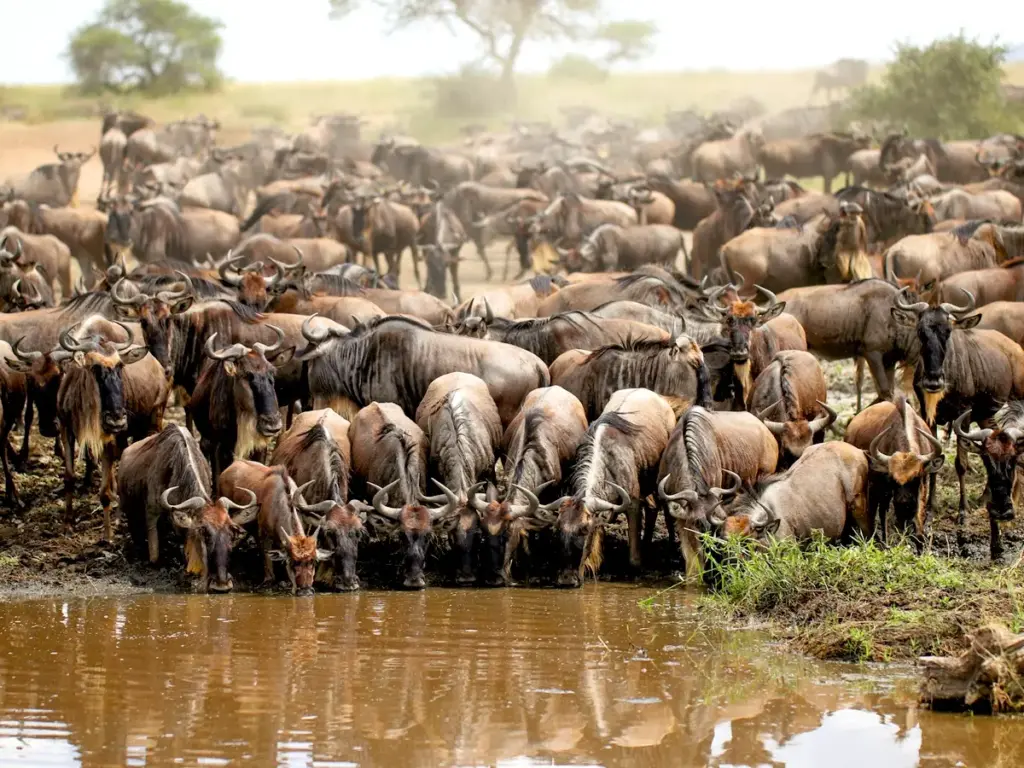
Wildebeest, Zebras and Gazelles: The Main Migrating Animals
Wildebeest, Zebras and Gazelles: The Main Migrating Animals define one of Africa’s greatest wildlife spectacles. Every year, huge herds move across the Serengeti-Mara ecosystem. Their journey follows rainfall, fresh grass, water, and seasonal breeding patterns.
The Great Migration remains a major attraction for travelers planning Tanzania safaris. It offers extraordinary opportunities to observe wildlife in natural landscapes. Travelers can witness vast herds crossing open plains and navigating challenging rivers.
Wildebeest form the largest migrating population. Zebras travel alongside them and use the landscape differently. Gazelles add another important layer to this remarkable ecological movement.
Together, these species create a complex relationship between grazing, reproduction, predation, and survival. Their movements also influence lions, cheetahs, hyenas, crocodiles, vultures, and many other species.
Understanding Wildebeest, Zebras and Gazelles: The Main Migrating Animals helps travelers appreciate more than dramatic wildlife photographs. The migration represents a living ecosystem shaped by nature’s seasonal rhythms.
At Terenga Africa Safaris and Travels Ltd, we design wildlife experiences around knowledge, responsible travel, and authentic encounters. Our Tanzania wildlife safaris help travelers understand the landscapes they explore.
Best Trending Tanzania Safari Holidays for 2027/2028
- 12-Day Tanzania Wildlife Safari
- 10-Day Tanzania Wildlife Safari & Zanzibar
- 10-Day Best Tanzania Honeymoon Luxury Safari and Zanzibar Beach Getaway
- 9-Day Ultimate Tanzania Wildlife Safari
- 9-Day Tanzania Adventure Safari
- 8-Day Tanzania Mid-Range Safari
- 8-Day Tanzania Northern Circuit Safari
- 7-Day Tanzania Wildlife Safari
- 7-Day Tanzania Wildlife Wonders Experience Tour
- 6-Day Majestic Tanzania Wildlife Luxury Safari
- 13-Day Tanzania Wildlife Tour & Zanzibar Beach Holiday
- 12-Day Tanzania Wildlife Safari Itinerary
- 11-Day Tanzania & Zanzibar Safari Adventure
- 11 Days Magical Kenya and Tanzania Safari
- 4-Day Tanzania Safari Extension Itinerary
- 5-Day Tanzania Safari Extension
- 9-Day Tanzania Wildlife Safari Adventure
- 7 Days Tanzania Safari Holiday
- 8 Days Tanzania Safari Holiday Itinerary
Wildebeest, Zebras and Gazelles: The Main Migrating Animals
Why These Three Species Matter
Wildebeest, Zebras and Gazelles: The Main Migrating Animals form the core of the Great Migration. Each species has different feeding habits and survival strategies.
Wildebeest depend heavily on nutritious grass. Zebras often consume taller grasses before other grazers move through. Gazelles select shorter vegetation and browse different parts of the landscape.
This feeding sequence reduces direct competition between species. It also helps different herbivores share the same ecosystem.
Rainfall determines where fresh grass appears. Consequently, migrating animals follow areas offering better grazing opportunities. Water availability also influences their movement across the Serengeti.
Their journey does not follow an exact annual timetable. Weather conditions can influence the location and timing of different herds.
Therefore, travelers should approach migration safaris with flexibility. Nature controls the movement, while experienced guides help travelers understand current conditions.
Wildebeest: The Largest Migrating Herds
The Main Travelers
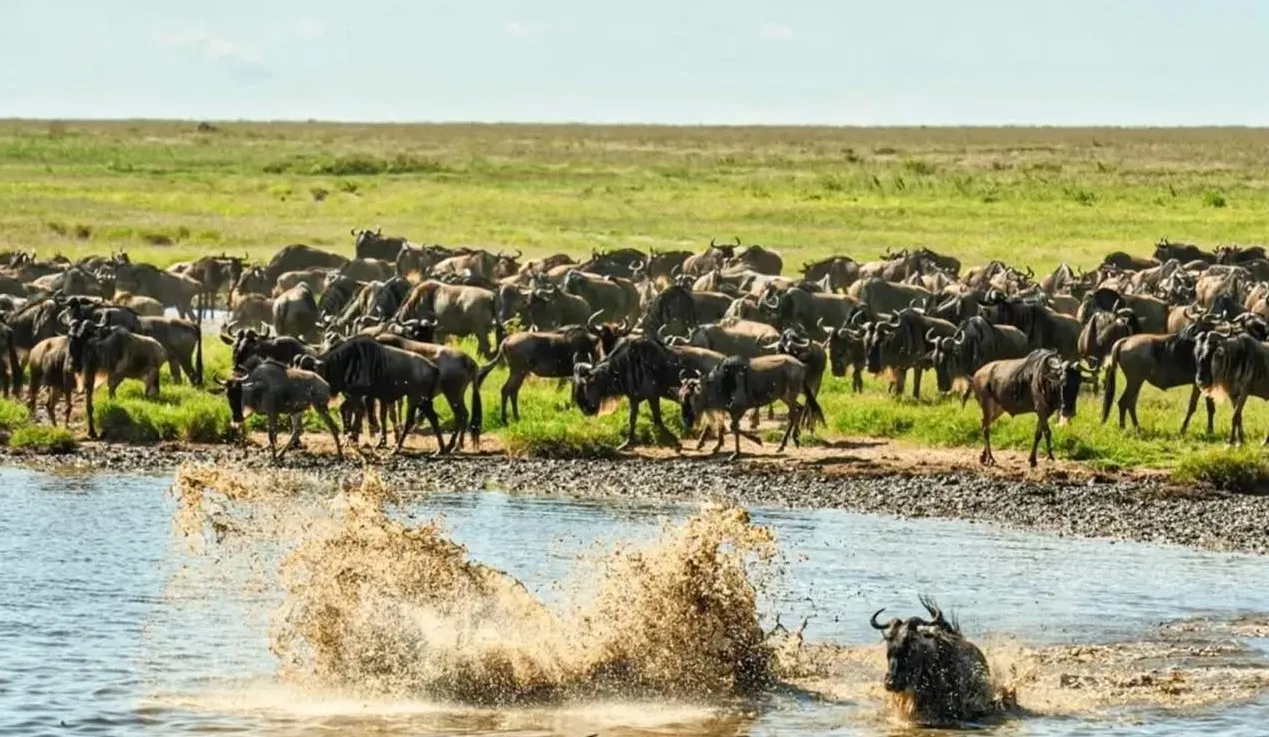
Wildebeest represent the largest component of Wildebeest, Zebras and Gazelles: The Main Migrating Animals.
More than a million wildebeest participate in the broader annual migration cycle. Their powerful bodies require substantial quantities of nutritious vegetation.
Fresh grass becomes particularly important after seasonal rainfall. New growth provides valuable nutrients for adults and young calves.
Wildebeest also have remarkable endurance. They can travel long distances across challenging terrain while following grazing opportunities.
Their movement creates spectacular scenes across the Serengeti. Herds may stretch across plains for kilometers.
Dust rises beneath thousands of hooves. The sound of moving animals can create an unforgettable safari atmosphere.
Wildebeest also support numerous predators. Lions, hyenas, cheetahs, crocodiles, and other carnivores depend on herbivore populations.
Their importance extends beyond migration photography. Wildebeest contribute significantly to the Serengeti ecosystem and food chain.
Wildebeest Calving Season
A Season of New Life
The calving season provides one of the most remarkable experiences within Wildebeest, Zebras and Gazelles: The Main Migrating Animals.
Large numbers of wildebeest give birth during the calving period. This timing connects closely with seasonal grass growth.
Fresh vegetation provides important nutrition for nursing mothers. Newborn calves also gain access to better feeding conditions as they develop.
Young wildebeest become mobile quickly after birth. They must keep pace with the moving herd.
Predators take advantage of increased opportunities during this period. Lions, cheetahs, hyenas, and other carnivores become active around vulnerable young animals.
Travelers visiting during this period can observe fascinating survival behavior. Mothers protect calves while maintaining movement with the herd.
A Tanzania safari during calving season therefore provides more than wildlife viewing. It offers an opportunity to witness reproduction and survival within a functioning ecosystem.
Zebras: The Striped Migration Partners
A Different Grazing Strategy
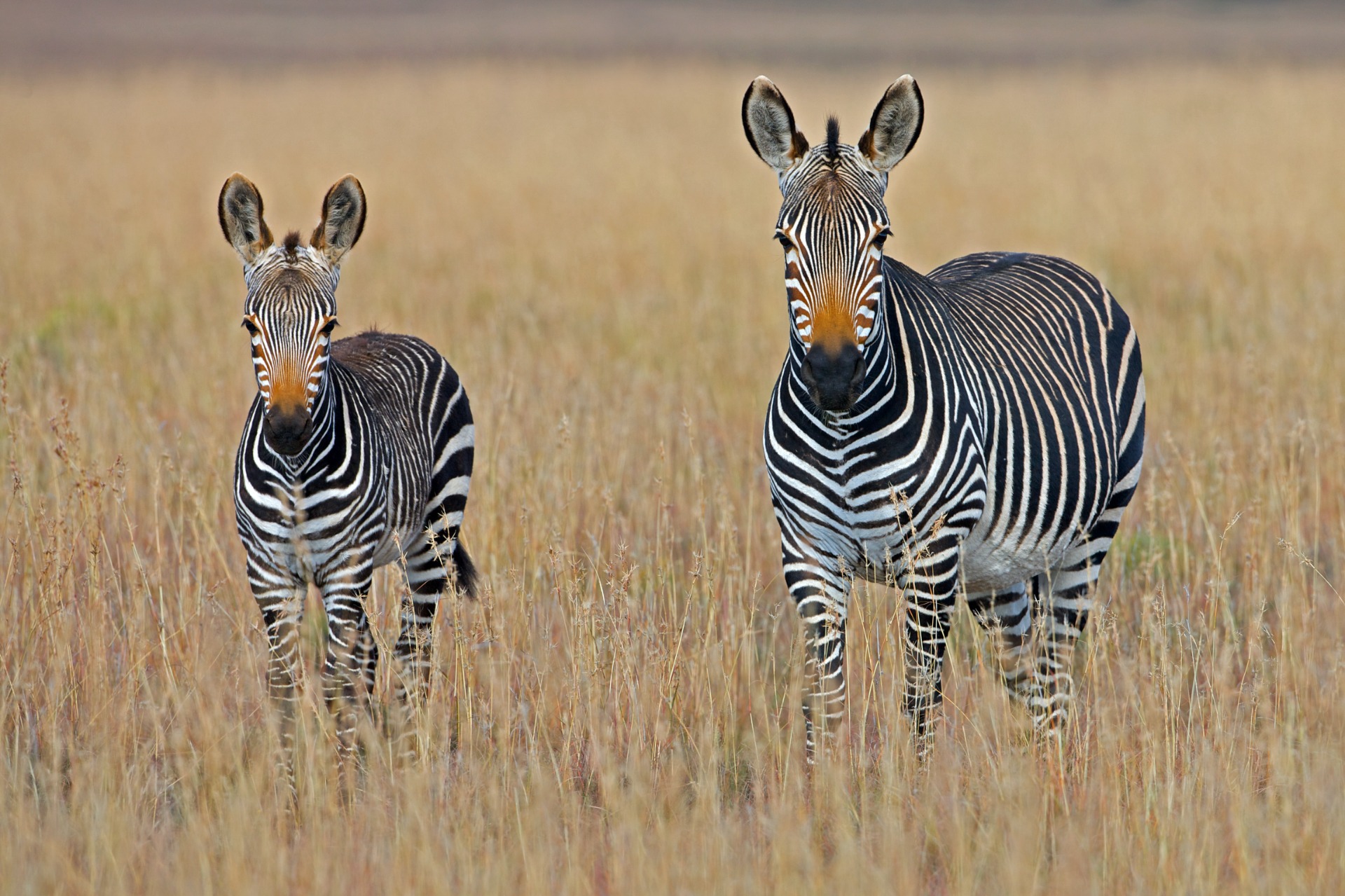
Zebras play a major role in Wildebeest, Zebras and Gazelles: The Main Migrating Animals.
Large zebra herds move through the Serengeti alongside wildebeest. Their grazing behavior complements the feeding habits of other herbivores.
Zebras often consume taller and tougher grasses. Their feeding can expose shorter vegetation that wildebeest prefer.
This relationship creates an efficient grazing sequence. Several herbivore species can therefore use the same landscape with reduced competition.
Zebras also possess strong social structures. Family groups remain together while joining larger herds.
Their striking black-and-white patterns create excellent photographic opportunities. Large groups moving across golden grasslands provide memorable safari scenes.
Furthermore, zebras provide prey for major predators. Lions and hyenas regularly target zebras across suitable habitats.
During Tanzania wildlife safaris, zebra sightings often occur alongside wildebeest. These mixed herds provide an excellent opportunity to understand ecological relationships.
Zebra Behavior During Migration
Zebra Behavior During Migration
Strength Through Numbers
Zebra movement demonstrates the importance of social behavior. Individuals remain connected to family groups while traveling through large landscapes.
Adults remain alert to predators. Young animals stay close to protective adults.
Large groups can also create confusion for predators. Numerous moving animals make it harder to isolate a single target.
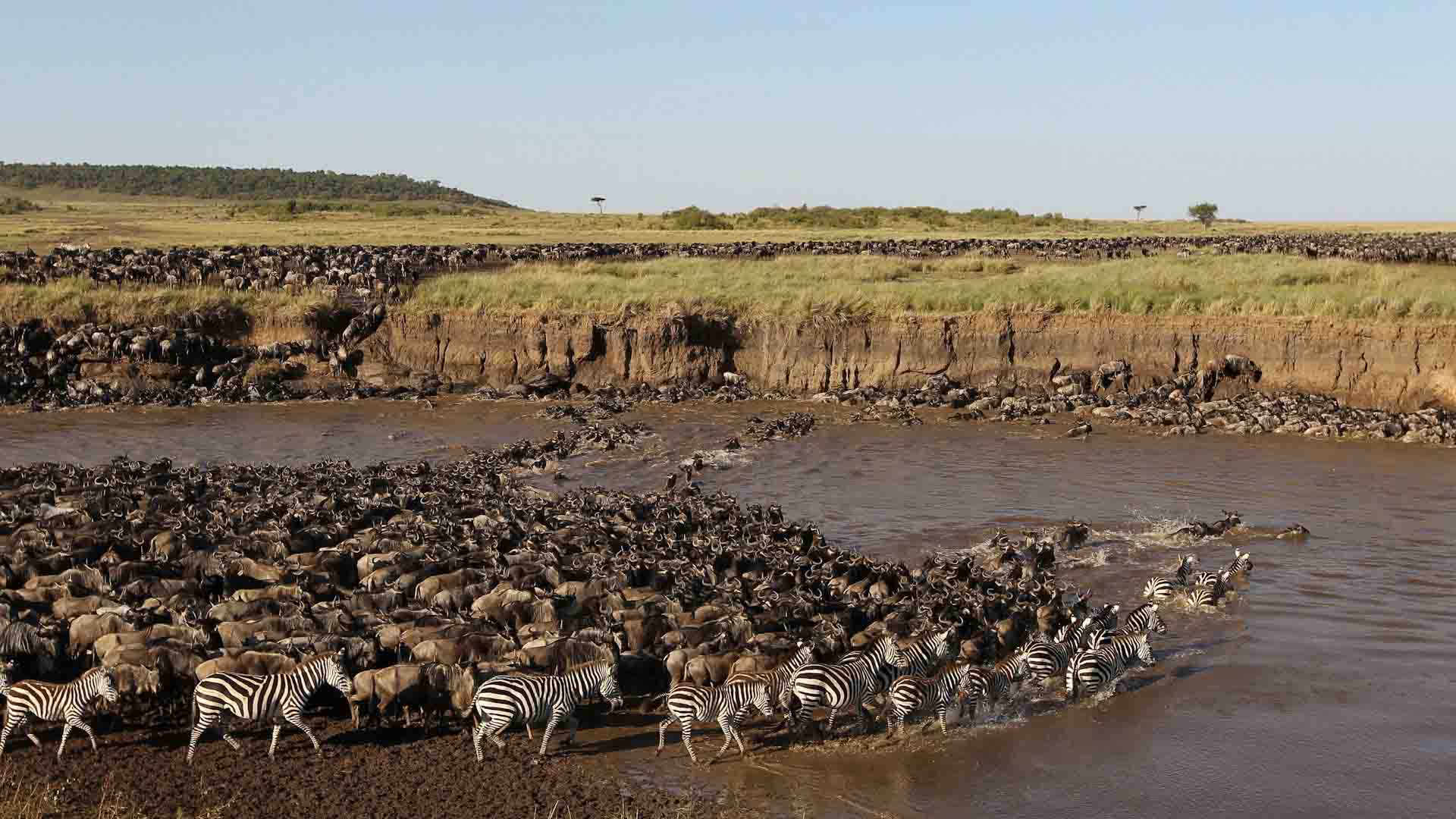
During river crossings, zebras can become part of massive mixed herds. They may gather near riverbanks while waiting for suitable conditions.
Patience remains essential during these moments. Wildlife does not follow a human schedule.
Experienced guides can interpret herd behavior and environmental conditions. Their knowledge helps travelers understand what may happen next.
Gazelles: Agile Grassland Specialists
Thomson’s Gazelles
Gazelles form another important component of Wildebeest, Zebras and Gazelles: The Main Migrating Animals.
Thomson’s gazelles remain strongly associated with the open grasslands of the Serengeti. Their smaller bodies allow them to exploit vegetation differently from larger herbivores.
These agile antelopes also play a major role within predator-prey relationships. Cheetahs frequently target gazelles during high-speed hunts.
Their speed provides an important defense against predators. Quick acceleration can help a gazelle escape an approaching cheetah.
However, survival requires constant awareness. Gazelles often remain alert while feeding in open landscapes.
Travelers can encounter large concentrations of gazelles during Tanzania wildlife tours. Their presence adds diversity to the broader migration landscape.
Grant’s Gazelles
Specialists of Dry Landscapes
Grant’s gazelles also contribute to the broader migration ecosystem. They possess adaptations that help them survive relatively dry conditions.
Their movements do not always match those of wildebeest. Nevertheless, they interact with the same ecosystem.
Grant’s gazelles can occupy areas where other herbivores face greater challenges. Their feeding habits also reduce competition with larger grazers.
Predators benefit from their presence. Cheetahs, lions, leopards, and hyenas can prey on different antelope species.
Consequently, gazelles form an important link between grasslands and carnivores.
Wildebeest, Zebras and Gazelles: The Main Migrating Animals
A Connected Feeding System
Wildebeest, Zebras and Gazelles: The Main Migrating Animals demonstrate how herbivore species can share one ecosystem.
Zebras often feed on taller grass. Wildebeest prefer shorter and fresher vegetation. Gazelles select particular plants and grasses according to availability.
This sequence allows several species to benefit from the same landscape.
Rainfall drives vegetation growth. Herbivores then respond to these changing food conditions.
As grass becomes less nutritious, herds move toward better grazing areas. New rainfall can attract them toward recently regenerated grasslands.
Therefore, migration represents an ongoing ecological response rather than a simple annual journey.
The Role of Rainfall in Migration
Nature’s Seasonal Signal
Rainfall remains one of the most important influences on Wildebeest, Zebras and Gazelles: The Main Migrating Animals.
Seasonal rains stimulate grass growth across different parts of the Serengeti ecosystem. Herbivores naturally seek these nutritious grazing areas.
Rainfall patterns vary across the region. Some areas receive rain earlier than others.
Consequently, animal movement can change according to local environmental conditions. Herds may move gradually or travel quickly when conditions favor movement.
This relationship makes migration timing difficult to guarantee precisely.
Travelers should therefore choose safari dates based on broad seasonal patterns. They should also remain open to unexpected wildlife behavior.
The Role of Water
Rivers and Waterholes
Water influences the movement of Wildebeest, Zebras and Gazelles: The Main Migrating Animals.
During wetter periods, temporary water sources can support large concentrations of wildlife. Dry periods increase the importance of permanent rivers and waterholes.
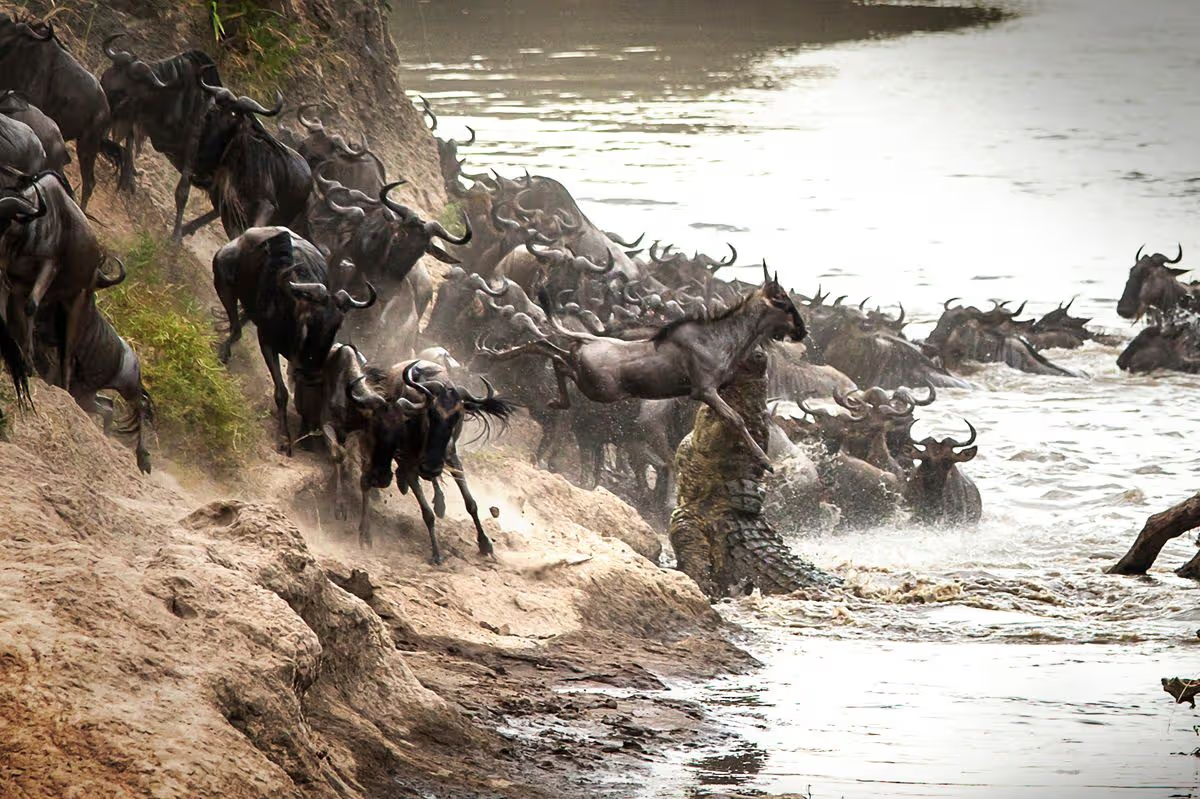
The Mara River becomes especially important during northern migration movements. Large herds may gather along its banks before attempting crossings.
Crocodiles create an additional danger within the river. Strong currents and steep banks can also make crossings challenging.
Travelers should never expect a river crossing at an exact time. Animals may wait for hours before moving.
This uncertainty forms part of the authentic safari experience.
Predators Follow the Migrating Herds
Lions and Wildebeest
Predators form an essential part of the story surrounding Wildebeest, Zebras and Gazelles: The Main Migrating Animals.
Lions often concentrate around areas with abundant herbivores. Large prey populations create seasonal hunting opportunities.
However, hunting remains challenging. Wildebeest can run quickly and form large defensive groups.
Zebras also provide important prey for lions. Their strength and speed make them challenging targets.
Gazelles present different hunting opportunities. Cheetahs can use their speed when pursuing smaller prey.
Consequently, the migration creates a dynamic predator-prey environment across the Serengeti.
Cheetahs and Gazelles
The Speed Competition
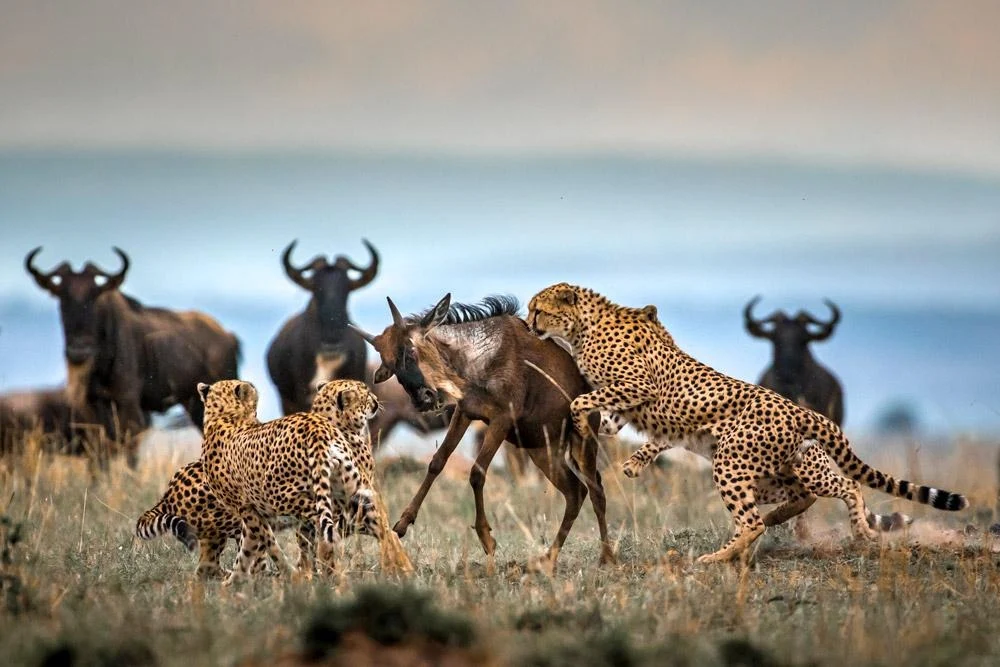
Cheetahs create some of the most exciting moments during Tanzania adventure safaris.
They depend heavily on open spaces for high-speed pursuits. Gazelles provide suitable prey across these landscapes.
A chase can last only seconds. The outcome depends on acceleration, direction, terrain, and timing.
Cheetahs must conserve energy. A failed chase can leave them vulnerable and exhausted.
This relationship shows how every animal faces challenges within the ecosystem.
Hyenas and the Migration
Powerful Hunters and Scavengers
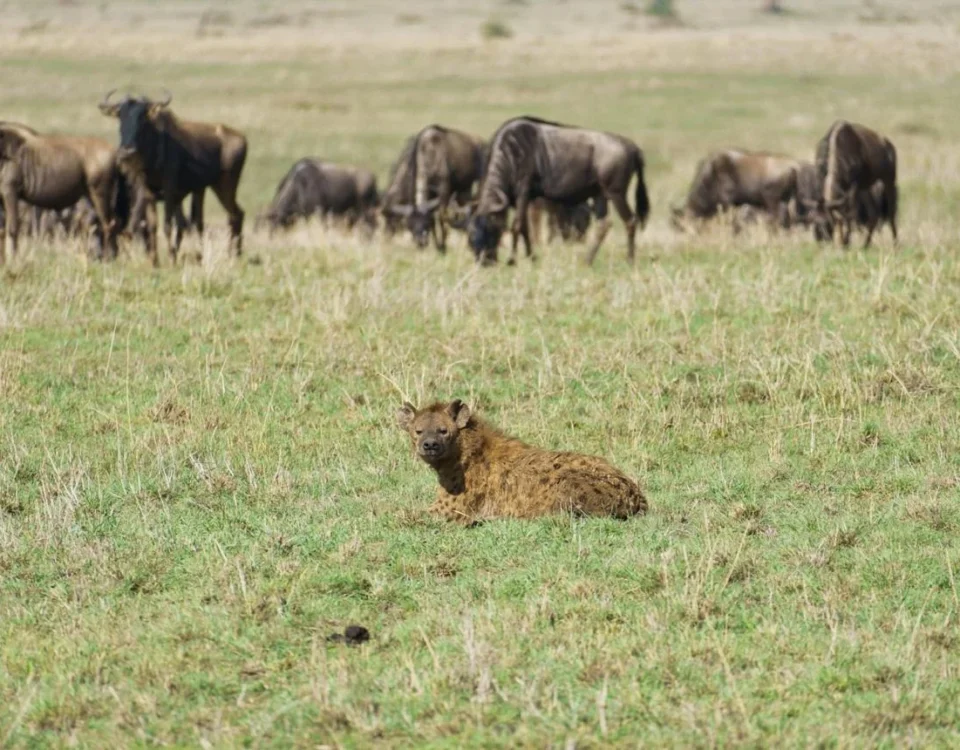
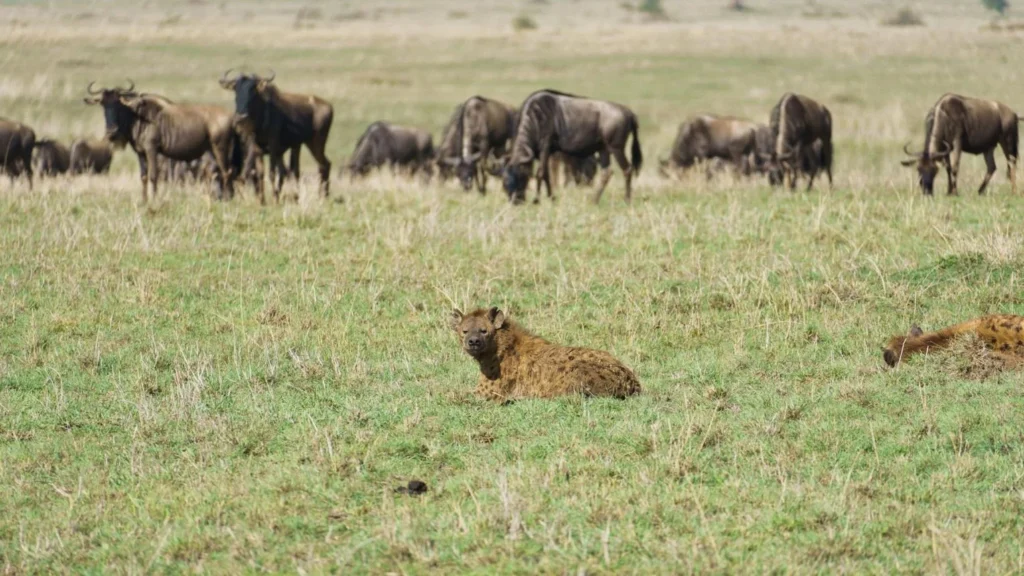
Spotted hyenas contribute significantly to the migration ecosystem. They can hunt prey and consume carrion.
Large herbivore concentrations provide opportunities for hyena clans. Young animals and vulnerable individuals can become targets.
Hyenas also compete with other predators. Their social organization gives them strength during encounters around food.
Their scavenging role supports ecosystem health. Hyenas help consume carcasses and recycle nutrients.
Therefore, seeing hyenas during a Tanzania wildlife safari provides valuable ecological insight.
Crocodiles and River Crossings
Ancient Ambush Predators
Nile crocodiles represent one of the major dangers during river crossings.
They remain near suitable crossing points and wait for opportunities. Their patience and powerful jaws make them formidable predators.
Wildebeest, zebras, and gazelles face significant risks when entering deep water.
Nevertheless, river crossings remain natural events. Visitors should avoid disturbing animals during these sensitive moments.
Responsible guides maintain appropriate distances and follow park regulations.
Birds and Other Wildlife
Beyond the Main Migrating Animals
Wildebeest, Zebras and Gazelles: The Main Migrating Animals attract attention, but many smaller species benefit from their movement.
Vultures locate carcasses left by predators and natural deaths. Storks and other birds exploit insects disturbed by moving herbivores.
Jackals and other scavengers also benefit from seasonal wildlife concentrations.
This interconnected system demonstrates the migration’s broader ecological value.
A Tanzania wildlife tour can therefore combine mammal viewing with exceptional birdwatching opportunities.
Cultural Experiences Around Serengeti Safari Lodges
Maasai Community Experiences
Travelers staying around Serengeti safari lodges can experience more than wildlife.
Maasai cultural visits offer opportunities to learn about traditional pastoral lifestyles. Visitors can experience traditional dances, crafts, beadwork, and community activities.
Respect remains essential during every cultural interaction. Travelers should follow local guidelines and support community-led initiatives.
Traditional Beadwork
Local artisans create beautiful beadwork using traditional techniques. Visitors can purchase handmade jewelry and crafts.
These purchases can support local households and community businesses.
Local Food Experiences
Some lodges arrange local culinary experiences. Guests can learn about regional ingredients and traditional preparation methods.
Food creates another connection between travelers and the destination.
Community Conservation
Some local communities participate in conservation initiatives. Travelers can learn how tourism supports both wildlife and community livelihoods.
These experiences create a broader understanding of responsible African tourism.
Why Choose Tanzania for the Great Migration?
Tanzania remains one of the world’s leading destinations for wildlife experiences.
The Serengeti provides extensive grasslands and diverse habitats. These landscapes support large herbivore populations and numerous predators.
A Tanzania safari can also include Ngorongoro Conservation Area and Tarangire National Park.
Such combinations create a richer Tanzania wildlife safari experience. Travelers can experience different landscapes and wildlife communities during one journey.
Tanzania also provides accommodation for different travel styles. Options range from luxury lodges to comfortable tented camps.
The right property depends on budget, season, location, and personal preferences.
Best Time to See the Migrating Animals
Calving Season
Travelers interested in newborn animals should consider the calving season. Large concentrations of wildebeest gather across the southern Serengeti during suitable conditions.
This period provides opportunities to observe young animals and active predators.
Northern Migration
Travelers interested in river crossings should consider the northern Serengeti season. However, crossing dates remain unpredictable.
Rainfall patterns can influence herd movements each year.
General Wildlife Viewing
Other periods still offer excellent wildlife experiences. The Serengeti supports abundant wildlife throughout much of the year.
Therefore, travelers should choose dates based on their wider safari interests.
Planning Tanzania Safaris Around the Migration
Work With Local Expertise
Planning Wildebeest, Zebras and Gazelles: The Main Migrating Animals requires careful consideration of geography and season.
The Serengeti covers a vast area. Accommodation location can significantly influence daily driving distances.
A lodge near your target wildlife area can save valuable safari time. Route planning also affects the number of game-viewing opportunities.
Terenga Africa Safaris and Travels Ltd helps travelers build practical itineraries around their interests.
We consider travel dates, accommodation preferences, wildlife goals, and overall safari style.
Responsible Wildlife Tourism
Protecting the Migration
Protecting Wildebeest, Zebras and Gazelles: The Main Migrating Animals requires responsible travel.
Travelers should follow national park regulations at all times. They should maintain appropriate distances from wildlife.
Visitors should also avoid feeding animals or leaving waste within protected areas.
Supporting local communities can strengthen conservation. Community tourism creates economic opportunities connected to protecting wildlife habitats.
Responsible tourism therefore benefits travelers, communities, and wildlife.
Wildebeest, Zebras and Gazelles: The Main Migrating Animals
Wildebeest, Zebras and Gazelles: The Main Migrating Animals represent the heart of the Great Migration.
Wildebeest provide the largest moving population. Zebras complement their grazing patterns. Gazelles add agility and diversity to the grassland ecosystem.
Predators follow these herbivores across the landscape. Crocodiles wait at important rivers. Scavengers clean the ecosystem after natural deaths.
Every species contributes to the larger ecological story.
Understanding these relationships transforms a safari from simple sightseeing into an educational experience.
Wildebeest, Zebras and Gazelles: The Main Migrating Animals
Wildebeest, Zebras and Gazelles: The Main Migrating Animals demonstrate nature’s remarkable ability to balance competition and cooperation.
Each species responds to changing environmental conditions. Rainfall changes grass growth. Grass influences herbivore movement. Herbivores influence predator distribution.
This cycle continues across the Serengeti-Mara ecosystem.
For international travelers, witnessing this process creates a powerful connection with Africa.
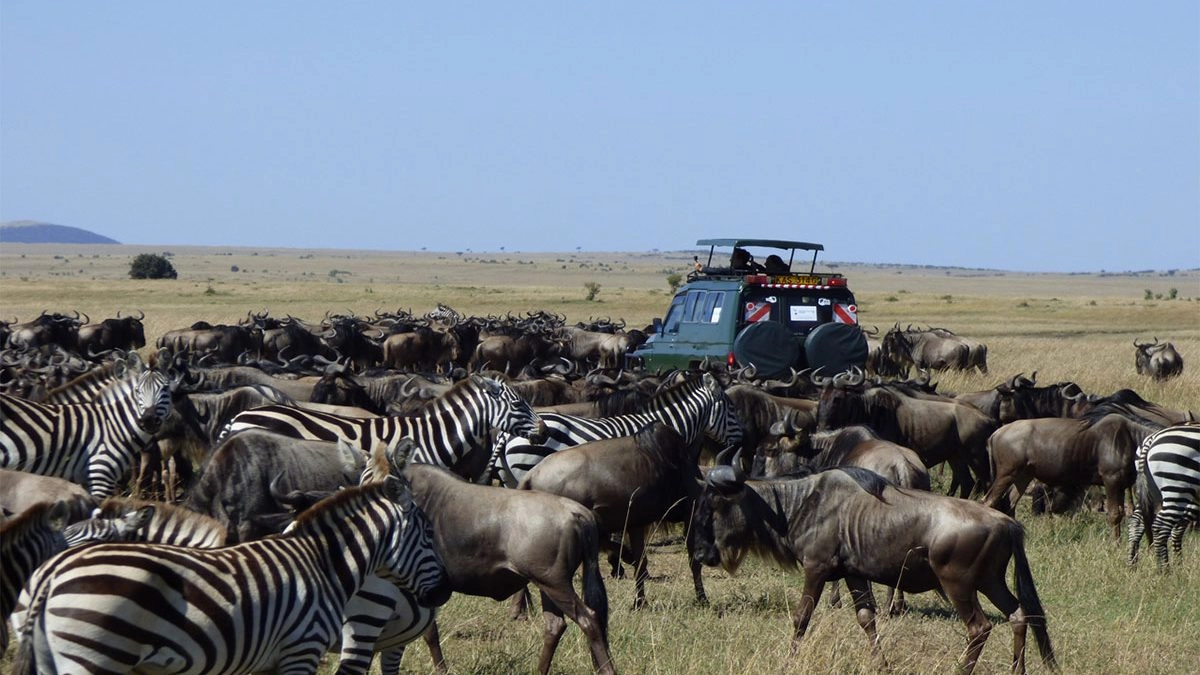
Great Migration
Wildebeest, Zebras and Gazelles: The Main Migrating Animals
Wildebeest, Zebras and Gazelles: The Main Migrating Animals also reveal why Tanzania remains a leading safari destination.
Travelers can experience enormous herds, dramatic predators, beautiful landscapes, and diverse cultures.
Furthermore, Tanzania offers opportunities for both first-time visitors and experienced safari travelers.
A carefully planned Tanzania wildlife tour can provide extraordinary memories without sacrificing responsible travel principles.
Wildebeest, Zebras and Gazelles: The Main Migrating Animals
Wildebeest, Zebras and Gazelles: The Main Migrating Animals create an unforgettable wildlife experience.
Their movement follows nature’s rhythm rather than a fixed human timetable.
Rainfall, food, water, breeding, and predator pressure influence their journey.
Therefore, every safari season offers a different story.
Wildebeest, Zebras and Gazelles: The Main Migrating Animals
Wildebeest, Zebras and Gazelles: The Main Migrating Animals remind travelers that Africa’s wildlife exists within connected ecosystems.
A single wildebeest herd can influence predators, scavengers, birds, and vegetation.
Likewise, changing rainfall can influence thousands of animals across enormous landscapes.
Wildebeest, Zebras and Gazelles: The Main Migrating Animals
Wildebeest, Zebras and Gazelles: The Main Migrating Animals provide endless opportunities for photography and wildlife observation.
Photographers can capture dramatic herd movements and intimate animal behavior.
Families can enjoy educational encounters with wildlife.
Couples can experience the romance of vast African landscapes.
Adventure travelers can explore one of Earth’s most remarkable natural systems.
Wildebeest, Zebras and Gazelles: The Main Migrating Animals
Wildebeest, Zebras and Gazelles: The Main Migrating Animals also demonstrate why conservation matters.
Healthy grasslands support herbivores. Healthy herbivore populations support predators.
Strong ecosystems also support communities that depend on tourism and natural resources.
Protecting migration routes therefore benefits both wildlife and people.
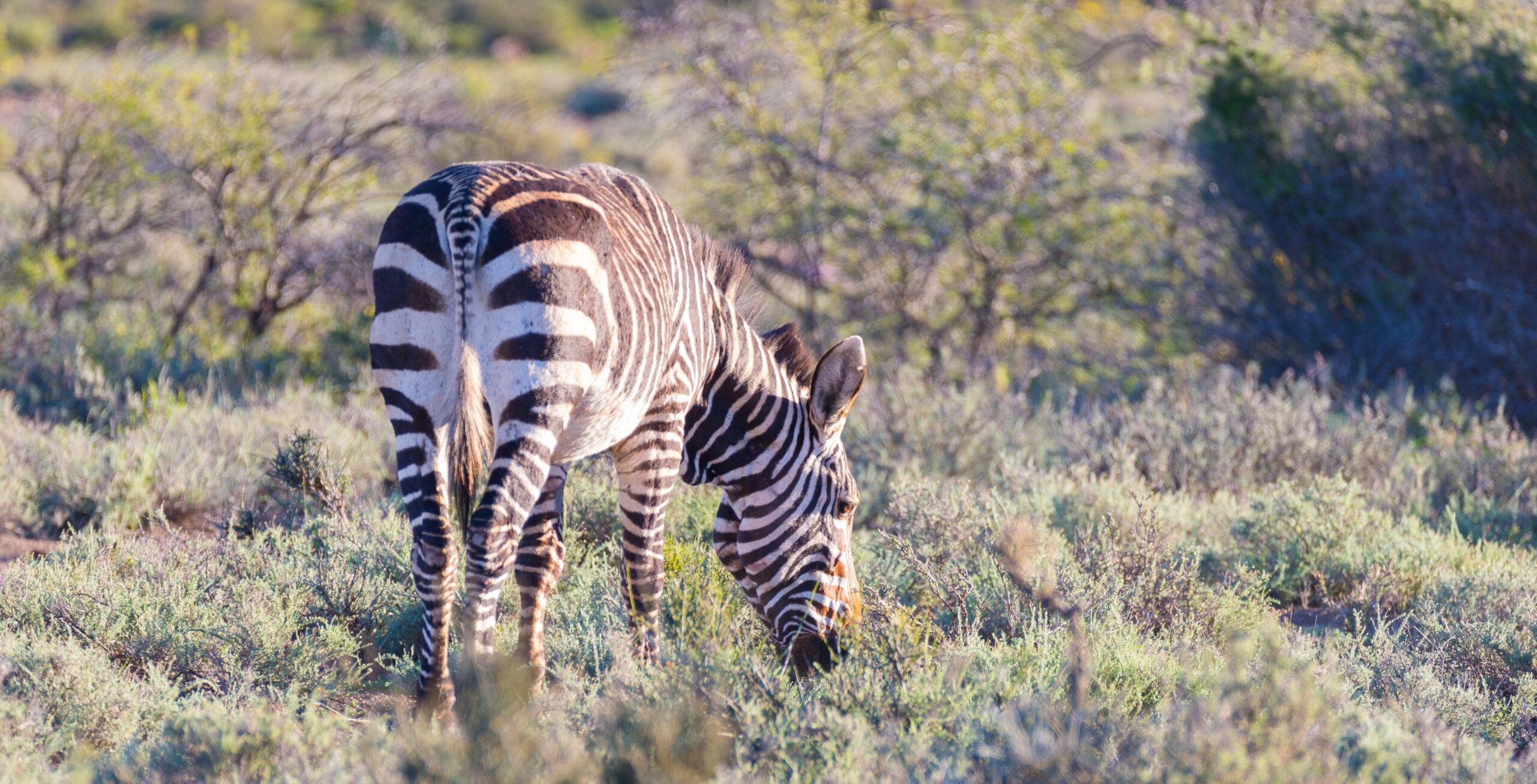
Wildebeest, Zebras and Gazelles: The Main Migrating Animals
Ultimately, Wildebeest, Zebras and Gazelles: The Main Migrating Animals represent much more than a famous wildlife event.
They symbolize survival, adaptation, movement, and ecological connection.
Their journey creates extraordinary opportunities for Tanzania safaris and Tanzania adventure safaris.
At Terenga Africa Safaris and Travels Ltd, we help travelers experience this remarkable natural cycle responsibly.
Our expertise focuses on thoughtful planning, authentic experiences, professional guidance, and strong destination knowledge.
Whether you seek a classic Tanzania safari or a specialized Tanzania wildlife safari, we can help create a memorable journey.
Wildebeest, Zebras and Gazelles: The Main Migrating Animals deserve protection for future generations.
Their story continues across the Serengeti, following the timeless rhythm of Africa’s changing seasons.
Safari Inclusions
- Airport transfers
- Safari transportation
- Professional safari guide
- Accommodation
- Meals
- Drinking water
- National park fees
- Game drives
- Migration viewing
- Cultural experiences
- Safari vehicle
- Government taxes
- Lodge activities
Safari Exclusions
- International flights
- Visa fees
- Travel insurance
- Personal expenses
- Alcoholic beverages
- Laundry
- Tips
- Souvenirs
- Optional activities
- Personal communications
- Medical expenses
- Additional accommodation
- Services not listed under inclusions

Serengeti National Park
About Terenga Africa Safaris and Travels Ltd
Terenga Africa Safaris and Travels Ltd creates memorable African journeys across Tanzania, Uganda, Kenya, Rwanda, and other East African destinations.
Our safari experiences combine wildlife, culture, conservation, comfort, and professional planning.
We help travelers discover Africa through meaningful experiences rather than simple sightseeing.
Travel in comfort. Explore in style. Experience the adventure of a lifetime with Terenga Safaris.