Hyenas and Newborn Wildebeest in the Serengeti
October 23, 2026
The Best Places to See Calving Wildebeest in Ndutu
October 26, 2026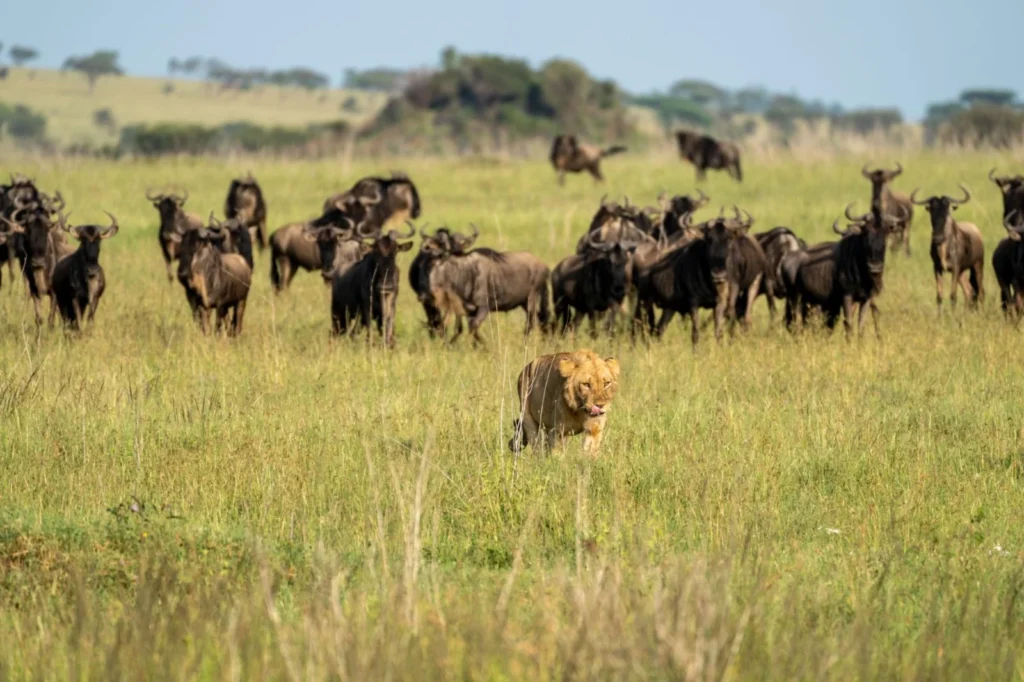
How Wildebeest Calves Learn to Survive Quickly? Discover Nature’s Remarkable Survival Story
Explore newborn instincts, maternal protection, predator avoidance, and the Great Migration across Tanzania’s Serengeti and Kenya’s Masai Mara.
How Wildebeest Calves Learn to Survive Quickly? This question reveals one of the most remarkable natural stories witnessed across the African savannah. Within minutes of birth, a newborn wildebeest must begin standing, balancing on slender legs, and preparing to follow its mother. Unlike human infants, which require extensive care over many months, wildebeest calves are born with strong instincts that help them adapt to life in a landscape filled with predators and constant movement. These early abilities are essential because the surrounding herd cannot remain in one place indefinitely. Lions, spotted hyenas, cheetahs, and other predators may search for vulnerable young animals, while hungry adults must continue feeding. Scientific research describes wildebeest calves as highly developed at birth, with the ability to stand and follow their mothers soon after delivery.
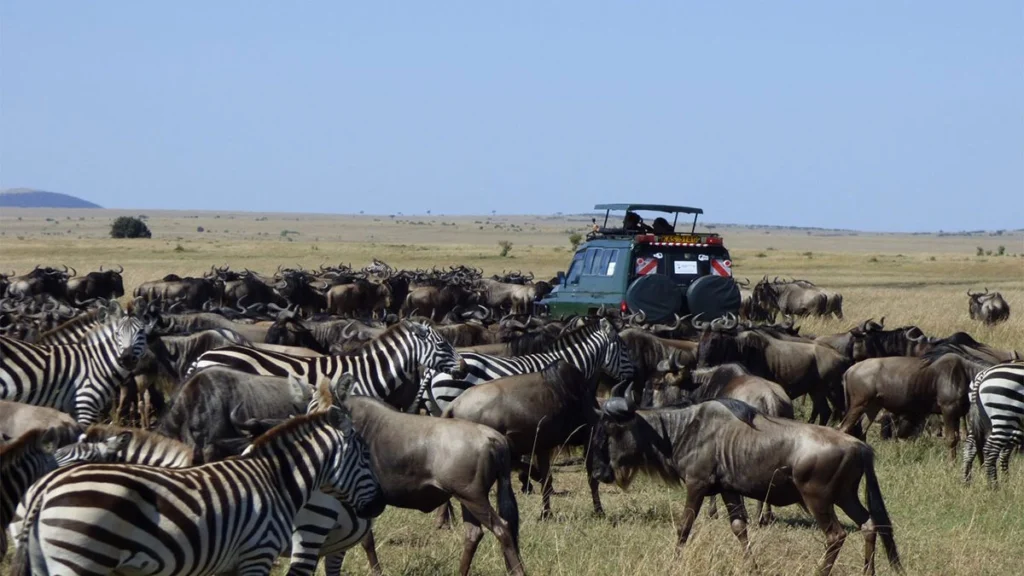
This remarkable adaptation makes the early stages of life a fascinating subject for wildlife enthusiasts visiting Tanzania and Kenya. During Tanzania Safaris, travellers exploring the Serengeti may witness newborn calves finding their balance, nursing beside their mothers, or moving through herds across the grasslands. Similar wildlife experiences may be encountered in the wider Masai Mara–Serengeti ecosystem as the migration changes location throughout the year.
1. How Quickly Can a Newborn Wildebeest Calf Stand and Walk?
How Wildebeest Calves Learn to Survive Quickly? begins with an extraordinary physical achievement: gaining control of their bodies shortly after birth. A newborn calf usually arrives with wet fur and unsteady legs, yet it instinctively attempts to rise and coordinate its movements. Repeated efforts help the young animal develop the balance required to stand, take steps, and eventually follow its mother. Research on Serengeti wildebeest reports that calves may stand and begin running within approximately seven minutes after birth, although the exact timing varies between individuals and circumstances.
This rapid mobility is not simply impressive; it can be essential to survival. A calf that remains separated from the moving herd may face greater exposure to predators or environmental hazards. Therefore, the ability to stand and move soon after birth gives it a better chance of staying close to its mother and benefiting from the safety of nearby animals. Observers on Tanzania Safaris may see young calves wobbling before becoming more confident on their feet, while experienced guides explain how these early movements support survival. The event also illustrates how evolution shapes animals for the particular challenges of their habitats. Unlike species whose young remain hidden in nests or dens, wildebeest calves must become mobile almost immediately because their mothers live in large herds that travel in response to food and rainfall.
2. Why Is Staying Close to the Mother So Important?

How Wildebeest Calves Learn to Survive Quickly? is closely connected to the strong relationship between a newborn calf and its mother. After birth, the mother provides milk, protection, and guidance while the young animal becomes familiar with its surroundings. Recognising and staying near its mother helps the calf maintain access to nourishment and remain connected to the moving herd. Nursing is particularly important because milk supplies energy for growth during a demanding early stage of life. Meanwhile, the mother must balance caring for her newborn with finding enough grass to sustain herself. Staying together becomes essential as the herd moves across the savannah in search of fresh grazing and water. A calf may use its mother’s appearance, scent, movement, and calls to maintain contact in a crowded group. The mother also responds to her calf’s behaviour, helping it remain close while both animals move through the landscape.
3. How Does the Great Migration Help Wildebeest Calves Survive?
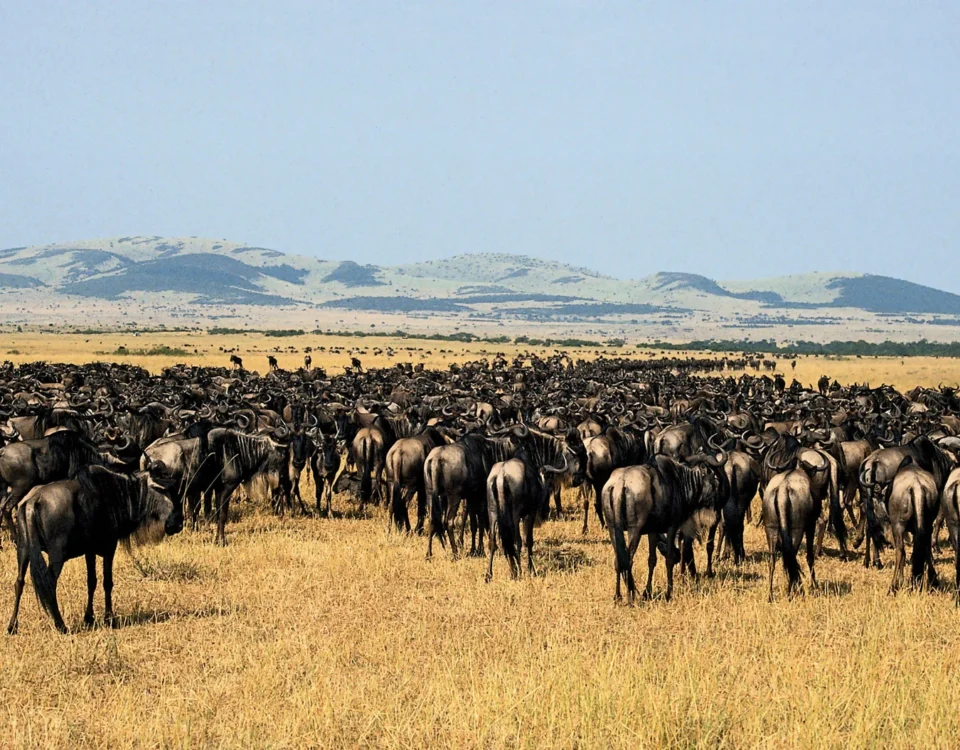
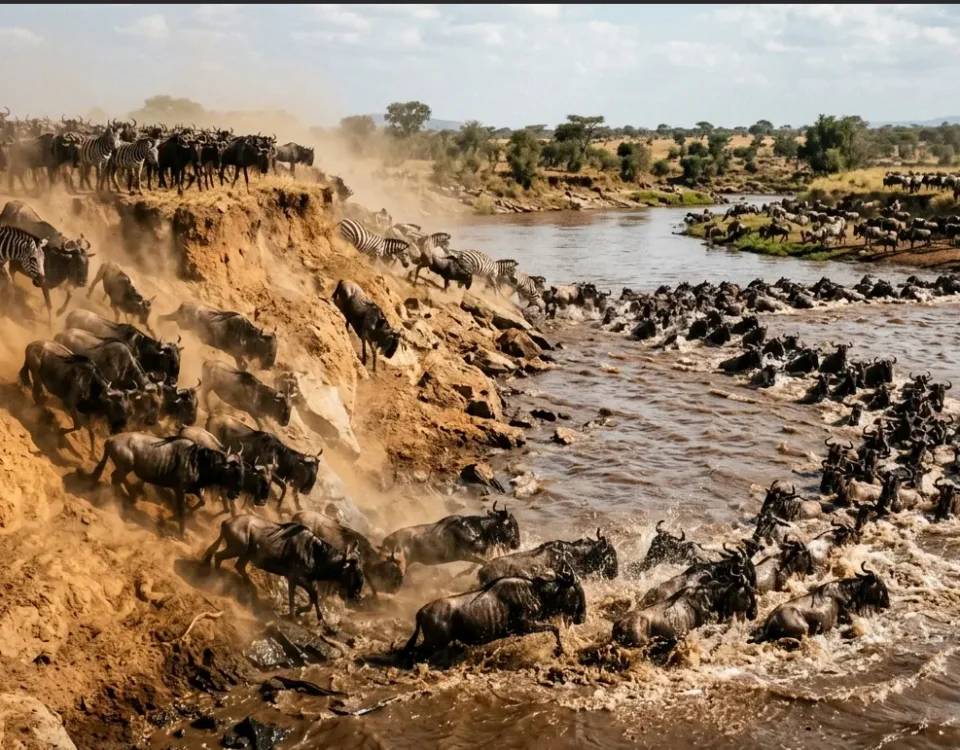
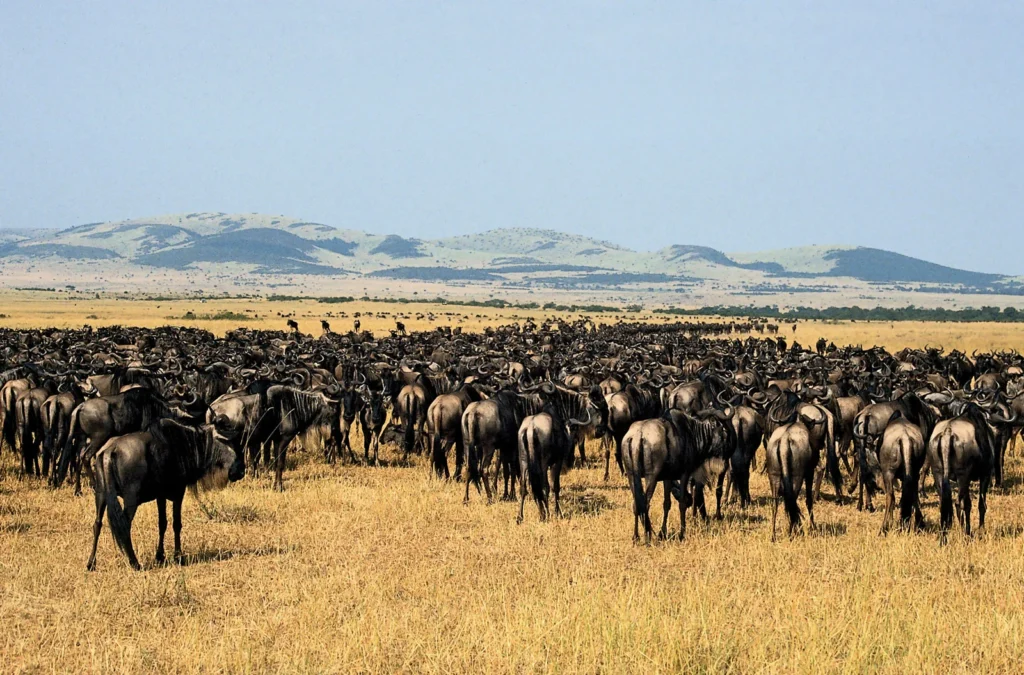
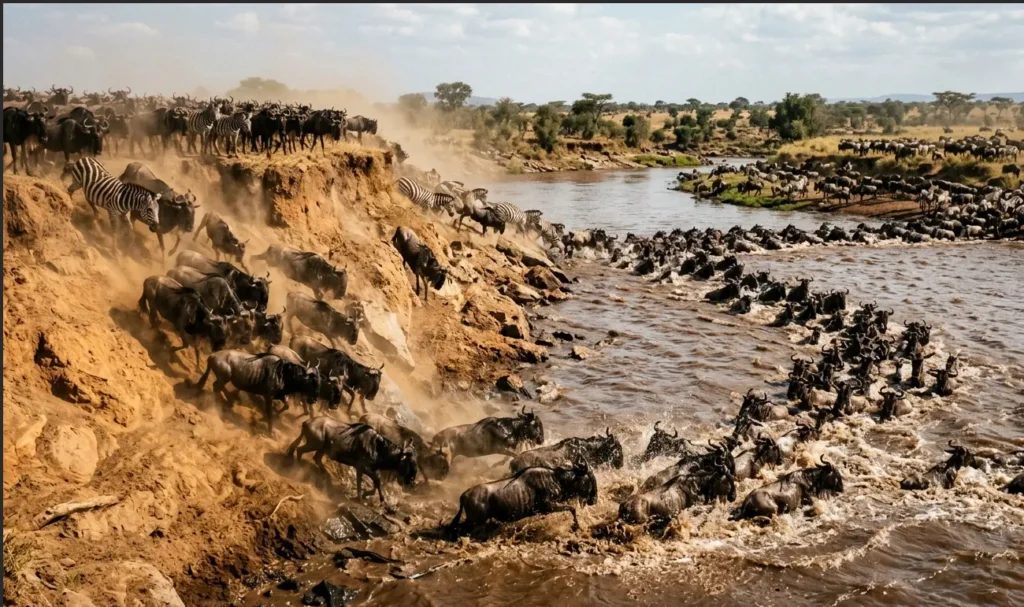
How Wildebeest Calves Learn to Survive Quickly? cannot be fully understood without considering the Great Migration and its seasonal relationship with rainfall and fresh grass. Across the Serengeti–Mara ecosystem, large wildebeest herds move between feeding areas as environmental conditions change. The southern Serengeti plains in Tanzania commonly support the main calving season around January to March, although the precise timing depends on rainfall and grazing conditions. As the dry season progresses, herds move through other parts of the ecosystem, with many reaching Kenya’s Masai Mara during the northern migration period.
Suitable short grass provides nutritious food for lactating mothers, helping them meet the demands of producing milk. At the same time, the open plains provide room for large herds to gather and for calves to begin following the adults. This seasonal concentration of births is an important aspect of wildebeest ecology. Rather than giving birth at completely random times throughout the year, many females reproduce within a relatively short period when conditions support the survival of their offspring.

4. How Do Wildebeest Calves Avoid Predators?
How Wildebeest Calves Learn to Survive Quickly? also involves responding to danger. The African savannah supports formidable predators, including lions, spotted hyenas, leopards, and cheetahs, which use different hunting techniques to find prey. A newborn wildebeest is vulnerable because its movements are initially uncertain and it has little experience interpreting threats. Rapid standing and movement help the calf remain close to its mother and herd, while staying among many animals may make it more difficult for a predator to isolate one individual. However, being in a large herd does not guarantee safety. Predators may target calves that are weak, separated, slow to follow, or otherwise exposed. Adult wildebeest can also become alert to danger through changes in movement, attention, or the reactions of surrounding animals.
5. What Other Skills Help Young Wildebeest Survive?
How Wildebeest Calves Learn to Survive Quickly? extends beyond standing and running. During their early development, calves must strengthen their legs, improve coordination, follow their mothers across varied ground, and learn to respond to movement within the herd. They also need to nurse regularly and build the energy required for continued activity. Every journey across the grasslands introduces environmental challenges, from uneven terrain and muddy patches to heat and distances between feeding areas. Remaining close to the herd helps calves keep up as adults move towards fresh pasture and water. Their rapid development is especially important in an ecosystem where wildlife cannot depend on constant access to a single feeding area. As weeks pass, growing strength and experience help young wildebeest become more capable members of the herd. These changes take place alongside the continued need for nourishment and protection.
6. What Can You Expect on a Wildebeest Calving Season Safari?
How Wildebeest Calves Learn to Survive Quickly? becomes especially vivid when observed in the wild during the calving season. A safari may include newborn calves attempting their first steps, mothers nursing their young, herds moving across green plains, and predators scanning the surroundings. Early-morning drives often provide pleasant temperatures and attractive light for wildlife photography, while afternoon excursions offer further opportunities to observe animal behaviour. The southern Serengeti and nearby Ndutu area are popular locations for calving-season viewing, but exact wildlife movements vary from year to year. Guides use recent sightings, local knowledge, and seasonal patterns to choose suitable areas for exploration. Nevertheless, no operator can guarantee a particular birth, predator encounter, or photograph. For travellers planning Tanzania Safaris, allowing several nights in the region usually provides more opportunities than visiting for only a brief stop.
7. When Is the Best Time to See Wildebeest Calves?
How Wildebeest Calves Learn to Survive Quickly? is most easily explored during the main calving period, which commonly occurs from January through March in the southern Serengeti. February is often a particularly rewarding month for travellers hoping to observe newborn calves, although rainfall and grazing conditions influence the timing.
Visitors interested in the herds later in the migration cycle may prefer Kenya’s Masai Mara, where large numbers commonly arrive during the middle and later months of the year. The migration follows rainfall and grazing conditions rather than a fixed calendar, so wildlife locations can change. Planning Tanzania Safaris around the calving season or Kenya Adventures around the northern migration period can improve the chances of seeing the desired wildlife activity. Before booking, discuss your travel dates, preferred destinations, accommodation standards, and available time with your safari operator.
8. What Should You Pack for This Safari?
Preparing well helps you enjoy How Wildebeest Calves Learn to Survive Quickly? in comfort during early starts and extended wildlife drives. Pack lightweight, neutral-coloured clothing, a warm layer for cool mornings, comfortable shoes, sun protection, and a waterproof jacket during potentially wet periods. Binoculars are useful for observing animal behaviour at a distance, while a camera with spare batteries and memory cards helps capture special moments. Bring personal medication, insect repellent, a refillable water bottle, and any travel documents required for your itinerary. For Tanzania Tours and Kenya Adventures, check baggage restrictions before domestic flights, especially when small aircraft are involved. Your operator can advise on location-specific packing needs.
9. Why Choose Terenga Africa Safaris & Travel Ltd?
How Wildebeest Calves Learn to Survive Quickly? offers more than a dramatic wildlife spectacle; it provides an opportunity to understand animal behaviour and the ecological importance of the Great Migration. Terenga Africa Safaris & Travel Ltd can help travellers plan seasonal wildlife journeys according to their dates, budget, preferred accommodation, and destination interests. A well-prepared itinerary should explain transport, accommodation, park fees, meals, and the expected driving schedule. We encourage responsible wildlife viewing, realistic expectations, and sufficient time to explore each destination without rushing. Whether you choose Tanzania Safaris in the Serengeti or Kenya Adventures in the Masai Mara, the aim is to create a meaningful and well-organised experience while respecting wildlife and its habitat.
 Conclusion: What Does the Wildebeest’s Survival Story Teach Us?
Ultimately, How Wildebeest Calves Learn to Survive Quickly? reveals the power of instinct, maternal care, and adaptation in the natural world. The ability to stand and follow the mother soon after birth gives calves an important advantage, while herd movement and suitable grazing support their continued development. Across the Serengeti and Masai Mara, this remarkable behaviour forms part of the wider Great Migration, connecting individual animals with seasonal changes across an entire ecosystem. Through carefully planned Tanzania Safaris, Tanzania Tours, and Kenya Adventures, travellers can witness these natural processes while gaining a deeper appreciation of Africa’s wildlife. Terenga Africa Safaris & Travel Ltd invites you to explore these extraordinary landscapes through a thoughtfully organised safari.
Plan your wildlife adventure: Visit www.terengasafaris.com to enquire about a tailor-made Serengeti or Masai Mara safari.