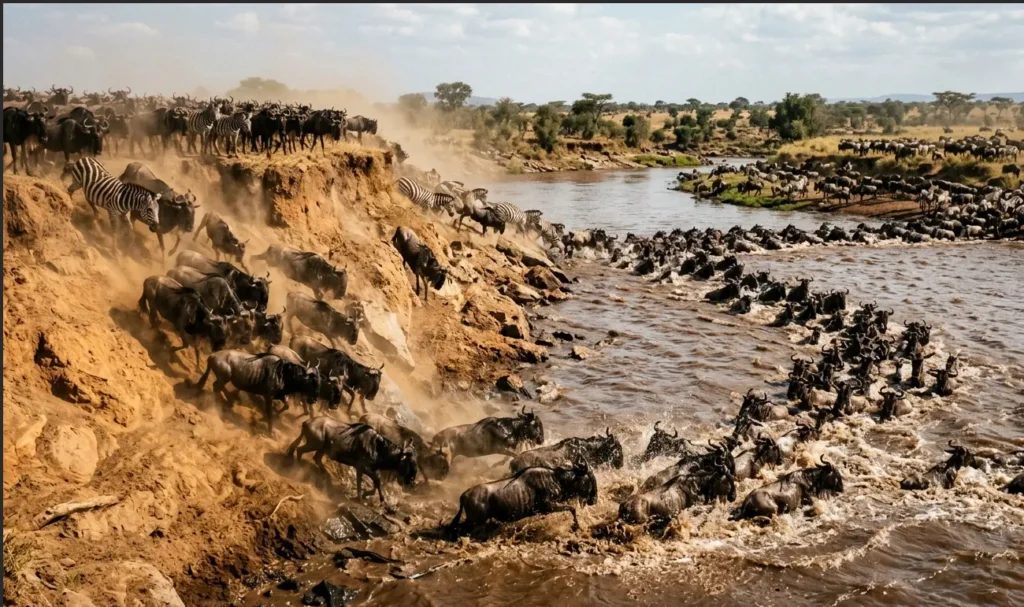
How Wildebeest Calves Learn to Survive Quickly? Discover Nature’s Remarkable Survival Story
October 26, 2026Why February Is One of the Best Months for Serengeti Safaris
October 27, 2026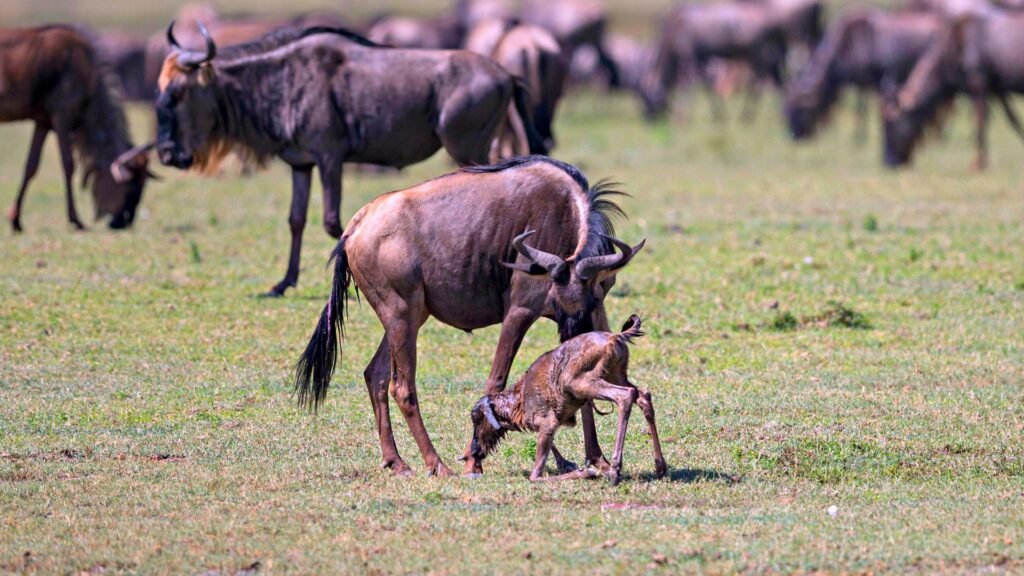
The Best Places to See Calving Wildebeest in Ndutu: A Complete Tanzania Safari Guide
Explore newborn wildebeest, predator encounters, seasonal wildlife movements, and unforgettable Great Migration experiences across southern Tanzania.
The Best Places to See Calving Wildebeest in Ndutu offer travellers a remarkable opportunity to witness one of nature’s most fascinating wildlife events. Located within the wider Serengeti–Ngorongoro ecosystem of northern Tanzania, Ndutu becomes a seasonal gathering place for migrating wildebeest when fresh grazing attracts large herds to its short-grass plains. During the main calving season, commonly from January through March, thousands of calves are born across the southern plains, with February often providing particularly rewarding opportunities to observe newborn animals. Exact timing varies with rainfall, grass growth, and herd movements.
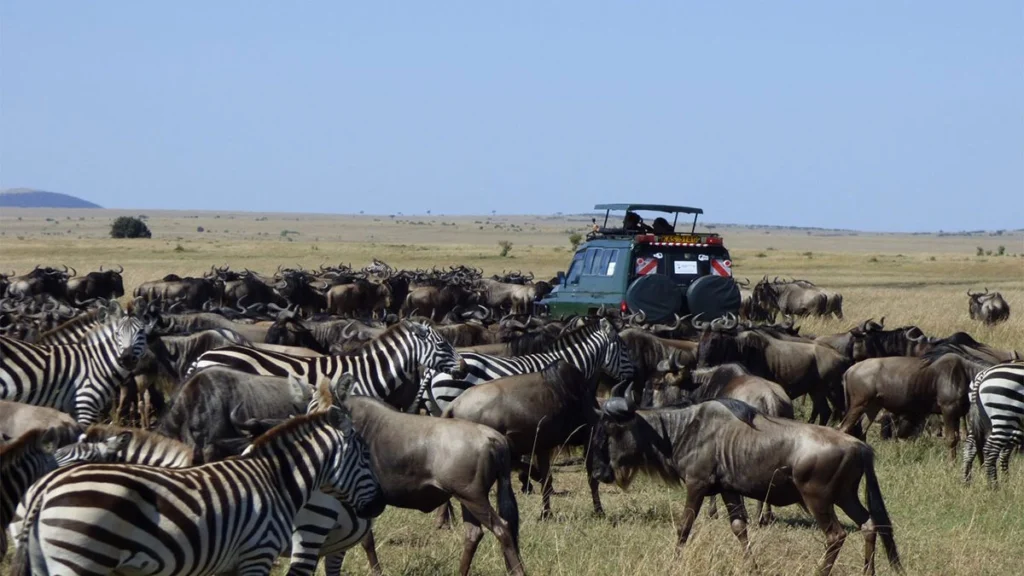
For wildlife enthusiasts, the experience is about much more than seeing large herds. Visitors may observe mothers nursing their calves, newborns finding their balance, zebras grazing alongside wildebeest, and predators searching the surrounding grasslands. These natural interactions make Ndutu an exceptional destination for photography, wildlife education, and immersive African safaris. Unlike river-crossing experiences farther north, calving-season viewing focuses on the beginning of life and the challenges young animals face in a predator-rich environment. Travellers planning Tanzania Safaris can build their itinerary around Ndutu, combining several days of game drives with comfortable accommodation and knowledgeable guides.
1. Which Parts of Ndutu Offer the Best Wildebeest Calving Experiences?

Where can you see the largest wildebeest herds around Ndutu?
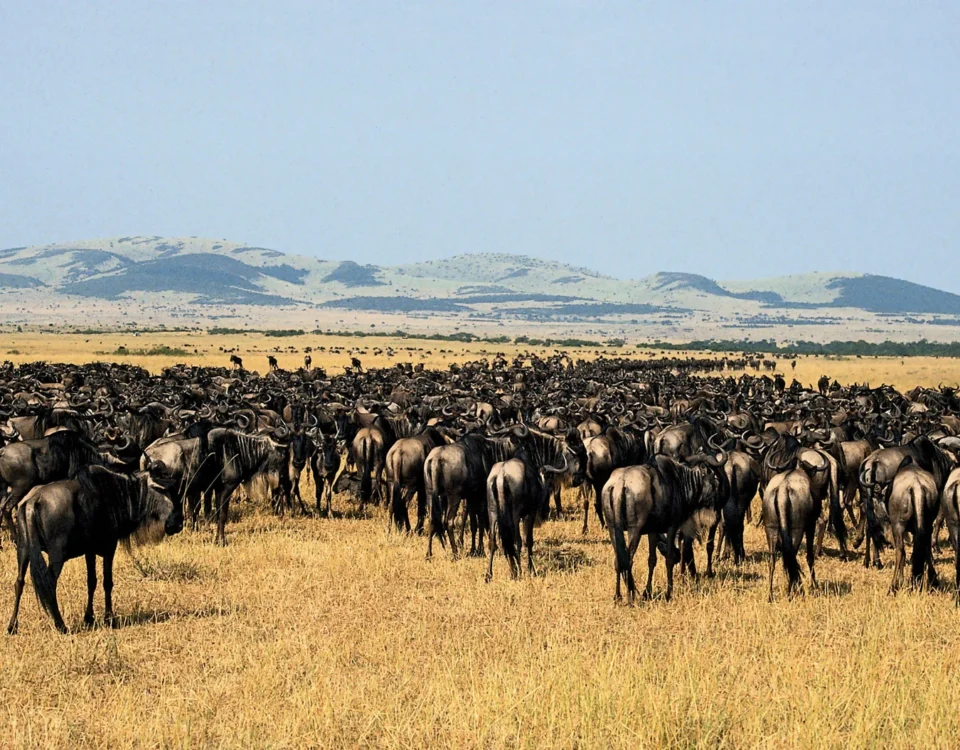
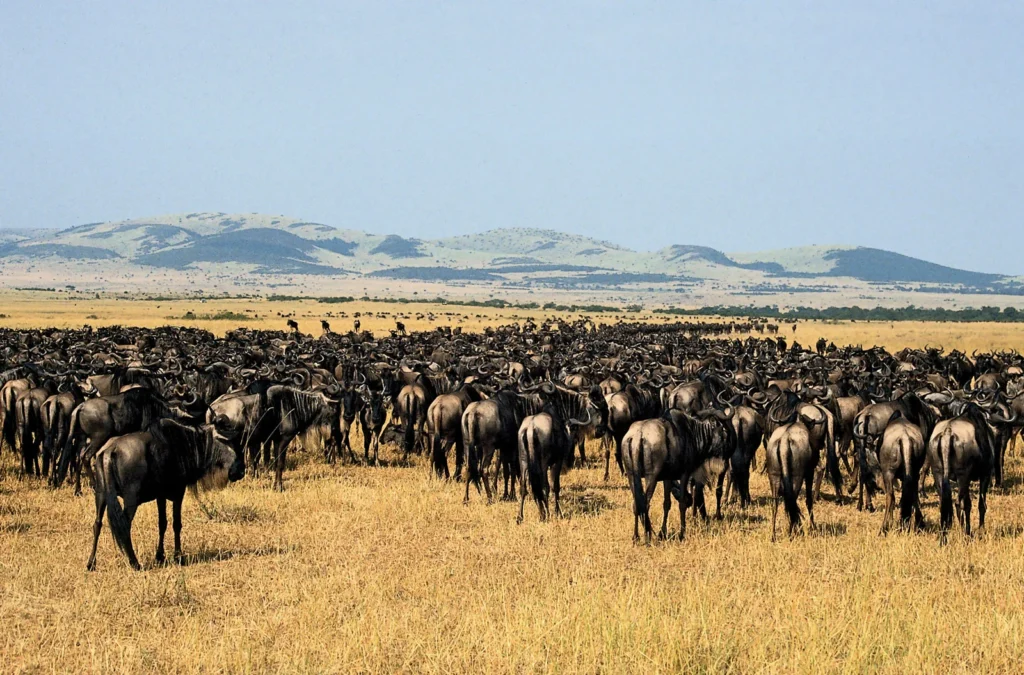
The Best Places to See Calving Wildebeest in Ndutu include the open short-grass plains surrounding the seasonal lakes, the grasslands extending towards the southern Serengeti, and suitable grazing areas around Kusini and Gol. These locations are not fixed viewing sites with guaranteed animal concentrations; herd distribution changes as rainfall and fresh pasture influence movement. The open plains are particularly valuable because visitors can sometimes observe large groups across wide stretches of grassland. Newborn calves may be seen feeding beside their mothers, resting between nursing sessions, or attempting their first steps while nearby adults graze. Predators may patrol these areas when prey is abundant, although their presence and behaviour depend on natural circumstances.
What can you see near Lake Ndutu?
The area around Lake Ndutu is among the most recognisable parts of The Best Places to See Calving Wildebeest in Ndutu, particularly when the surrounding grasslands support large seasonal herds. The lake and nearby habitats form part of a wider landscape used by migrating animals, with the precise concentration of wildebeest varying throughout the season. Visitors may encounter zebras, gazelles, giraffes, hyenas, lions, and cheetahs as they explore the plains and woodland edges. Birdlife can also enrich the experience, especially around water and suitable feeding grounds. Rather than concentrating entirely on newborn calves, a good game drive considers the complete environment, including how animals use the grasslands and where predators are likely to move. Photographers can benefit from changing light, open sightlines, and the contrasting colours of the seasonal landscape.
Why explore Lake Masek and the surrounding plains?
Lake Masek and its neighbouring grasslands add another useful area to The Best Places to See Calving Wildebeest in Ndutu. The wider landscape combines open feeding grounds with patches of woodland and other habitats used by different wildlife species. Wildebeest and zebras may move through nearby plains, while predators search for feeding opportunities around the seasonal concentrations of prey. Woodland edges can also create opportunities to look for animals that prefer more cover, although sightings depend on conditions and luck. A guide may choose to explore this area when recent reports or herd movements suggest promising game viewing. For visitors, this variation creates a richer safari than repeatedly travelling across the same stretch of open grassland. The best approach is to allow enough time to explore several suitable habitats while avoiding unnecessary driving.
2. When Is the Best Time to Visit Ndutu for Wildebeest Calving?
The Best Places to See Calving Wildebeest in Ndutu are most rewarding during the main calving season, generally from January through March. The first herds may begin gathering on the southern plains from December, while calving commonly intensifies during January and February. February is often considered a particularly attractive month because many newborn calves may be present at once. By March, young animals can still be seen, although the distribution of herds and the pace of calving may change.
These dates should be treated as seasonal guidance rather than a fixed timetable. Rainfall determines grass growth, and changes in grazing conditions can influence where the herds gather. Travellers seeking The Best Places to See Calving Wildebeest in Ndutu should discuss recent migration updates with their safari operator before confirming the final route. Green-season weather can bring beautiful scenery and opportunities for photography, but muddy tracks or rain may affect some journeys. Booking early is sensible for January and February, when demand for seasonal camps can be high. A safari of several nights provides greater flexibility than a brief stop, giving guides more time to explore different parts of the region.
3. What Are the Expectations on a Ndutu Calving Season Safari?
A safari exploring The Best Places to See Calving Wildebeest in Ndutu typically includes early-morning and afternoon game drives, when wildlife viewing and photography can be especially rewarding. During the day, guests may see large herds grazing, mothers caring for newborn calves, zebras moving
between feeding areas, and predators observing the plains. Not every outing will produce dramatic action, and some animals may be resting or moving beyond the immediate viewing area. That unpredictability is part of observing wildlife in its natural environment. A knowledgeable guide helps interpret what is happening, explain changes in animal behaviour, and adjust the route based on recent sightings and conditions.
4. What Should You Pack for a Ndutu Wildebeest Calving Safari?
Packing carefully for The Best Places to See Calving Wildebeest in Ndutu helps you stay comfortable during long game drives and changing weather conditions. Neutral-coloured clothing in khaki, beige, olive, or brown is practical for safari activities, while a warm jacket or fleece is useful during chilly early mornings. A lightweight waterproof jacket can be valuable because seasonal showers may affect the southern plains. Comfortable shoes are helpful around camps, although most wildlife viewing takes place in a safari vehicle. Travellers should bring a sun hat, sunglasses, sunscreen, insect repellent, and personal medication.
5. Why Choose Terenga Africa Safaris & Travel Ltd for This Safari?
The Best Places to See Calving Wildebeest in Ndutu require thoughtful seasonal planning, experienced guiding, and realistic expectations about wildlife movements. Terenga Africa Safaris & Travel Ltd helps travellers organise Tanzania Safaris around their preferred dates, accommodation standards, budget, and interests. We recommend selecting camps based on their practical location for the intended game drives, rather than choosing accommodation by name alone. A clear safari proposal should explain the itinerary, transport arrangements, accommodation, meals, applicable conservation fees, and any optional activities. Such transparency helps travellers understand what their package includes before making a booking. Guests interested in photography may benefit from longer stays and flexible drives, while families may prefer shorter transfers and accommodation suited to their needs. For visitors planning The Best Places to See Calving Wildebeest in Ndutu, we encourage responsible wildlife viewing, patience, and respect for park regulations.
6. Can You Combine Ndutu with Other Tanzania Safaris?
The Best Places to See Calving Wildebeest in Ndutu can be part of a wider northern Tanzania adventure when your schedule allows additional destinations. Many travellers combine the Ndutu region with other areas of Serengeti National Park or the Ngorongoro Crater, creating opportunities to observe different habitats and wildlife communities. The Serengeti offers extensive grasslands, kopjes, and resident predators, while the Ngorongoro Crater is known for its diverse wildlife within a remarkable volcanic landscape.
A longer itinerary may also include Tarangire National Park or Lake Manyara, depending on travel dates and interests. Although the Masai Mara in Kenya is part of the same broader migratory ecosystem, crossing between Tanzania and Kenya requires careful planning around border procedures, transport, and the separate park systems. Travellers interested in Kenya Adventures and Tanzania Safaris can discuss a cross-border itinerary, but it is important to allow enough time for travel and wildlife viewing in each country. Rather than trying to visit every destination, choose a practical combination that suits your priorities and preferred pace.
 Conclusion: How Can You Experience Ndutu’s Wildebeest Calving Season?
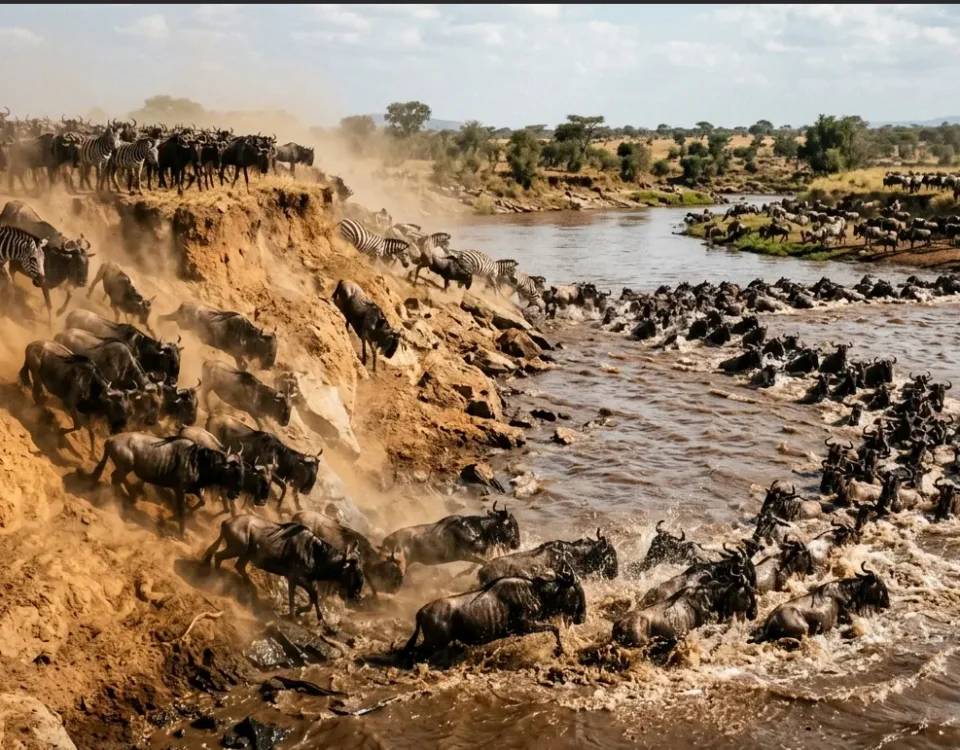
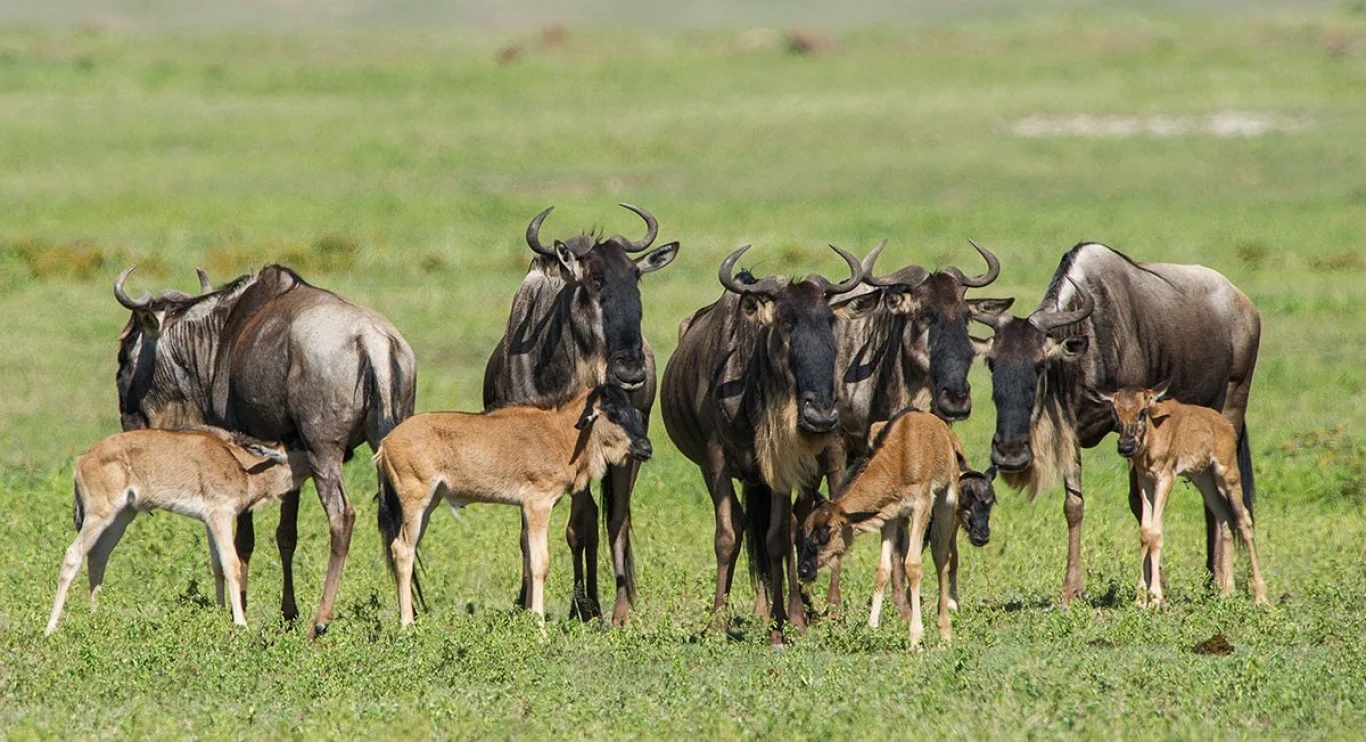
The Best Places to See Calving Wildebeest in Ndutu provide an unforgettable opportunity to witness the Great Migration during one of its most important seasonal stages. From newborn calves learning to stand to the movement of large herds across green plains, Ndutu presents a compelling story of wildlife, survival, and adaptation. Its changing landscapes and rich animal life make it a rewarding choice for wildlife photographers, families, nature enthusiasts, and travellers seeking authentic Tanzania Adventures. With suitable travel dates, a knowledgeable guide, and enough time to explore different areas, visitors can develop a deeper appreciation of the Serengeti–Ngorongoro ecosystem. Terenga Africa Safaris & Travel Ltd can help you plan a tailor-made safari around your interests, budget, and accommodation preferences.
Start planning your Tanzania safari: visit www.terengasafaris.com to enquire about a Ndutu calving-season experience.