Why Every Serengeti Migration Safari Is Different?
September 24, 2026
How Good Rainfall Creates New Migration Opportunities?
September 25, 2026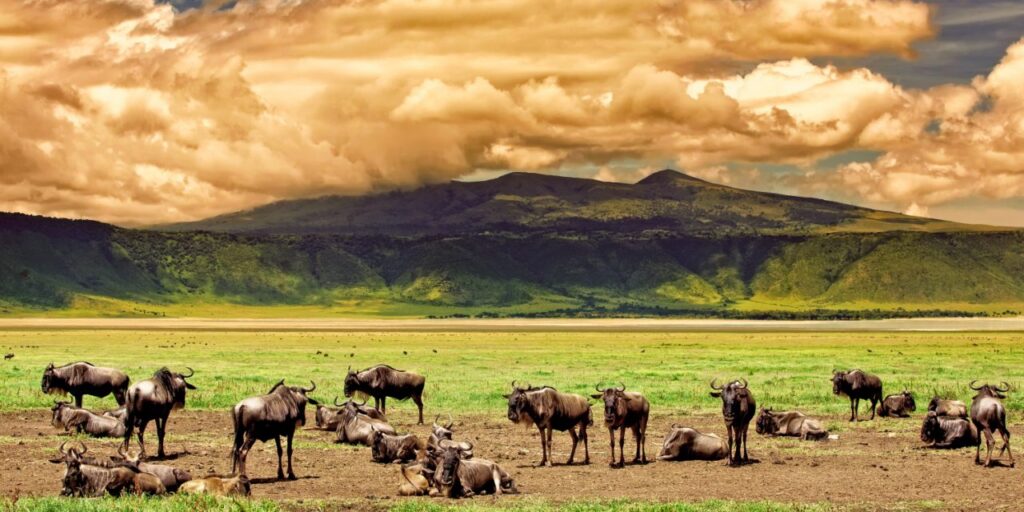
How Drought Can Change the Wildebeest Migration Route?
The Great Wildebeest Migration remains one of Africa’s most remarkable wildlife spectacles. Every year, enormous herds move through the Serengeti-Mara ecosystem. Their movements connect Tanzania and Kenya across a vast natural landscape. However, the journey does not follow a perfectly fixed calendar or route.
Rainfall, fresh grass, water availability, and environmental conditions influence the animals’ movements. Therefore, How Drought Can Change the Wildebeest Migration Route remains an important question for safari travelers. Understanding this process helps visitors plan more realistic Tanzania safaris.
The Serengeti ecosystem receives seasonal rainfall that influences grass growth and water availability. Migrating wildebeest respond strongly to these changing resources. Scientific research shows that migratory grazers can adjust their movements according to rainfall patterns.
Consequently, drought can influence where herds gather, how quickly they travel, and which areas they use. The effect does not always mean a completely different migration route. Instead, herds can alter their timing, concentration, and movement patterns.
For travelers planning Tanzania wildlife safaris, this distinction matters greatly. Wildlife migration remains a natural process rather than a scheduled event. At Terenga Africa Safaris, we recommend flexible planning around seasonal conditions.
Why Rainfall Controls the Wildebeest Migration
Fresh Grass Drives Seasonal Movement
Wildebeest depend heavily on grass for food and nutrition. Fresh rainfall stimulates vegetation growth across different parts of the Serengeti-Mara ecosystem. Consequently, herds move toward areas offering better grazing opportunities.
Research on the Serengeti shows that migratory herbivores respond closely to rainfall and vegetation conditions.
During favorable seasons, nutritious grass can support large concentrations of wildebeest. The herds may therefore remain longer within productive grazing areas. When those resources decline, movement becomes increasingly necessary.
Drought changes this balance. Extended dry conditions can reduce grass availability across traditional grazing grounds. Water sources may also become increasingly important as surface water decreases.
This relationship explains why How Drought Can Change the Wildebeest Migration Route matters to safari planning. The animals follow ecological opportunities rather than human travel calendars.
How Drought Can Change the Wildebeest Migration Route
Herds May Leave Traditional Areas Earlier
A prolonged drought can reduce forage quality before the expected seasonal transition. When this happens, wildebeest may begin moving earlier toward areas with better resources.
The timing can therefore differ from one year to another. A herd might leave a familiar grazing zone sooner than travelers expect.
Satellite research has documented considerable variation in wildebeest distribution during different months. Herd concentrations can change significantly between July and October.
This natural variation explains why experienced safari operators avoid promising exact wildlife locations months ahead.
Instead, professional Tanzania wildlife tour planning considers seasonal patterns alongside current field conditions. Guides then adapt daily game drives according to animal movements.
Drought Can Change Herd Concentrations
Drought does not necessarily redirect every wildebeest. Instead, it can concentrate animals around remaining productive areas.
Water availability becomes particularly important during prolonged dry periods. Remaining rivers, wetlands, and green grazing areas can attract large numbers of animals.
The Mara River plays an important role within the northern migration ecosystem. Tanzania National Parks identifies the river as an important dry-season water source.
Consequently, drought can increase the ecological importance of permanent water sources. Herds may spend more time around areas that retain water and usable grazing.

10-Day Tarangire, Serengeti to Ndutu Migration & Ngorongoro
Drought Can Influence the Timing of River Crossings
The Mara River Remains Important
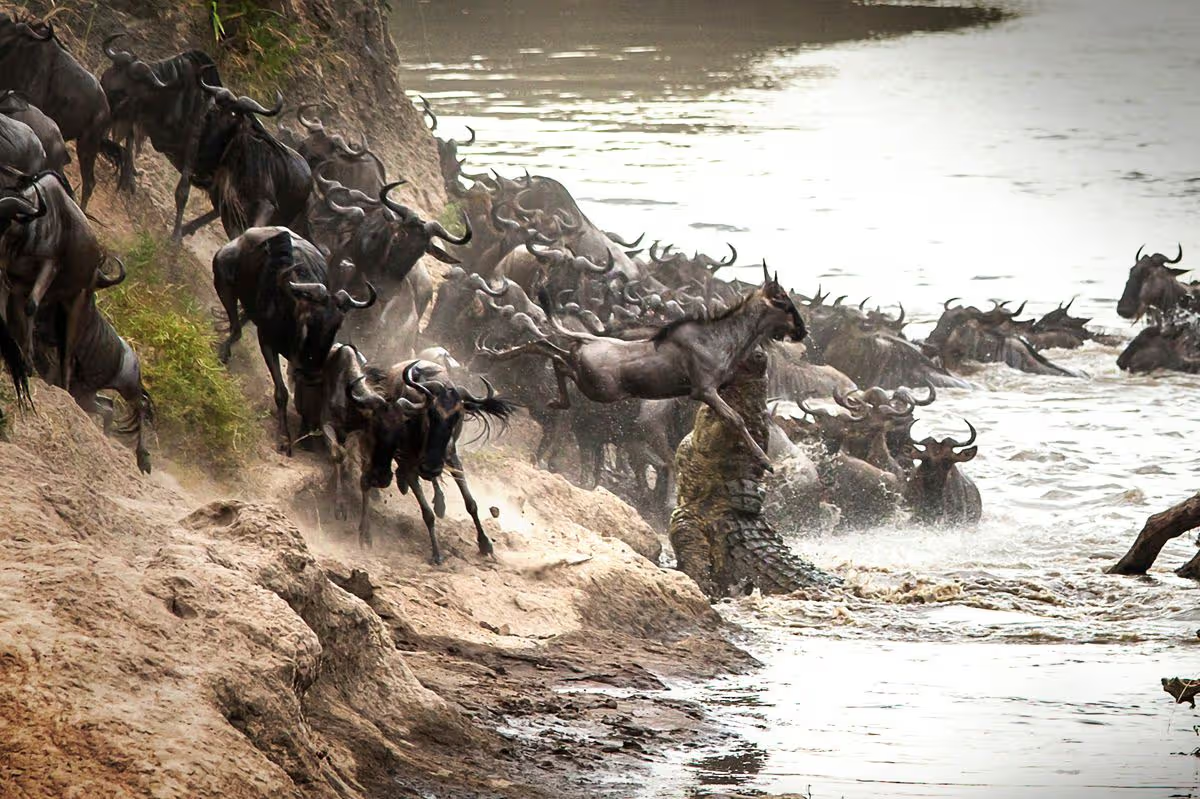
River crossings form one of the most famous experiences during Tanzania adventure safaris. However, wildebeest do not cross simply because a particular month has arrived.
Water, grass, herd location, weather, and animal movement all influence crossing behavior.
Scientific satellite observations show changing wildebeest concentrations around the Mara River during the dry season.
Drought can create additional pressure around remaining water sources. However, the timing and location of crossings remain unpredictable.
Therefore, travelers should avoid treating the migration as a fixed performance. Nature determines the schedule.
Why Crossing Predictions Remain Difficult
A herd can approach a river and retreat several times. Animals may also move along the river before selecting another crossing point.
This behavior creates uncertainty for visitors hoping to witness crossings. Skilled guides improve opportunities by monitoring fresh tracks, herd movements, weather, and grazing conditions.
That approach provides a more responsible way to experience Tanzania wildlife safaris. It respects natural behavior while improving the visitor experience.
Drought Does Not Always Mean a Completely Different Route
Migration Is Flexible
One important fact about How Drought Can Change the Wildebeest Migration Route involves understanding ecological flexibility.
The migration follows broad seasonal patterns. However, individual movements can vary within that larger cycle.
Research shows that wildebeest travel across extensive areas between the Serengeti and Maasai Mara.
Therefore, drought can modify the route without completely replacing the traditional migration system.
Herds can move toward alternative grazing areas within the broader ecosystem. They may also change their speed and concentration.
This flexibility helps migrating animals respond to changing environmental conditions.
How Drought Affects Wildebeest Nutrition
Grass Quality Matters
Not every green area provides identical nutritional value. Young grass can offer important nutrients for grazing animals.
The southern Serengeti contains nutrient-rich short-grass plains. Tanzania National Parks highlights these plains as important calving grounds.
Drought can reduce the availability of high-quality forage. As a result, wildebeest may travel farther to locate suitable grazing.
Longer journeys require more energy. Water-dependent wildebeest can also experience greater nutritional pressure during dry conditions.
Research on drought-stressed wildebeest shows increased travel distances when water becomes scarce.
These findings demonstrate why drought can affect both movement and animal condition.
What Drought Means for Predators
Lions Follow the Prey
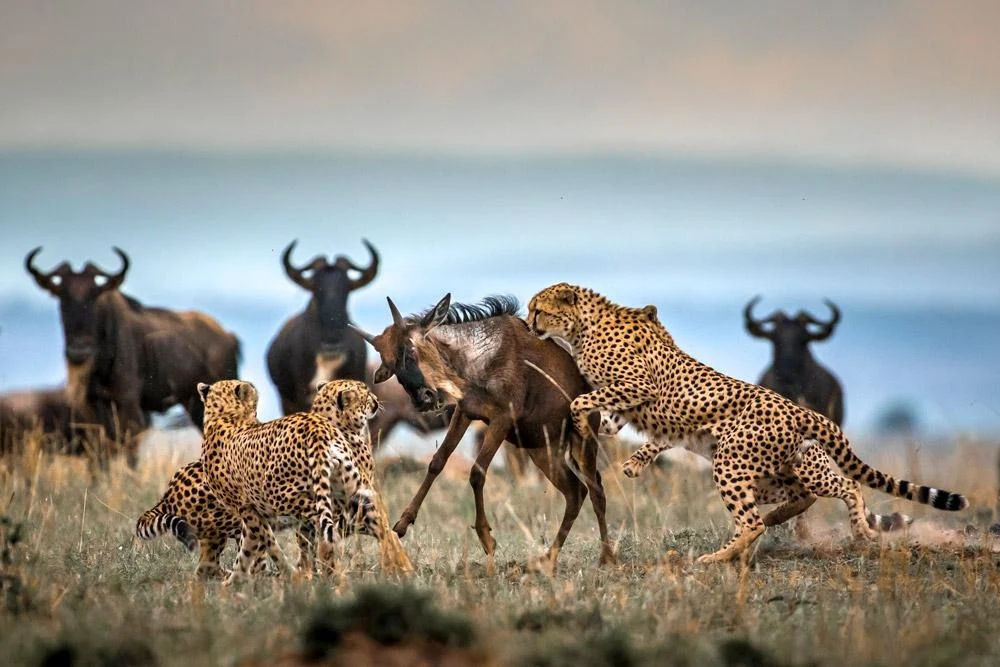
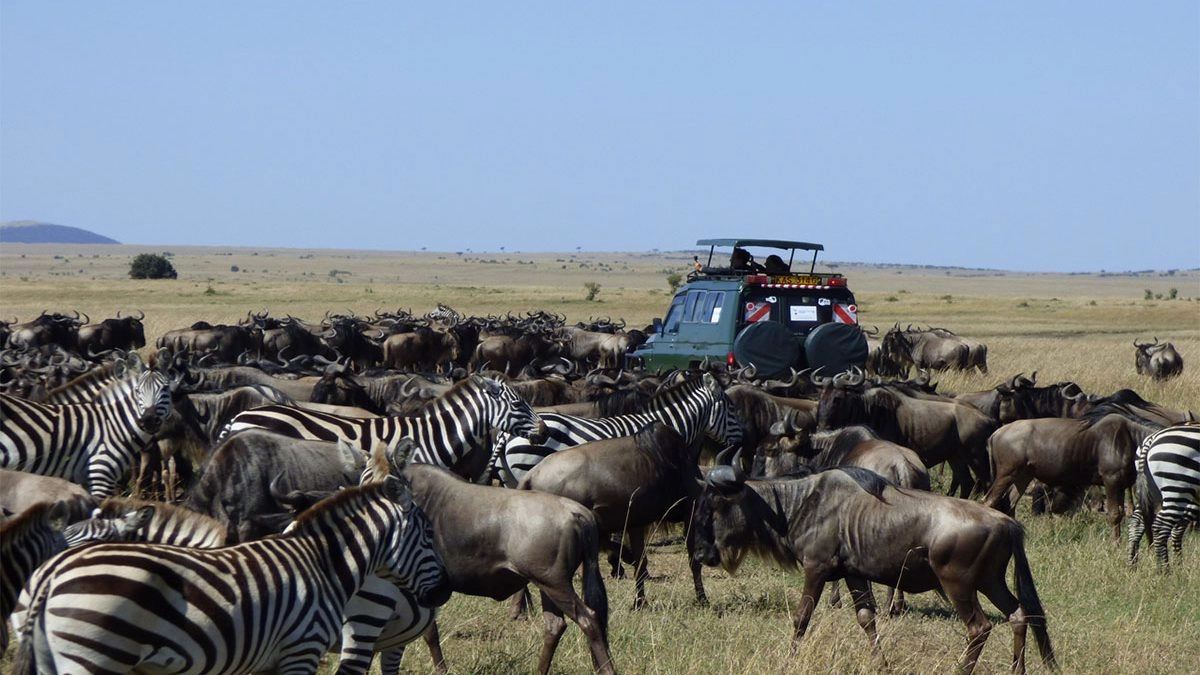
Wildebeest support a large predator community across the Serengeti-Mara ecosystem. Lions, cheetahs, hyenas, crocodiles, and other predators benefit from seasonal prey concentrations.
When wildebeest distribution changes, predator opportunities can also change. Lions may encounter larger prey concentrations in particular grazing areas.
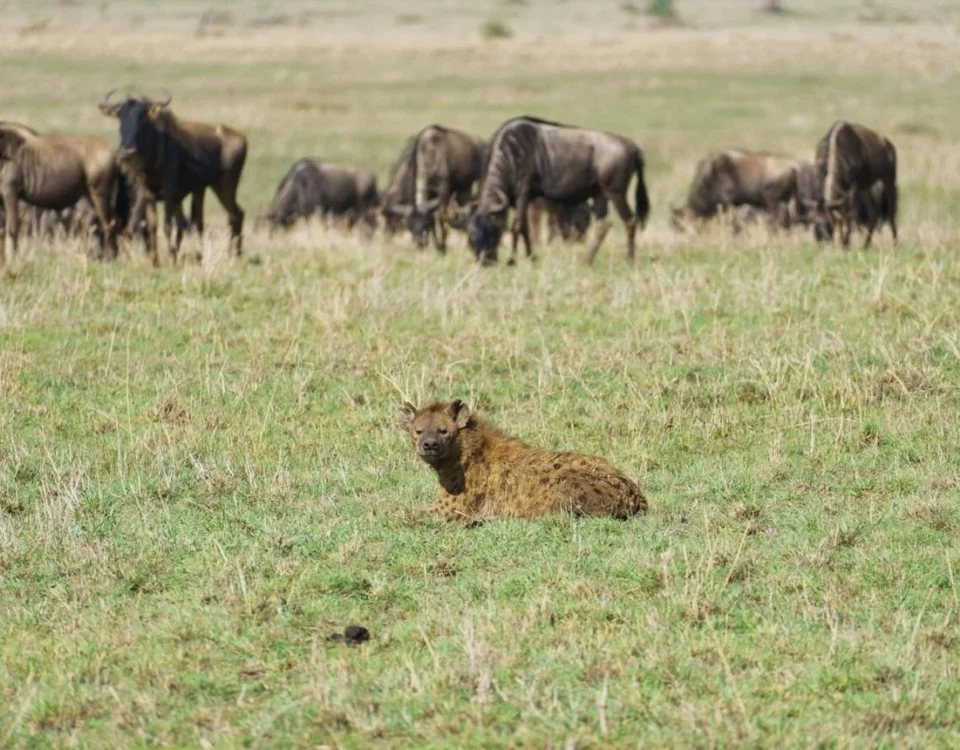
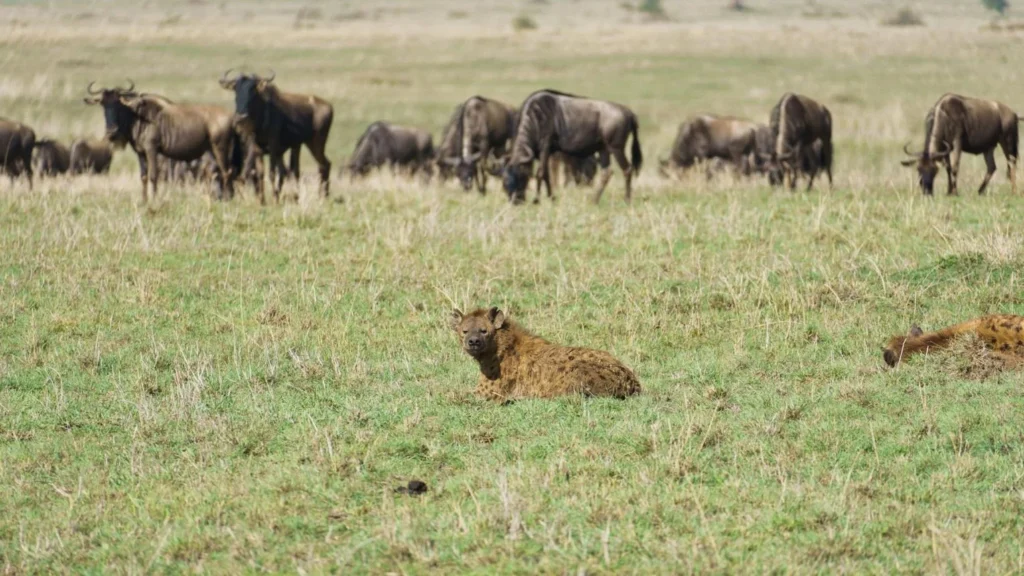
Hyenas can similarly adjust their movements according to prey availability.
Therefore, How Drought Can Change the Wildebeest Migration Route also explains changes in predator sightings.
Safari travelers should remember that wildlife distribution changes continuously. A particular area can produce excellent sightings one week and different sightings later.
How Drought Can Change the Wildebeest Migration Route for Safari Planning
Flexible Safari Planning
Planning Tanzania safaris around the migration requires realistic expectations. Fixed dates cannot guarantee a specific herd location.
Instead, travelers should select seasons based on their preferred experiences. They can then allow guides to adapt activities according to field conditions.
A knowledgeable safari company can monitor regional conditions before and during the journey. This approach improves decision-making without promising unpredictable wildlife events.
At Terenga Africa Safaris, we view safari planning as a combination of research, local knowledge, logistics, and flexibility.
That principle supports reliable Tanzania wildlife tour experiences throughout the year.
6-Day Private Mara River Crossing Migration
Cultural Experiences Near Serengeti Safari Lodges
Maasai Cultural Experiences
A Serengeti safari can include meaningful cultural experiences beyond wildlife viewing. Travelers can visit Maasai communities located around parts of the wider Serengeti ecosystem.
These experiences may include traditional dancing, beadwork demonstrations, livestock-based traditions, and community visits.
Visitors can also learn about traditional pastoral lifestyles and relationships with the surrounding landscape.
Responsible cultural tourism should prioritize respect, consent, fair payment, and community participation.
Such experiences add depth to Tanzania adventure safaris. They also help travelers understand the people and traditions connected to the wider safari landscape.
Local Craft and Beadwork
Beadwork provides another cultural experience around several safari areas. Visitors can purchase locally produced crafts directly through appropriate community tourism initiatives.
These purchases can provide an additional source of income for participating communities.
Travelers should seek genuine community-based experiences rather than staged encounters. A responsible safari operator can help arrange appropriate visits.
Why Responsible Tourism Matters During Drought
Supporting Conservation
Drought can place additional pressure on wildlife and ecosystems. Sustainable tourism therefore becomes increasingly important.
Tourism contributes to conservation through park fees, employment, accommodation, guiding, transport, and community initiatives.
Protecting connected habitats also matters for migratory wildlife. Research highlights the importance of maintaining open migration corridors between the Serengeti and Mara ecosystems.
Human-made barriers can restrict wildlife movement. Fences, habitat fragmentation, and blocked water access can create additional challenges.
Consequently, responsible tourism should support conservation policies that protect ecological connectivity.
How Travelers Can Prepare for Changing Migration Routes
Choose Flexible Dates
Travelers should understand that migration timing changes naturally. Flexible travel dates can provide more opportunities for adapting the itinerary.
Work With Experienced Guides
Professional guides understand seasonal wildlife patterns and local environmental conditions. Their knowledge helps visitors adjust game-drive locations when herds move.
Consider Different Safari Areas
A well-designed itinerary can include several ecosystems. Serengeti, Ngorongoro, Tarangire, and other northern Tanzania destinations offer different wildlife experiences.
This approach reduces dependence on seeing one particular migration event.
How Drought Can Change the Wildebeest Migration Route: Key Takeaways
Understanding How Drought Can Change the Wildebeest Migration Route makes Tanzania safari planning more realistic.
Drought can reduce grass availability and affect water sources. Herds may then move earlier or concentrate around remaining resources.
Migration routes can shift within the broader Serengeti-Mara ecosystem. However, drought does not automatically create an entirely new migration route.
Rainfall remains one of the major environmental influences behind seasonal wildlife movement.
For this reason, How Drought Can Change the Wildebeest Migration Route should remain an important consideration for every migration-focused safari.
Great Migration
Safari Inclusions
- Private safari vehicle
- Professional English-speaking safari guide
- Park entry fees
- Game drives
- Accommodation
- Meals as specified
- Drinking water during game drives
- Airport transfers
- Cultural experience
- Government taxes
- Safari planning services
Safari Exclusions
- International flights
- Visa fees
- Travel insurance
- Personal expenses
- Alcoholic drinks
- Laundry services
- Tips
- Optional activities
- Personal shopping
- Medical expenses
- Additional accommodation
How Drought Can Change the Wildebeest Migration Route: Plan With Experts
How Drought Can Change the Wildebeest Migration Route demonstrates the dynamic nature of African wildlife.
The Great Migration remains a living ecological process. Rainfall, grass, water, temperature, and environmental conditions constantly influence animal movements.
Therefore, travelers should approach migration safaris with flexibility and realistic expectations.
A strong safari experience combines professional planning with respect for nature’s unpredictability. It also creates opportunities to discover wildlife, landscapes, communities, and cultures beyond the migration itself.
At Terenga Africa Safaris, our goal is to connect travelers with authentic African experiences. Our Tanzania safaris combine wildlife knowledge, practical planning, cultural experiences, and responsible tourism.
Whether you seek a Tanzania wildlife safari, a dedicated migration journey, or a wider Tanzania adventure safari, informed planning matters.
Most importantly, How Drought Can Change the Wildebeest Migration Route reminds us that wildlife does not follow a human timetable.
Best Trending Tanzania Safari Holidays for 2027/2028
- 12-Day Tanzania Wildlife Safari
- 10-Day Tanzania Wildlife Safari & Zanzibar
- 10-Day Best Tanzania Honeymoon Luxury Safari and Zanzibar Beach Getaway
- 9-Day Ultimate Tanzania Wildlife Safari
- 9-Day Tanzania Adventure Safari
- 8-Day Tanzania Mid-Range Safari
- 8-Day Tanzania Northern Circuit Safari
- 7-Day Tanzania Wildlife Safari
- 7-Day Tanzania Wildlife Wonders Experience Tour
- 6-Day Majestic Tanzania Wildlife Luxury Safari
- 5-Day Kenya Wildlife Budget Safari
- 13-Day Tanzania Wildlife Tour & Zanzibar Beach Holiday
- 12-Day Tanzania Wildlife Safari Itinerary
- 11-Day Tanzania & Zanzibar Safari Adventure
- 11 Days Magical Kenya and Tanzania Safari
- 4-Day Tanzania Safari Extension Itinerary
- 5-Day Tanzania Safari Extension
- 9-Day Tanzania Wildlife Safari Adventure
- 7 Days Tanzania Safari Holiday
- 8 Days Tanzania Safari Holiday Itinerary