Where Is the Great Migration in February?
October 16, 2026
The Best Time to See Wildebeest Calving in Serengeti
October 19, 2026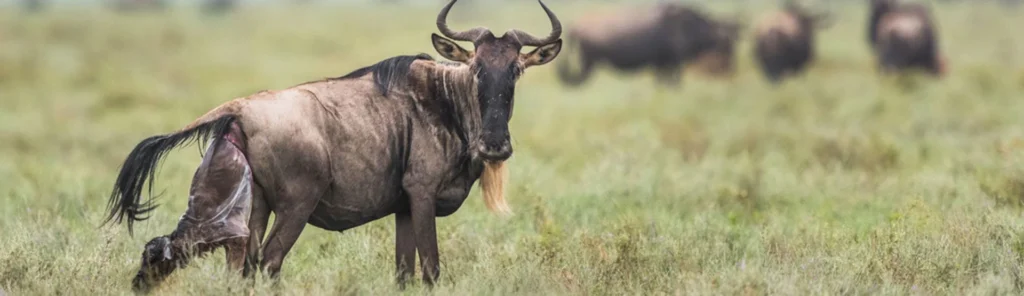
Why Wildebeest Give Birth in the Southern Serengeti: A Complete Guide to Tanzania’s Great Migration
Why Wildebeest Give Birth in the Southern Serengeti is one of the most fascinating stories in African wildlife ecology. Every year, hundreds of thousands of wildebeest gather across the southern Serengeti plains and the adjoining Ndutu region. This remarkable natural event forms a vital stage of the Great Migration, one of the world’s most extraordinary wildlife movements. For travelers planning Tanzania Tours, the calving season offers an opportunity to witness newborn animals, dramatic predator encounters, and the remarkable survival instincts that sustain Africa’s wilderness.
Unlike many wildlife events that depend on chance sightings, wildebeest calving follows a recognizable seasonal pattern. Rainfall, fresh grass, soil fertility, and the nutritional needs of pregnant females influence where the herds gather. Southern Tanzania’s open grasslands provide favorable conditions when seasonal rains encourage new vegetation. Consequently, the region becomes a natural nursery where mothers can feed while their calves develop strength. These environmental advantages help explain why wildebeest return to these plains during a critical period of their reproductive cycle.
For international visitors, understanding Why Wildebeest Give Birth in the Southern Serengeti adds meaning to a Tanzania Safari. The experience involves much more than photographing newborn calves. It reveals the relationship between climate, plant growth, animal migration, reproduction, and predator behavior. Terenga Africa Safaris & Travel Ltd helps travelers appreciate these connections through carefully planned Tanzania Adventures that combine wildlife observation, knowledgeable guiding, and respect for the natural environment. Whether you are a first-time safari visitor, a wildlife photographer, or a nature enthusiast, the calving season offers an unforgettable perspective on the rhythms of the African plains.
How Does Fresh Grass Influence Wildebeest Calving?
The main explanation for Why Wildebeest Give Birth in the Southern Serengeti lies in the availability of nutritious grass. Seasonal rainfall transforms the short-grass plains into productive feeding grounds, providing pregnant females with essential nutrients. These grasses grow across areas influenced by volcanic materials and nutrient-rich soils, particularly around the southern Serengeti and Ndutu region. Although soil fertility varies across the wider landscape, these grasslands can produce valuable forage during the rainy season.
Pregnancy places considerable nutritional demands on a wildebeest cow. She must support the developing calf while maintaining enough energy for movement, feeding, and eventual nursing. Access to fresh vegetation helps females maintain their condition before giving birth. After delivery, mothers also need sufficient nourishment to produce milk and recover from the physical demands of calving. Therefore, seasonal grass growth supports both maternal health and the early development of newborn calves.
Furthermore, the concentration of food encourages large herds to remain within suitable grazing areas. Rather than spreading evenly across the ecosystem, wildebeest gather where conditions meet their immediate needs. This seasonal concentration creates one of the defining spectacles of Tanzania Safaris: vast herds stretching across open plains beneath expansive African skies.
However, rainfall and grass growth do not operate independently. The timing and distribution of seasonal showers influence where the best grazing develops. As a result, the herds may shift between different parts of the southern Serengeti ecosystem. Travelers exploring Why Wildebeest Give Birth in the Southern Serengeti should understand that the migration follows changing environmental conditions rather than a fixed timetable. Experienced safari guides use current wildlife movements and local conditions to improve opportunities for meaningful sightings.
Why Do Wildebeest Give Birth at Nearly the Same Time?
Another important factor behind Why Wildebeest Give Birth in the Southern Serengeti is synchronized reproduction. Many wildebeest females give birth within a relatively short period, creating an impressive concentration of newborn calves across the plains. This pattern develops through seasonal breeding and the species’ reproductive cycle. Wildebeest pregnancy lasts approximately eight and a half months, allowing births to cluster around favorable environmental conditions.
Such synchronization offers several advantages. When many calves arrive within a short period, predators encounter an abundance of vulnerable young animals. Individual calves still face serious risks, but the large number of births can make it difficult for predators to capture every newborn. This effect is sometimes described as predator satiation, although its benefits vary according to predator numbers, hunting opportunities, and environmental conditions.
Meanwhile, the concentration of births helps wildlife researchers observe important stages of animal development within a relatively compact period. Visitors may witness females giving birth, calves attempting their first steps, and young animals staying close to their mothers. These moments demonstrate how quickly wildebeest must adapt to life on the open plains.
Nevertheless, synchronized calving does not mean every female gives birth on the same day or in precisely the same location. Some calves arrive earlier or later, and rainfall can influence the distribution of herds. Understanding Why Wildebeest Give Birth in the Southern Serengeti therefore requires looking at the wider seasonal cycle rather than expecting a single dramatic moment. For travelers booking Tanzania Tours, the greatest reward often comes from spending enough time in the region to observe different stages of this natural process.
What Makes the Southern Serengeti and Ndutu Ideal Calving Grounds?
The geography of the southern Serengeti helps explain Why Wildebeest Give Birth in the Southern Serengeti year after year. Broad grasslands, seasonal water sources, and productive grazing areas create favorable conditions for large herbivore populations. The Ndutu region, which extends across the Serengeti ecosystem toward the Ngorongoro Conservation Area, forms an important part of this seasonal landscape.
Open terrain allows wildebeest to locate grazing opportunities while remaining alert to potential threats. Although predators can approach from several directions, visibility across short-grass plains may help adult animals detect approaching danger. Herd members also benefit from numbers, as many eyes and ears can help identify threats. Nevertheless, open landscapes do not guarantee safety, and young calves remain vulnerable during their first weeks of life.
Seasonal water availability also matters. Wildebeest need regular access to water, particularly when temperatures rise and herds spend long periods feeding. Rainfall can replenish temporary pools and improve pasture conditions, although water availability changes throughout the season. These combined resources help make the southern plains an important destination during the migration’s calving phase.
Beyond its ecological importance, the region offers outstanding opportunities for wildlife observation. Visitors may encounter wildebeest, zebras, gazelles, lions, cheetahs, hyenas, and numerous bird species. The presence of different herbivores and carnivores reveals the interconnected nature of the ecosystem. For travelers interested in Why Wildebeest Give Birth in the Southern Serengeti, the Ndutu area provides an excellent setting to explore how habitat, food, water, and wildlife behavior influence one another.
What Happens to Newborn Calves During the Calving Season?
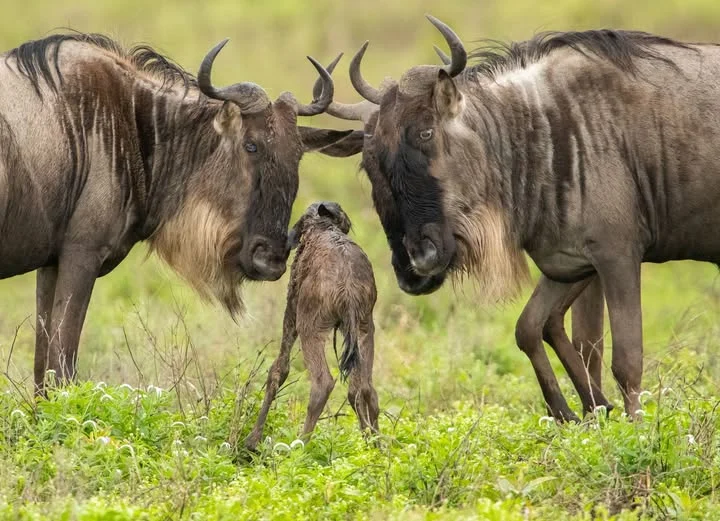
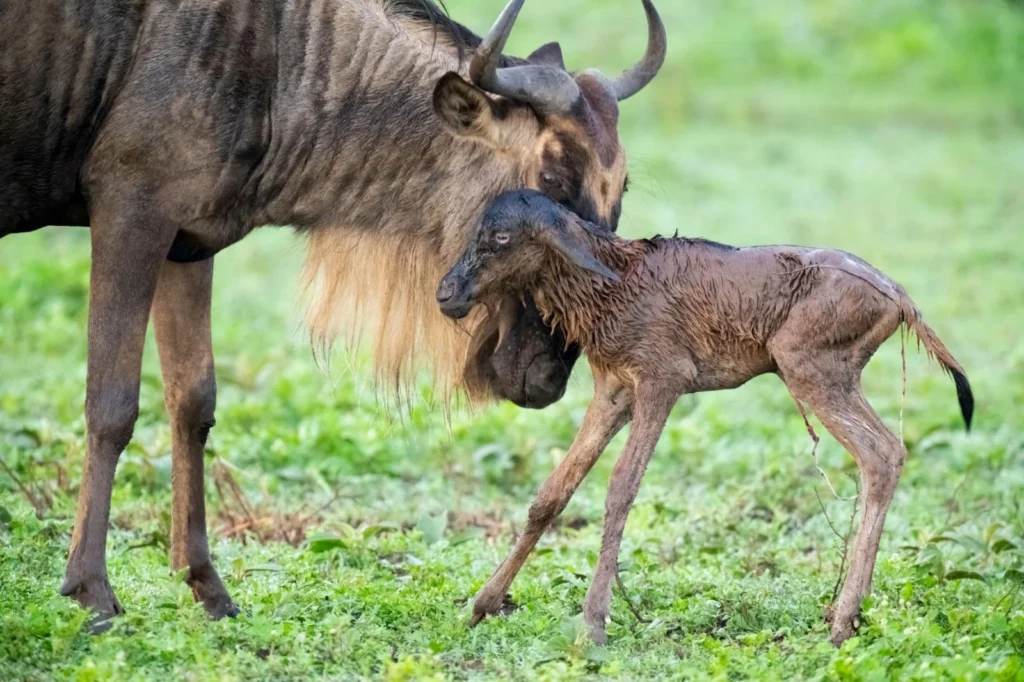
Understanding Why Wildebeest Give Birth in the Southern Serengeti becomes even more meaningful when visitors learn about the first hours of a calf’s life. Newborn wildebeest must adapt quickly because the open plains expose them to predators and changing weather. In many cases, a healthy calf attempts to stand within minutes after birth. Soon afterward, it begins moving alongside its mother, although individual development varies.
This rapid development is essential for survival. A calf that can stand and move effectively has a better chance of keeping up with the herd. Mothers remain attentive, encouraging their young to follow while providing milk and protection. The bond between mother and calf is especially important during the early stages, when the young animal depends heavily on maternal care.
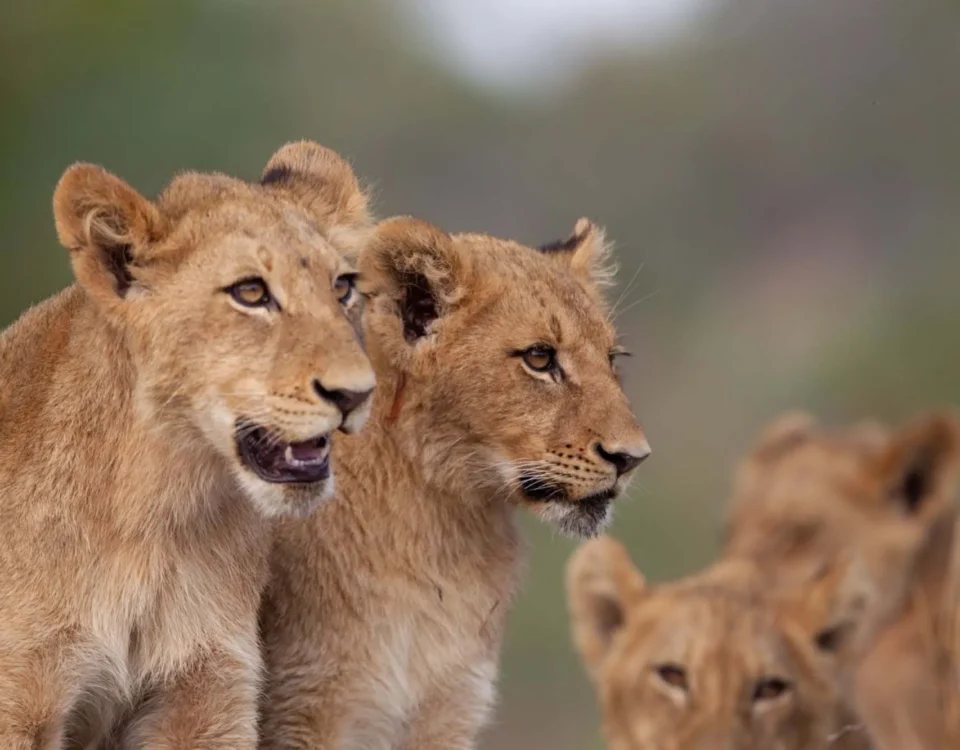
Predators create one of the season’s most dramatic ecological challenges. Lions, cheetahs, spotted hyenas, and other carnivores may target newborn wildebeest because young animals are less experienced and physically vulnerable. Predation is a natural part of the ecosystem, helping transfer energy through the food chain. However, not every predator encounter ends in a successful hunt, and many calves survive to join the moving herds.
During Tanzania Safaris, visitors may witness hunting behavior, defensive herd movements, or mothers guiding their calves across the grasslands. Such encounters can be emotionally powerful, but wildlife viewing should always remain respectful. Guides should maintain appropriate distances, avoid obstructing animal movements, and follow park regulations. Learning Why Wildebeest Give Birth in the Southern Serengeti encourages travelers to appreciate both the beauty and the harsh realities of wildlife survival without disturbing the animals.

What Can Travelers Expect During a Southern Serengeti Calving Safari?
A safari focused on Why Wildebeest Give Birth in the Southern Serengeti offers a different experience from a conventional wildlife trip centered only on the Big Five. The calving season combines large herbivore gatherings, intimate animal behavior, impressive landscapes, and unpredictable predator activity. Every day brings different possibilities because wildlife moves according to food availability, weather, and interactions between species.
Morning game drives often provide favorable opportunities to observe wildlife while temperatures remain relatively cool. During these excursions, travelers may see large wildebeest herds grazing across the plains, newborn calves staying close to their mothers, or predators moving through the grass. Afternoon drives can reveal different behavior as animals feed, rest, and respond to changing temperatures. Your guide can adjust the route according to recent sightings and the conditions on the ground.
Photography enthusiasts may appreciate the open horizons, dramatic skies, and opportunities to capture animal behavior. Wildlife photographers should bring suitable camera equipment, remain patient, and respect park rules. Meanwhile, birdwatchers can look for resident and seasonal bird species around grasslands, wetlands, and other habitats. The diversity of wildlife makes the calving season rewarding even when a particular predator encounter does not occur.
Through thoughtfully planned Tanzania Adventures, Terenga Africa Safaris & Travel Ltd can help travelers select suitable accommodation, arrange experienced guiding, and build a realistic itinerary around the southern Serengeti ecosystem. Nevertheless, wildlife sightings can never be guaranteed. A responsible safari focuses on understanding nature rather than expecting animals to perform on demand. For visitors exploring Why Wildebeest Give Birth in the Southern Serengeti, this approach creates a richer, more authentic experience.
When Is the Best Time to Witness Wildebeest Calving?
The best period for exploring Why Wildebeest Give Birth in the Southern Serengeti generally falls between December and March, when seasonal rains support fresh grazing across the southern plains. Calving often reaches its peak during late January and February, although exact timing varies with rainfall and herd movements. The Ndutu region is especially popular during this period because large concentrations of wildebeest frequently gather there.
January and February are particularly attractive for travelers hoping to see newborn calves and active predator populations. However, no two seasons unfold exactly alike. Some years bring earlier rainfall, while others experience delays or uneven precipitation. These differences can shift the location and density of the herds, making flexible planning valuable.
December can offer the beginning of the calving period, alongside green landscapes and growing wildlife concentrations. March may still provide excellent opportunities, depending on the season, although herds can begin moving toward other grazing areas as conditions change. Visitors should avoid assuming that every part of the southern Serengeti will contain the same number of animals throughout these months.
When planning Tanzania Tours, travelers should consider their preferred dates, budget, photography interests, and accommodation choices. Booking early is advisable for popular calving-season periods, particularly when seeking specific camps or lodges near productive wildlife areas. Before departure, request updated guidance about expected herd locations. A well-informed plan gives you a stronger chance of experiencing Why Wildebeest Give Birth in the Southern Serengeti at a rewarding time, while allowing room for the natural unpredictability that makes African safaris special.
Why Choose Terenga Africa Safaris & Travel Ltd for This Safari?
Choosing the right safari operator can make a significant difference when exploring Why Wildebeest Give Birth in the Southern Serengeti. Wildlife movements are seasonal, distances between destinations can be considerable, and successful game viewing depends on thoughtful planning. Travelers benefit from an itinerary that considers travel time, accommodation location, guiding quality, personal interests, and realistic expectations.
Terenga Africa Safaris & Travel Ltd helps travelers explore Tanzania through safari experiences designed around wildlife, scenery, and meaningful encounters with nature. Our approach emphasizes clear communication, practical itinerary planning, and attention to each guest’s travel priorities. Whether you are visiting Tanzania for the first time or returning to experience the Great Migration again, the itinerary should reflect your available time, comfort preferences, and interests.
For a calving-season safari, accommodation location deserves particular attention. Staying within a suitable distance of the southern plains can reduce unnecessary driving and provide more time for wildlife observation. Flexible game-drive planning also helps guides respond to recent sightings and changing conditions. Guests should receive clear information about inclusions, exclusions, park fees, transport arrangements, accommodation standards, and any additional costs before confirming a trip.
Our wider Tanzania Safaris can also combine the Serengeti with destinations such as the Ngorongoro Conservation Area or Tarangire National Park, depending on the itinerary and season. Travelers with additional time may consider extending their journey to Zanzibar for beaches and cultural experiences. Every extension should account for travel distances and the time needed to enjoy each destination properly.
Above all, Why Wildebeest Give Birth in the Southern Serengeti is a story of nature, not a scripted attraction. We encourage responsible wildlife viewing, realistic expectations, and appreciation for Tanzania’s remarkable ecosystems. Our goal is to help guests discover Africa with comfort, knowledgeable support, and a deeper understanding of the places they visit.
Where Is the Great Migration in February
What Should You Pack for a Wildebeest Calving Safari?
Preparing well for Why Wildebeest Give Birth in the Southern Serengeti helps you remain comfortable during game drives and changing weather conditions. The calving season overlaps with the region’s rainy period, so travelers should prepare for sunshine, cool mornings, dust, and occasional showers. Lightweight clothing that dries quickly can be useful, while neutral colors help you blend into the safari environment without distracting wildlife.
Consider packing the following essentials:
- Clothing: Lightweight shirts, long trousers, a warm layer for early mornings, and a waterproof jacket.
- Footwear: Comfortable walking shoes for camp use and any permitted guided activities.
- Sun protection: A wide-brimmed hat, sunglasses, and high-SPF sunscreen.
- Photography equipment: A camera, suitable telephoto lens, spare batteries, memory cards, and protective equipment for wet or dusty conditions.
- Personal essentials: Insect repellent, personal medication, toiletries, and any recommended travel health supplies.
- Practical accessories: Binoculars, a reusable water bottle, a small day bag, and a flashlight or headlamp where appropriate.
- Travel documents: Passport, required visas, travel insurance details, and copies of essential booking information.
Travelers should also confirm baggage limits with their safari operator and airline, especially when using small aircraft. Soft-sided luggage may be required for certain safari flights. Before departure, discuss any specific health precautions with a qualified travel-health professional.
Finally, keep your expectations flexible. Why Wildebeest Give Birth in the Southern Serengeti is an extraordinary natural event, but rain, wildlife movement, and animal behavior remain beyond human control. Packing thoughtfully allows you to focus on the experience rather than the inconveniences of changing conditions.
Conclusion: Why Is Wildebeest Calving a Must-See Tanzania Adventure?
Ultimately, Why Wildebeest Give Birth in the Southern Serengeti reveals how wildlife reproduction depends on the relationship between rainfall, grassland productivity, maternal nutrition, and survival. The southern plains provide favorable calving grounds when seasonal conditions support fresh grazing, while synchronized births create a remarkable concentration of newborn animals. Predators, herd behavior, and rapid calf development add further depth to this extraordinary ecological event.
For travelers, the experience offers more than impressive photographs. It provides an opportunity to understand the Great Migration as a living system shaped by natural cycles. Observing wildebeest with their newborn calves can inspire a deeper appreciation for Tanzania’s wildlife heritage and the importance of protecting the habitats that sustain it.
With thoughtful preparation and responsible guiding, Tanzania Tours can become rewarding journeys of discovery. Terenga Africa Safaris & Travel Ltd invites travelers from around the world to explore the Serengeti, learn about its remarkable wildlife, and experience the natural wonders that make Tanzania one of Africa’s leading safari destinations.
Best Trending Tanzania Safari Holidays for 2027/2028
- 12-Day Tanzania Wildlife Safari
- 10-Day Tanzania Wildlife Safari & Zanzibar
- 10-Day Best Tanzania Honeymoon Luxury Safari and Zanzibar Beach Getaway
- 9-Day Ultimate Tanzania Wildlife Safari
- 9-Day Tanzania Adventure Safari
- 8-Day Tanzania Mid-Range Safari
- 8-Day Tanzania Northern Circuit Safari
- 7-Day Tanzania Wildlife Safari
- 7-Day Tanzania Wildlife Wonders Experience Tour
- 6-Day Majestic Tanzania Wildlife Luxury Safari
- 5-Day Kenya Wildlife Budget Safari
- 13-Day Tanzania Wildlife Tour & Zanzibar Beach Holiday
- 12-Day Tanzania Wildlife Safari Itinerary
- 11-Day Tanzania & Zanzibar Safari Adventure
- 11 Days Magical Kenya and Tanzania Safari
- 4-Day Tanzania Safari Extension Itinerary
- 5-Day Tanzania Safari Extension
- 9-Day Tanzania Wildlife Safari Adventure
- 7 Days Tanzania Safari Holiday
- 8 Days Tanzania Safari Holiday Itinerary