How Many Animals Take Part in the Great Migration?
August 27, 2026
Why the Serengeti Great Migration Is One of Africa’s Greatest Wildlife Events?
August 29, 2026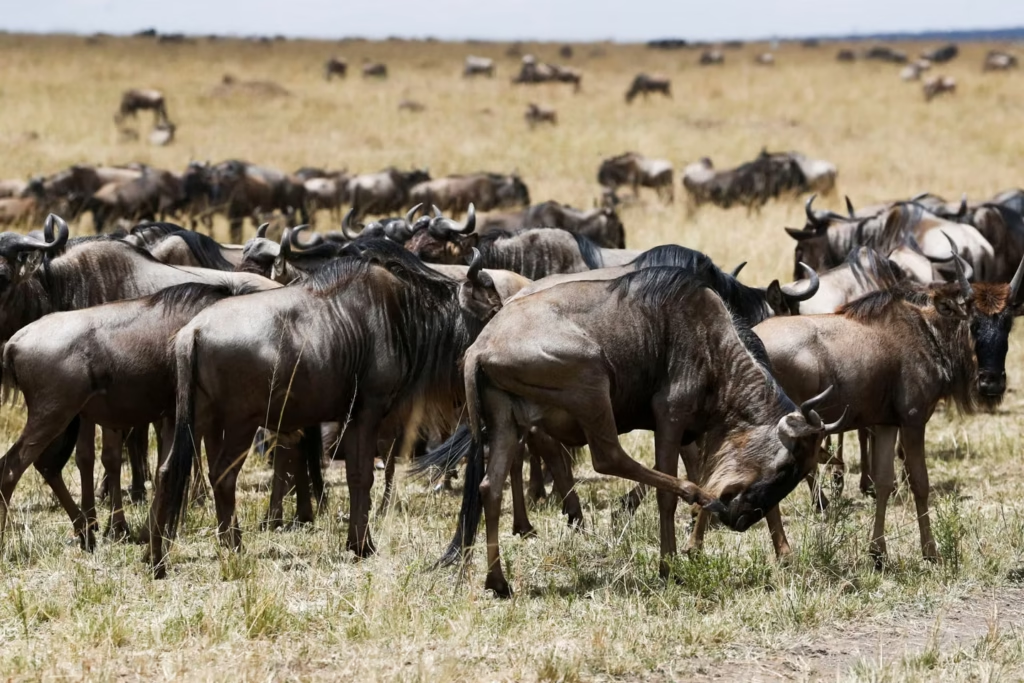
The Difference Between the Serengeti Migration and Other Animal Migrations
The Difference Between the Serengeti Migration and Other Animal Migrations explains why Tanzania’s Great Migration remains one of Earth’s greatest natural spectacles. Animal migration happens across many continents and environments. Birds cross oceans, whales travel between feeding grounds, and caribou move across northern landscapes.
However, the Serengeti Migration offers something remarkably different. Millions of large land animals move through an open ecosystem filled with predators, rivers, grasslands, and changing weather. Travelers can witness this movement directly during carefully planned Tanzania safaris.
The Great Migration mainly involves wildebeest, zebras, and gazelles. These animals follow seasonal rainfall and fresh grazing opportunities across the Serengeti-Mara ecosystem. Their movement creates a constantly changing wildlife spectacle throughout the year.
Furthermore, predators follow the migrating herds. Lions, cheetahs, hyenas, leopards, and crocodiles respond to changing prey concentrations. This creates an extraordinary moving ecosystem rather than a simple journey from one location to another.
The Difference Between the Serengeti Migration and Other Animal Migrations also lies in its accessibility. Safari travelers can observe enormous herds from specialized vehicles while exploring protected wilderness areas.
At Terenga Africa Safaris and Travels Ltd, we help international travelers understand Africa through meaningful wildlife experiences. Our Tanzania wildlife safaris combine destination knowledge, responsible tourism, professional planning, and authentic encounters with nature.
Most Popular Tanzania Safari Holidays for 2027/2028
- 12-Day Tanzania Wildlife Safari
- 10-Day Tanzania Wildlife Safari & Zanzibar
- 10-Day Best Tanzania Honeymoon Luxury Safari and Zanzibar Beach Getaway
- 9-Day Ultimate Tanzania Wildlife Safari
- 9-Day Tanzania Adventure Safari
- 8-Day Tanzania Mid-Range Safari
- 8-Day Tanzania Northern Circuit Safari
- 7-Day Tanzania Wildlife Safari
- 7-Day Tanzania Wildlife Wonders Experience Tour
- 6-Day Majestic Tanzania Wildlife Luxury Safari
- 13-Day Tanzania Wildlife Tour & Zanzibar Beach Holiday
- 12-Day Tanzania Wildlife Safari Itinerary
- 11-Day Tanzania & Zanzibar Safari Adventure
- 11 Days Magical Kenya and Tanzania Safari
- 4-Day Tanzania Safari Extension Itinerary
- 5-Day Tanzania Safari Extension
- 9-Day Tanzania Wildlife Safari Adventure
- 7 Days Tanzania Safari Holiday
- 8 Days Tanzania Safari Holiday Itinerary
The Difference Between the Serengeti Migration and Other Animal Migrations
Understanding Animal Migration
Animal migration describes regular or seasonal movement between different locations. Animals migrate for food, water, breeding opportunities, favorable weather, or survival.
Migration occurs across land, oceans, rivers, and skies. Different species follow completely different migration patterns.
Some birds travel thousands of kilometers between continents. Whales move through oceans between feeding and breeding grounds. Fish migrate through rivers and seas to reproduce.
Land mammals also migrate. Caribou travel across Arctic regions. Elephants can move seasonally between important water and feeding areas.
However, The Difference Between the Serengeti Migration and Other Animal Migrations becomes clear when considering its enormous concentration of large animals.
Few wildlife events bring such huge numbers of mammals together within one connected ecosystem.
The Serengeti Migration combines massive herbivore populations with predators and dramatic landscapes.
Therefore, it creates one of the most complete wildlife experiences available during a Tanzania safari.
The Serengeti Migration: A Massive Land Movement
Millions of Animals on the Move
The Difference Between the Serengeti Migration and Other Animal Migrations begins with the incredible number of participating animals.
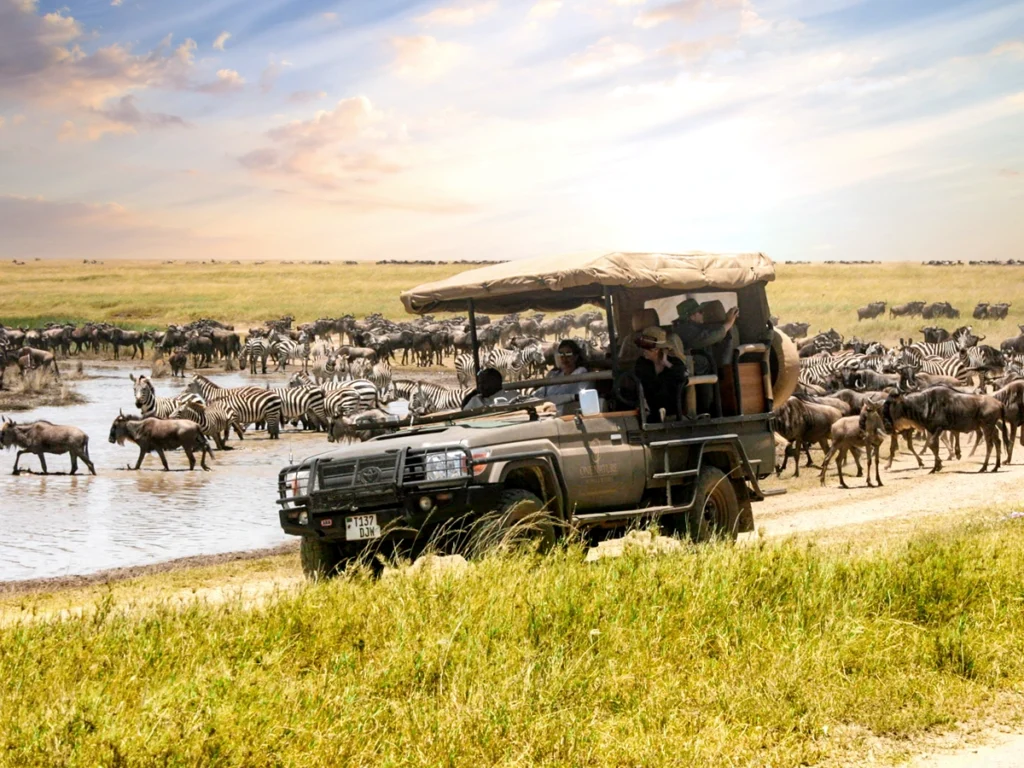
The Great Migration includes approximately 1.3 to 1.5 million wildebeest. Large zebra populations also join the movement.
Hundreds of thousands of gazelles and other grazing animals contribute to the wider ecosystem.
Together, more than two million major grazing animals move through different parts of the Serengeti-Mara ecosystem.
This concentration creates an extraordinary wildlife event.
Unlike many migrations, travelers can see thousands of large mammals across open plains.
The visual scale creates a powerful experience for photographers and wildlife enthusiasts.
A Tanzania wildlife tour can reveal herds stretching toward distant horizons.
Dust rises beneath thousands of hooves. The sounds of moving animals fill the landscape.
These moments explain why the Serengeti remains a leading destination for Tanzania adventure safaris.
A Migration Driven by Rainfall
Following the Green Grass
One major point in The Difference Between the Serengeti Migration and Other Animal Migrations involves rainfall.
The Serengeti herds follow changing patterns of rain and fresh grass.
Rainfall stimulates new vegetation across different areas of the ecosystem. Wildebeest respond by moving toward nutritious grazing grounds.
Their movement does not depend on a calendar date.
Instead, environmental conditions influence the timing and direction of travel.
This makes the Serengeti Migration dynamic and unpredictable.
A Tanzania safari can therefore provide different migration experiences every year.
In comparison, some bird migrations follow more predictable seasonal routes.
The Serengeti herds respond more directly to local rainfall and grass conditions.
Consequently, travelers should remain flexible when planning Tanzania wildlife safaris.
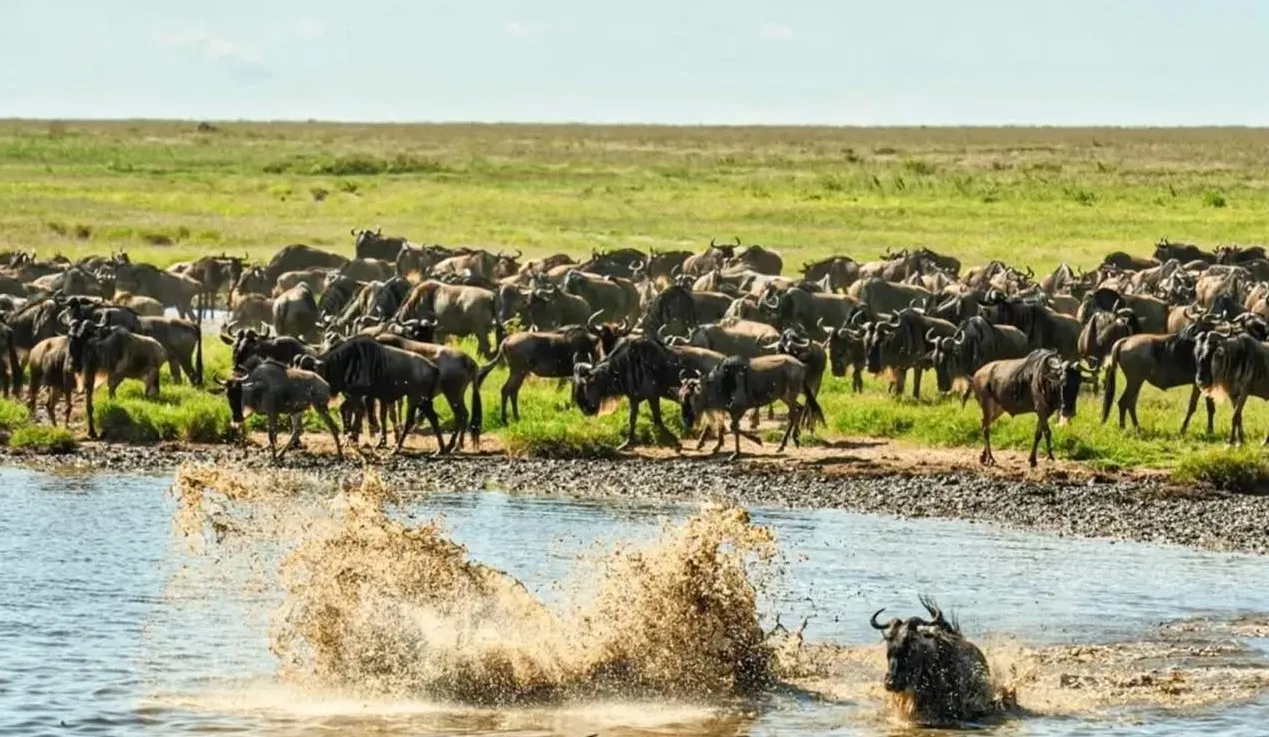
Serengeti Migration
The Serengeti Migration Is a Continuous Cycle
Movement Throughout the Year
The Difference Between the Serengeti Migration and Other Animal Migrations also appears in the migration’s continuous nature.
The Great Migration does not simply begin and end once each year.
Instead, the animals continue moving through a large circular ecosystem.
Different areas become important during different seasons.
The southern Serengeti often supports large herds during the calving period.
Central areas can provide important wildlife viewing opportunities throughout the year.
The western corridor becomes significant during seasonal movement.
Northern areas attract travelers interested in dramatic river crossings.
Eventually, many herds move south again.
This continuous cycle creates year-round opportunities for Tanzania safaris.
Therefore, travelers can experience different stages rather than searching for one short migration event.
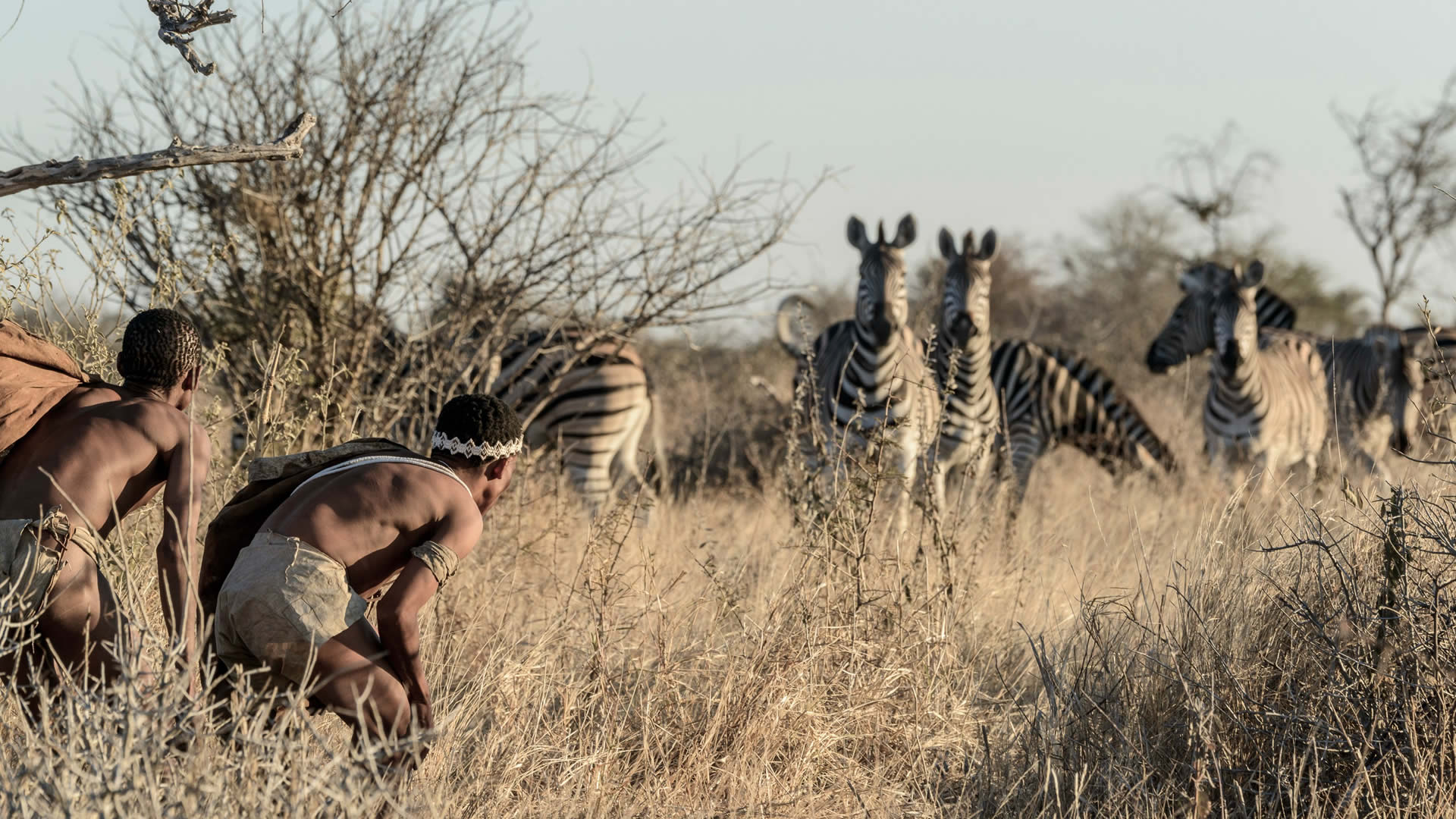
Mixed Species Travel Together
Wildebeest, Zebras, and Gazelles
Another important point in The Difference Between the Serengeti Migration and Other Animal Migrations involves mixed-species movement.
Wildebeest do not travel alone.
Large zebra herds often move alongside them.
Gazelles also use the changing grassland ecosystem.
Each species has different feeding preferences.
Zebras can consume taller and tougher grasses.
Wildebeest prefer shorter and nutritious grasses.
Gazelles often select different plants and vegetation.
This ecological relationship reduces direct competition.
Consequently, several herbivore species can benefit from the same landscapes.
Mixed herds also improve awareness of predators.
Different animals use different senses to detect danger.
Therefore, the Serengeti Migration represents a complex ecological partnership.
This interaction adds great educational value to Tanzania wildlife safaris.
Serengeti Migration
Predators Follow the Migration
A Moving Food Web
The Difference Between the Serengeti Migration and Other Animal Migrations becomes even more fascinating because predators follow the herds.
Lions hunt wildebeest and zebras across the grasslands.
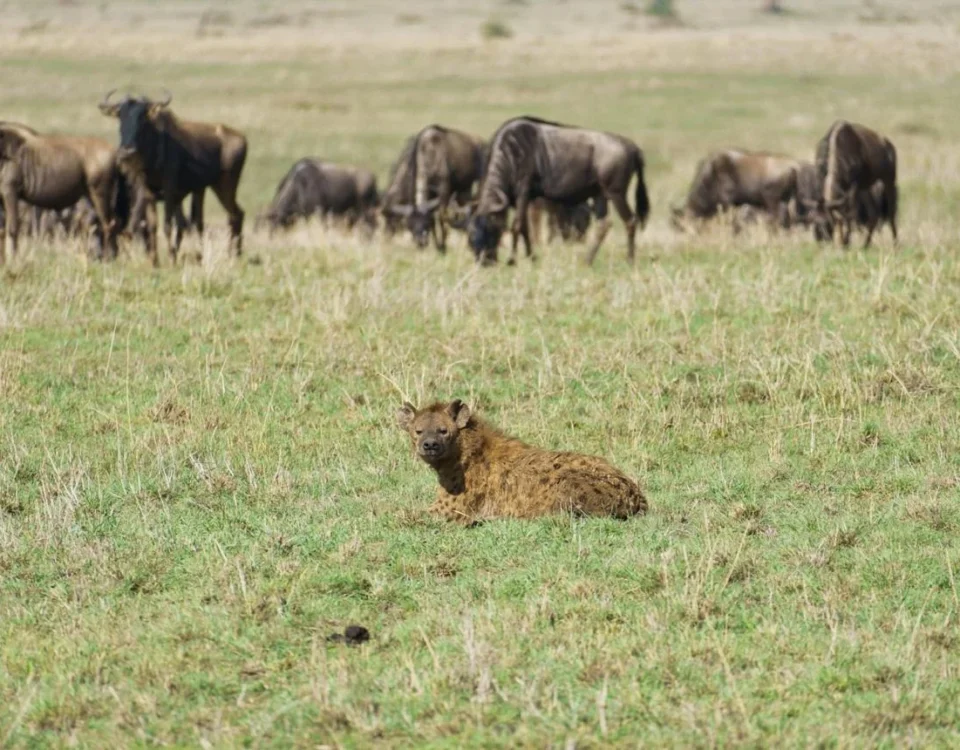
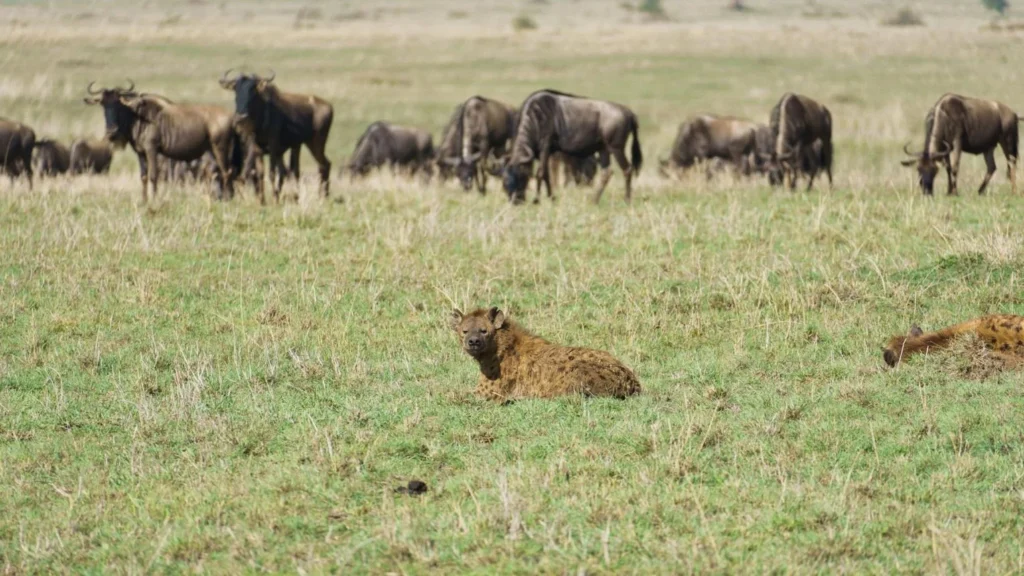
Hyenas benefit from large prey populations and natural carcasses.
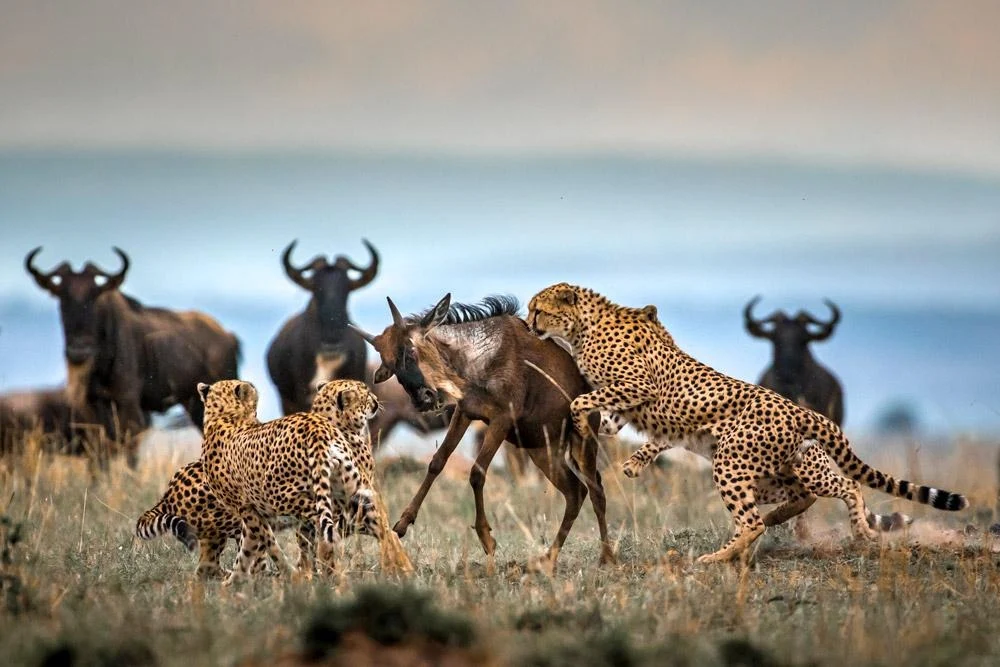
Cheetahs hunt suitable smaller animals across open areas.
Leopards occupy wooded habitats and riverine landscapes.
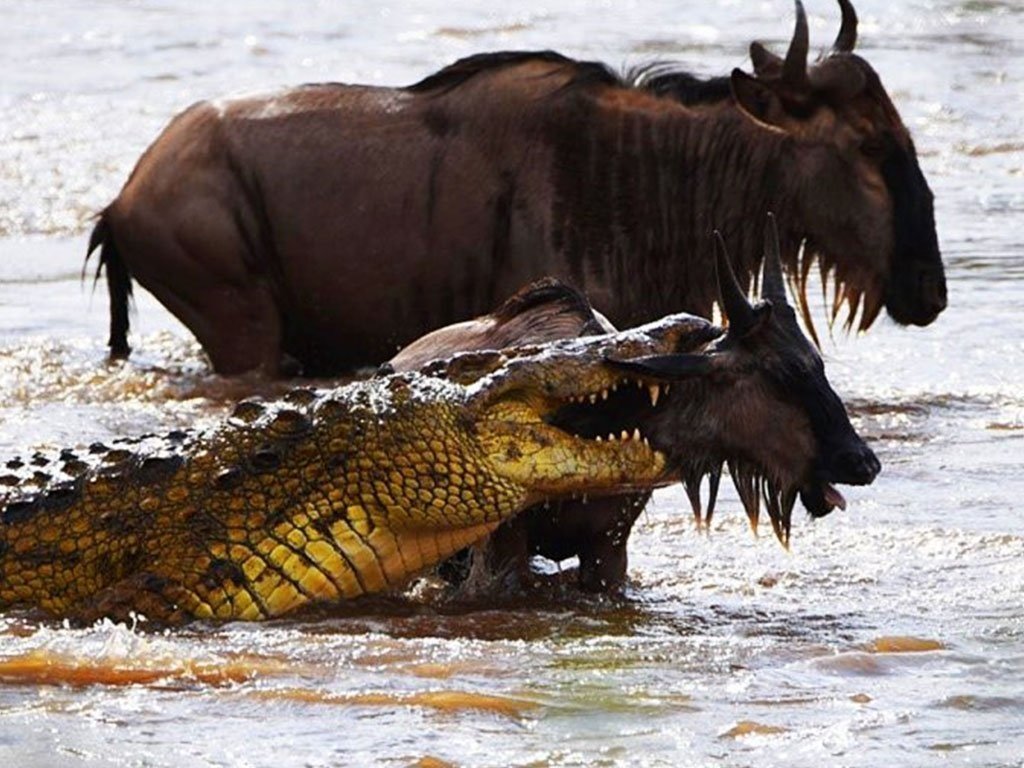
Crocodiles become particularly important during major river crossings.
As herbivore concentrations change, predator opportunities also change.
Therefore, the migration influences an entire food web.
Many migrations involve animals traveling between feeding or breeding areas. The Serengeti event allows travelers to observe predators interacting with migrating prey.
This creates extraordinary opportunities for wildlife photography and observation.
A Tanzania wildlife safari can therefore include both migration scenes and dramatic predator encounters.
River Crossings Create Extraordinary Drama
Nature’s Most Famous Safari Scenes
River crossings form one of the most recognizable aspects of the Great Migration.
They represent another major point in The Difference Between the Serengeti Migration and Other Animal Migrations.
Thousands of wildebeest and zebras may gather along riverbanks.
The animals often hesitate before entering the water.
One animal may finally begin the crossing. Large numbers can quickly follow.
Strong currents create serious dangers.
Steep riverbanks can also challenge exhausted animals.
Crocodiles wait in suitable river habitats.
These events create dramatic wildlife scenes.
However, no safari operator can guarantee a river crossing.
Nature controls the animals’ decisions.
Therefore, experienced Tanzania safari planning focuses on suitable regions and seasons.
Professional guides help travelers understand animal behavior without disturbing wildlife.
The Calving Season Is Another Unique Feature
A Landscape Filled With New Life
The Difference Between the Serengeti Migration and Other Animal Migrations also includes synchronized breeding and calving.
During suitable periods, enormous wildebeest herds gather across the southern Serengeti plains.
Many females give birth within a relatively short time.
The arrival of thousands of calves creates an extraordinary wildlife event.
Fresh grass supports mothers during this important period.
Newborn calves must quickly stand and follow the herd.
Predators also take advantage of increased opportunities.
Lions, cheetahs, hyenas, and other carnivores become active around vulnerable animals.
A Tanzania safari during calving season offers remarkable opportunities to observe natural behavior.
Visitors can witness young animals learning to survive within a demanding ecosystem.
Serengeti Migration
Comparing the Serengeti Migration With Bird Migration
Migration Through the Sky
Bird migration differs greatly from the Serengeti Migration.
Many birds travel between breeding and feeding grounds across continents.
Some species cross oceans and deserts during long seasonal journeys.
Their migration often depends on temperature, daylight, food availability, and breeding cycles.
However, travelers rarely witness millions of large birds moving across open landscapes simultaneously.
The Serengeti provides a more visible land-based experience.
The Difference Between the Serengeti Migration and Other Animal Migrations therefore includes direct visibility.
Visitors can watch herds moving across grasslands for hours.
A Tanzania wildlife tour offers close observation without requiring specialized equipment.
Bird migration remains scientifically remarkable. However, the Serengeti creates a unique visual experience because of its massive mammals.
Comparing the Serengeti Migration With Whale Migration
Giants of the Ocean
Whales also undertake remarkable migrations.
Many species travel between feeding areas and breeding grounds across vast oceans.
Their journeys can cover thousands of kilometers.
However, ocean environments make whale migration difficult to observe continuously.
Travelers often encounter whales during specific feeding or breeding periods.
In contrast, the Serengeti Migration occurs across visible land landscapes.
Safari vehicles can travel through designated routes while searching for herds.
This accessibility creates a major difference.
The Difference Between the Serengeti Migration and Other Animal Migrations therefore includes the opportunity for extended wildlife observation.
Travelers can spend several days following different migration stages.
Comparing the Serengeti Migration With Caribou Migration
Northern Mammal Movement
Caribou undertake some of the world’s largest land mammal migrations.
They move across Arctic and sub-Arctic landscapes in search of seasonal resources.
Like wildebeest, caribou respond to changing environmental conditions.
Both migrations involve large herbivore populations.
However, the Serengeti ecosystem supports a greater mixture of visible large predators.
The landscapes also differ dramatically.
Caribou move through cold northern environments.
Wildebeest travel through tropical and subtropical grasslands.
The Difference Between the Serengeti Migration and Other Animal Migrations therefore includes climate, habitat, and predator diversity.
A Tanzania adventure safari provides a warmer and more accessible wildlife experience.
Comparing the Serengeti Migration With Elephant Movements
Seasonal Family Journeys
Elephants can travel long distances between feeding and water areas.
Their movement may follow seasonal resources and traditional routes.
However, elephant movements usually involve family groups rather than millions of animals.
The Serengeti Migration operates on a much larger population scale.
Wildebeest and zebras form massive concentrations.
Their movement can transform entire landscapes.
Predators respond to the arrival of prey.
Scavengers benefit from natural deaths.
Birds follow insects disturbed by moving animals.
Therefore, the Serengeti Migration influences the ecosystem on a remarkable scale.
The Open Landscape Makes the Difference
Endless Serengeti Plains
The Difference Between the Serengeti Migration and Other Animal Migrations also depends on the Serengeti’s geography.
The open grasslands provide excellent visibility.
Travelers can often see wildlife across enormous distances.
The landscape allows large herds to move freely across suitable habitats.
Acacia trees, rocky kopjes, rivers, and grasslands create diverse environments.
This scenery makes Tanzania safaris visually spectacular.
Photographers can capture wildlife against dramatic African landscapes.
Sunrise and sunset add beautiful natural light.
Therefore, the Serengeti offers more than animal movement.
It provides a complete wilderness experience.
Tanzania Safaris Offer Year-Round Migration Experiences
Choose Your Preferred Season
One of the greatest advantages of a Tanzania safari involves year-round wildlife opportunities.
The migration changes location throughout the annual cycle.
Travelers can choose dates based on their preferred experience.
Some visitors prefer the calving season.
Others want large moving herds.
Many travelers hope to witness river crossings.
Photographers may focus on predator activity.
Birdwatchers can combine migration viewing with Tanzania’s diverse birdlife.
Therefore, Tanzania wildlife safaris offer exceptional flexibility.
Terenga Africa Safaris and Travels Ltd helps travelers select suitable routes based on seasonal wildlife patterns.
Cultural Experiences Around Serengeti Safari Lodges
Discover the Maasai Heritage
A Tanzania safari offers more than wildlife encounters.
Travelers can explore meaningful cultural experiences around suitable safari destinations.
Maasai communities represent an important cultural presence around the greater Serengeti region.
Respectful, community-led experiences can introduce visitors to local traditions.
Traditional Maasai Dance
Travelers can enjoy cultural performances featuring traditional music, singing, and energetic dancing.
These experiences showcase an important part of local heritage.
Maasai Village Visits
Organized cultural visits can introduce travelers to aspects of pastoral life.
Visitors can learn about traditional homes, livestock, crafts, and community practices.
Respect and proper guidance remain essential.
Maasai Beadwork
Local artisans create colorful handmade jewelry and decorative crafts.
Purchasing authentic products can support community livelihoods.
Local Food Experiences
Some safari lodges and community programs offer traditional food experiences.
Visitors can discover local ingredients and cooking methods.
These activities add cultural depth to Tanzania wildlife tours.
Serengeti
Other Cultural Experiences Around Safari Lodges
Connect With Tanzania’s People
Tanzania offers many cultural experiences beyond Maasai traditions.
Travelers can visit local markets and artisan communities.
Coffee experiences can introduce visitors to agricultural traditions.
Some destinations offer village walks and cultural workshops.
These experiences should always respect local communities.
Responsible cultural tourism creates meaningful connections rather than staged encounters.
Terenga Africa Safaris and Travels Ltd promotes authentic and respectful cultural experiences.
We believe wildlife and culture together create a deeper understanding of Africa.
Responsible Tourism and the Serengeti Migration
Protecting a Natural Wonder
The Difference Between the Serengeti Migration and Other Animal Migrations highlights the importance of conservation.
Millions of animals depend on healthy grasslands and open migration routes.
Protected areas help safeguard important habitats.
Tourism can support conservation when managed responsibly.
Travelers should follow national park regulations.
Visitors should maintain safe distances from wildlife.
Safari vehicles should never block animal movement.
Guests should avoid leaving waste in protected landscapes.
Responsible choices help protect the Serengeti for future generations.
The Difference Between the Serengeti Migration and Other Animal Migrations
Why the Great Migration Stands Apart
The Difference Between the Serengeti Migration and Other Animal Migrations comes from its extraordinary combination of scale and diversity.
Millions of herbivores participate in a continuous annual cycle.
Wildebeest dominate the movement.
Zebras and gazelles contribute different ecological roles.
Predators follow the changing prey populations.
River crossings create dramatic survival challenges.
Calving season introduces thousands of newborn animals.
Rainfall determines where fresh grass grows.
Every element connects within one enormous ecosystem.
This complexity makes the Great Migration one of the world’s greatest wildlife experiences.
The Difference Between the Serengeti Migration and Other Animal Migrations
A Living Ecosystem in Motion
The Difference Between the Serengeti Migration and Other Animal Migrations becomes clear when travelers understand its ecological connections.
The migration does not involve animals simply changing locations.
It influences predators, scavengers, birds, insects, and vegetation.
Rain produces fresh grass.
Grass attracts herbivores.
Herbivores support predators.
Natural remains support scavengers.
Therefore, the entire ecosystem responds to movement.
This natural connection provides exceptional educational value during Tanzania safaris.
The Difference Between the Serengeti Migration and Other Animal Migrations
Experience the Great Migration With Terenga Africa Safaris
The Difference Between the Serengeti Migration and Other Animal Migrations becomes most powerful when experienced directly.
Standing beside the Serengeti plains creates a sense of Africa’s extraordinary natural scale.
Thousands of animals can move across the horizon.
Predators may rest nearby.
Birds circle above the grasslands.
The landscape constantly changes with the seasons.
Terenga Africa Safaris and Travels Ltd creates carefully planned Tanzania safari experiences for international travelers.
Our itineraries combine wildlife expertise, professional planning, responsible tourism, and cultural experiences.
We help visitors choose suitable destinations based on travel dates and interests.
The Difference Between the Serengeti Migration and Other Animal Migrations
Ultimately, The Difference Between the Serengeti Migration and Other Animal Migrations lies in its extraordinary combination of numbers, ecosystems, predators, and landscapes.
Few wildlife events offer millions of large mammals within one connected natural system.
The migration remains a continuous journey shaped by rainfall and survival.
Every season reveals a different chapter.
Therefore, Tanzania wildlife safaris provide opportunities to experience this natural wonder throughout the year.
A carefully planned Tanzania wildlife tour can include the Great Migration, Big Five wildlife, cultural encounters, and beautiful landscapes.
For travelers seeking extraordinary Tanzania adventure safaris, the Serengeti remains one of the world’s greatest destinations.
At Terenga Africa Safaris and Travels Ltd, we help travelers experience Africa with confidence, knowledge, and respect.
The Difference Between the Serengeti Migration and Other Animal Migrations proves that the Great Migration remains one of nature’s most extraordinary stories.
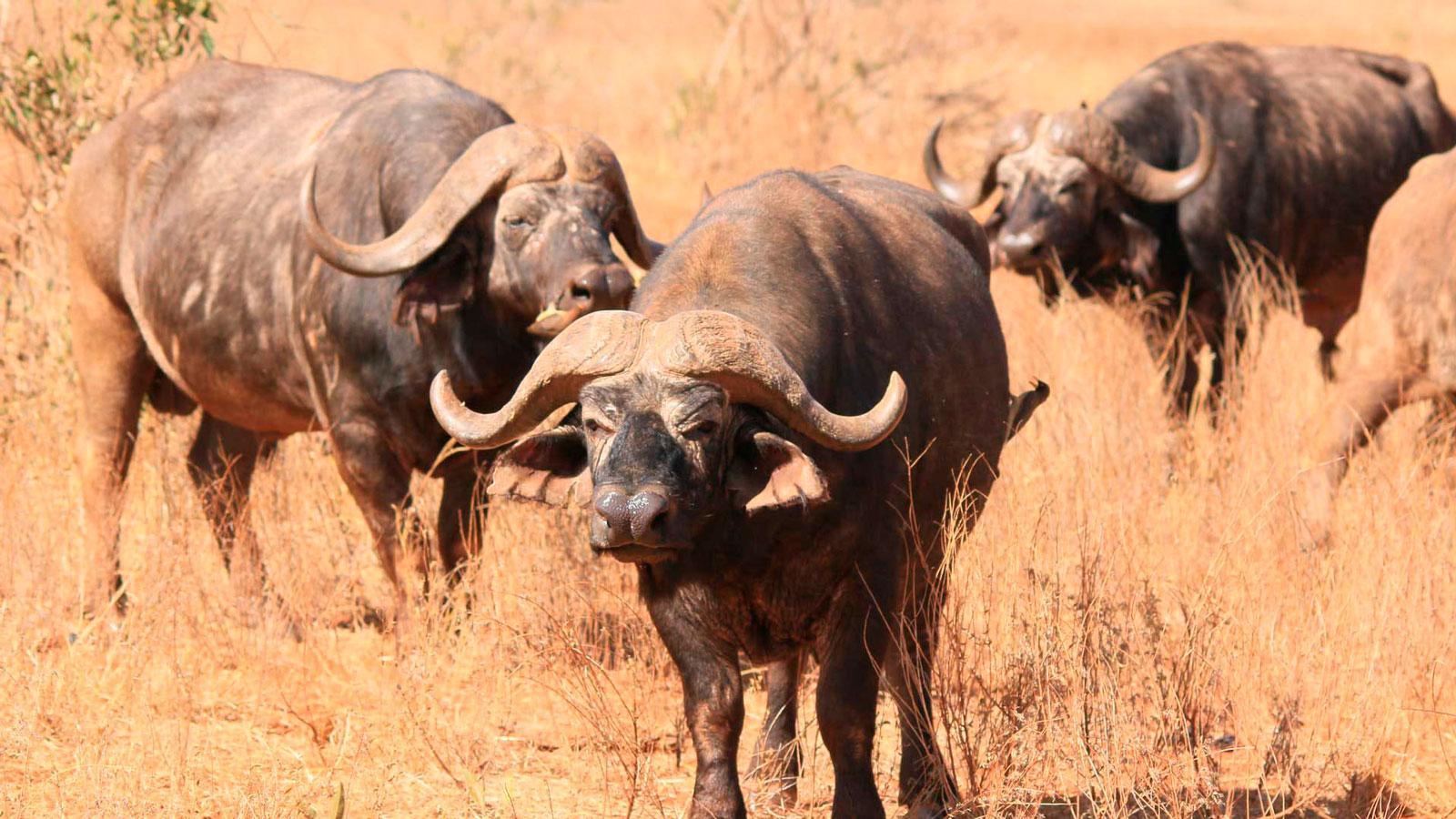
Ruvubu National Park
Safari Inclusions
- Airport transfers
- Safari transportation
- Professional English-speaking safari guide
- Accommodation
- Meals
- Drinking water
- National park fees
- Game drives
- Great Migration viewing
- Cultural experiences
- Safari vehicle
- Government taxes
- Selected lodge activities
Safari Exclusions
- International flights
- Visa fees
- Travel insurance
- Personal expenses
- Alcoholic beverages
- Laundry services
- Tips and gratuities
- Souvenirs
- Optional activities
- Personal communications
- Medical expenses
- Additional accommodation
- Services not listed under inclusions
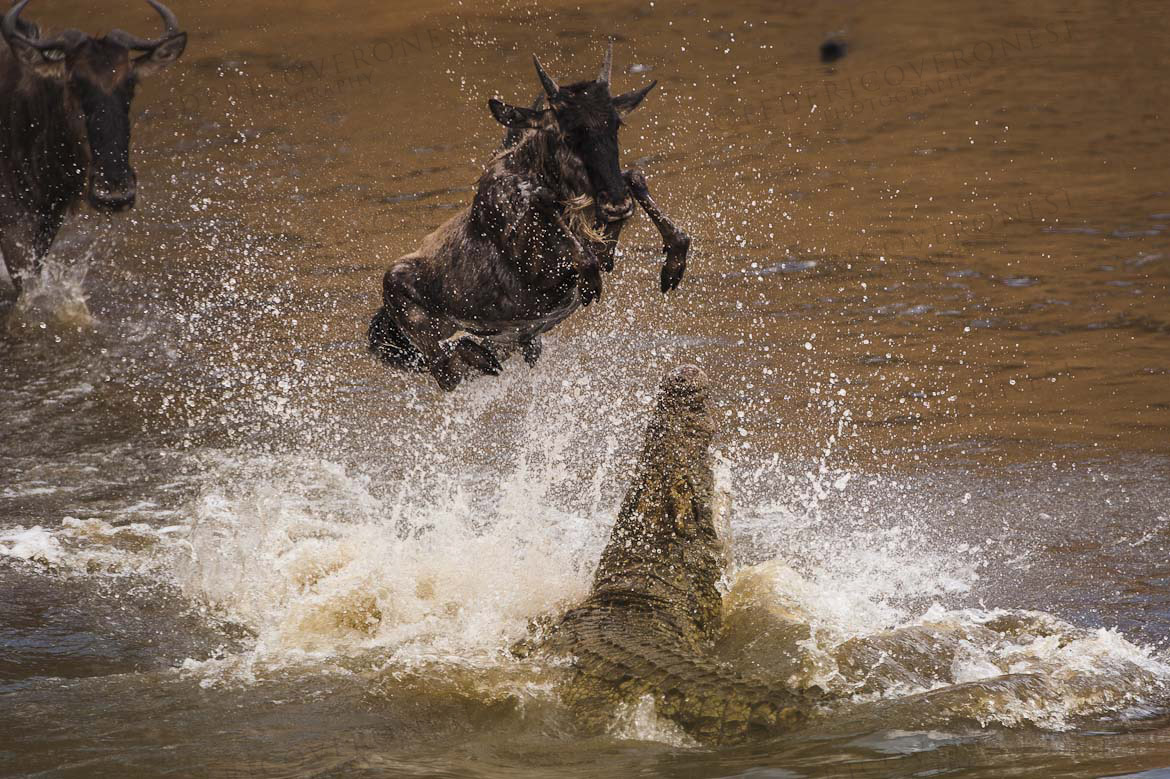
Nile Crocodile attacking Wildebeest calf during Mara river great migration crossing.
About Terenga Africa Safaris and Travels Ltd
Terenga Africa Safaris and Travels Ltd creates exceptional travel experiences across Tanzania and East Africa.
We combine destination expertise, wildlife knowledge, cultural experiences, and responsible tourism.
Our goal is to provide reliable African tourism information for travelers worldwide.
We design journeys that connect visitors with wildlife, landscapes, people, and conservation.