March in the Serengeti: The Transition After Calving
November 2, 2026
March Rainfall and Wildebeest Movement
November 3, 2026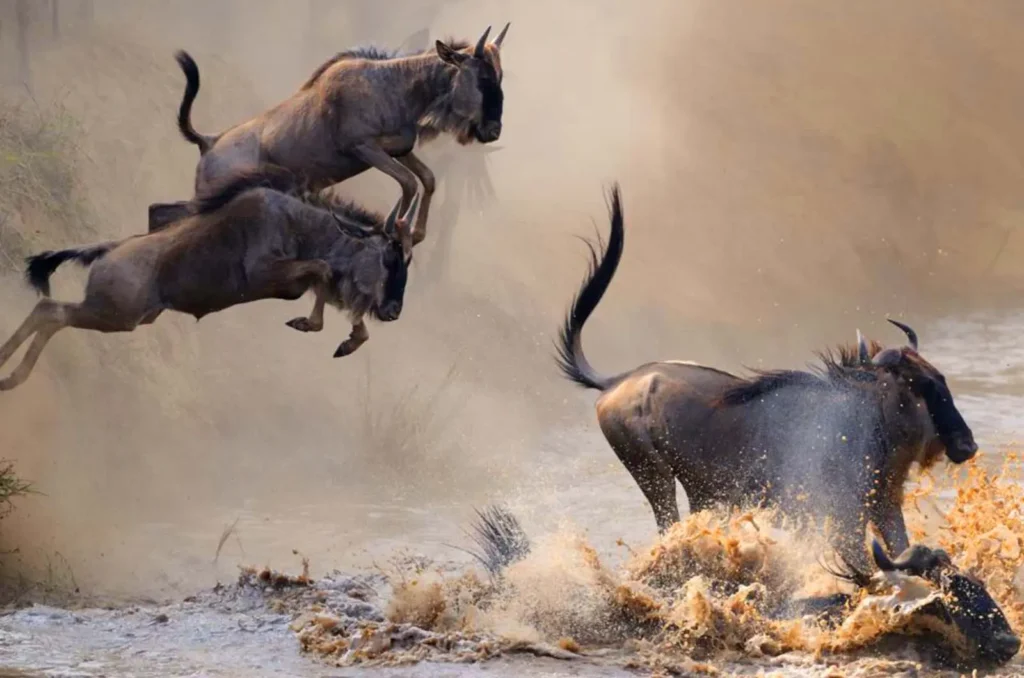
How Young Wildebeest Join the Great Migration: Understanding the Journey of Newborn Calves Across the Serengeti
Discover how newborn wildebeest develop the strength to follow millions of migrating animals across Tanzania’s Serengeti ecosystem, the challenges they face during their first months of life, and the remarkable survival instincts that make the Great Wildebeest Migration one of Africa’s greatest wildlife spectacles.
How Young Wildebeest Join the Great Migration
The Great Wildebeest Migration is one of the most extraordinary wildlife events in the world, involving millions of animals moving across the vast grasslands of Tanzania’s Serengeti National Park and Kenya’s Maasai Mara ecosystem. Among the most fascinating aspects of this annual natural spectacle is the way newborn wildebeest develop the strength, coordination, and survival instincts required to follow the enormous migrating herds. Every year, hundreds of thousands of wildebeest calves are born across the southern Serengeti and neighbouring Ndutu plains, particularly during the main calving season between January and March. Within minutes of birth, these young animals begin attempting to stand, while their mothers remain close to provide protection and nourishment. Remarkably, many calves can walk shortly after being born and gradually develop the ability to run alongside adult wildebeest. This early development is essential because the migration is a continuous movement influenced by rainfall, fresh grazing opportunities, and the availability of water. As the young animals grow stronger, they begin travelling with their mothers and other members of the herd, gradually becoming part of the wider migration journey. Understanding How Young Wildebeest Join the Great Migration provides travellers with a deeper appreciation of the natural processes that sustain this remarkable wildlife movement. Rather than simply watching enormous herds crossing the plains, visitors can observe the early stages of animal development, maternal care, predator avoidance, and the survival strategies that shape life in the African wilderness. For wildlife enthusiasts, photographers, families, and international travellers, witnessing these interactions is among the most rewarding experiences available through Tanzania Safaris. At Terenga Africa Safaris & Travel Ltd, we help visitors discover these extraordinary natural events through professionally organised Tanzania Adventures, knowledgeable safari guides, and carefully planned wildlife experiences.
Where Are Young Wildebeest Born During the Great Migration?
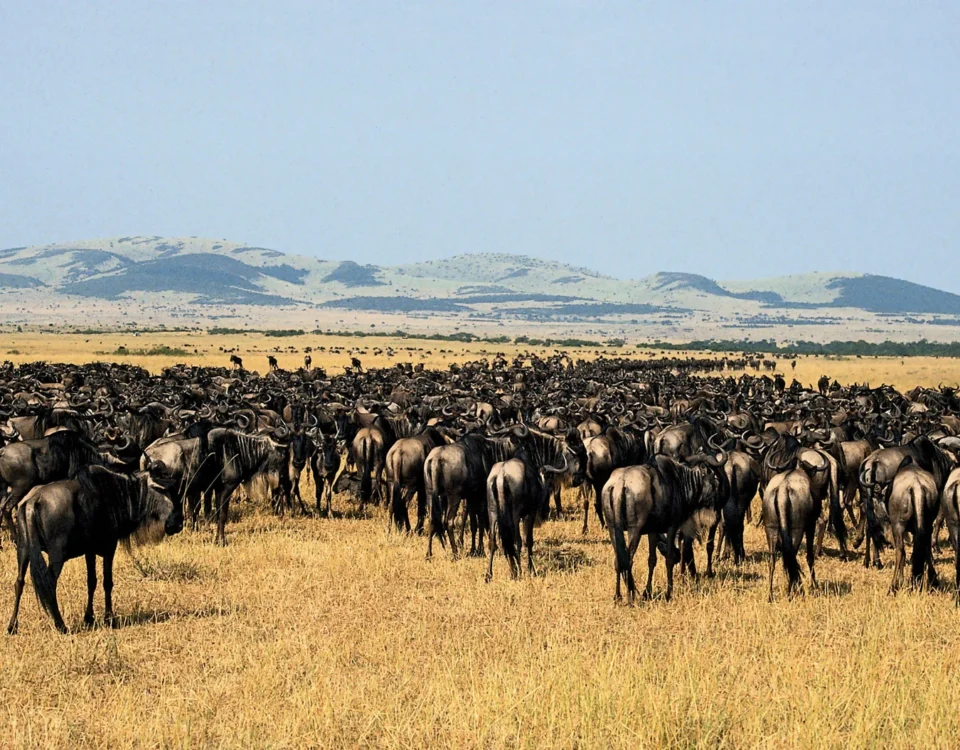
The journey of young wildebeest begins mainly in the southern Serengeti ecosystem, where seasonal grasslands provide suitable conditions for reproduction and early development. During the calving season, large concentrations of pregnant females gather across the open plains of southern Serengeti National Park and the Ndutu region within the wider Ngorongoro Conservation Area. These locations are particularly important because the short grass that grows after seasonal rainfall provides nutritious food for adult wildebeest. Adequate nutrition helps mothers maintain their strength while supporting the development of their unborn calves. Generally, the main calving period occurs between January and March, with a particularly high concentration of births often taking place during January and February. During this period, thousands of calves may be born across the grasslands within a relatively short time. Such concentrated birthing activity is a natural survival strategy because large numbers of newborn animals make it more difficult for predators to focus on individual calves. However, the southern plains are not entirely safe. Lions, cheetahs, spotted hyenas, and other predators monitor the migrating herds, creating constant challenges for vulnerable newborns. Despite these threats, the availability of food and the presence of large herds provide favourable conditions for young wildebeest to begin developing their survival abilities. Understanding How Young Wildebeest Join the Great Migration therefore starts with appreciating the importance of the southern Serengeti as a nursery for one of Africa’s largest migrating wildlife populations. Travellers exploring this region can witness remarkable scenes of mothers caring for their newborns, calves taking their first steps, and large herds grazing across the expansive plains. Through carefully organised Tanzania Tours, visitors can experience this important wildlife season while learning about the ecological conditions that support the Great Migration.
How Quickly Can Newborn Wildebeest Stand and Walk?
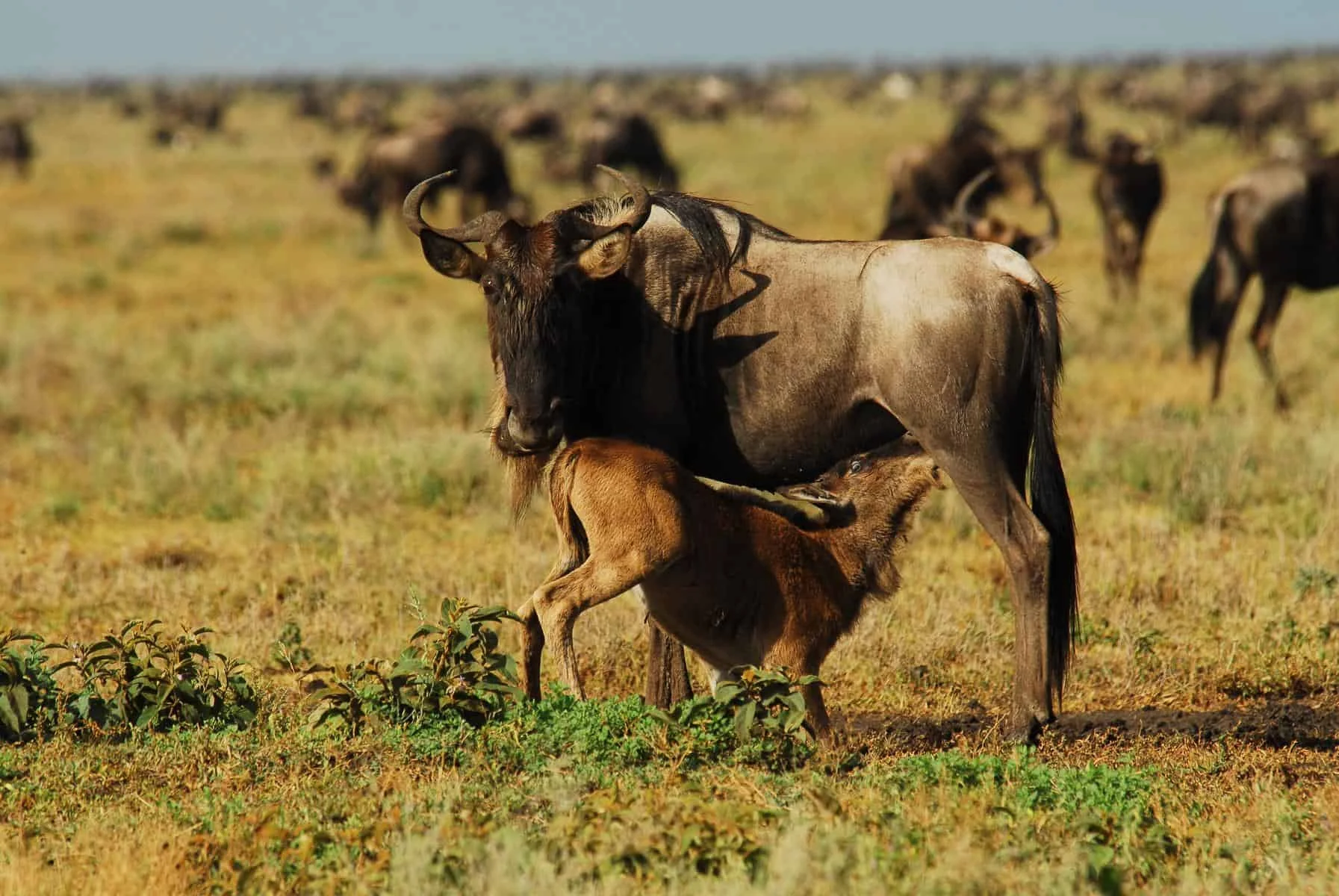
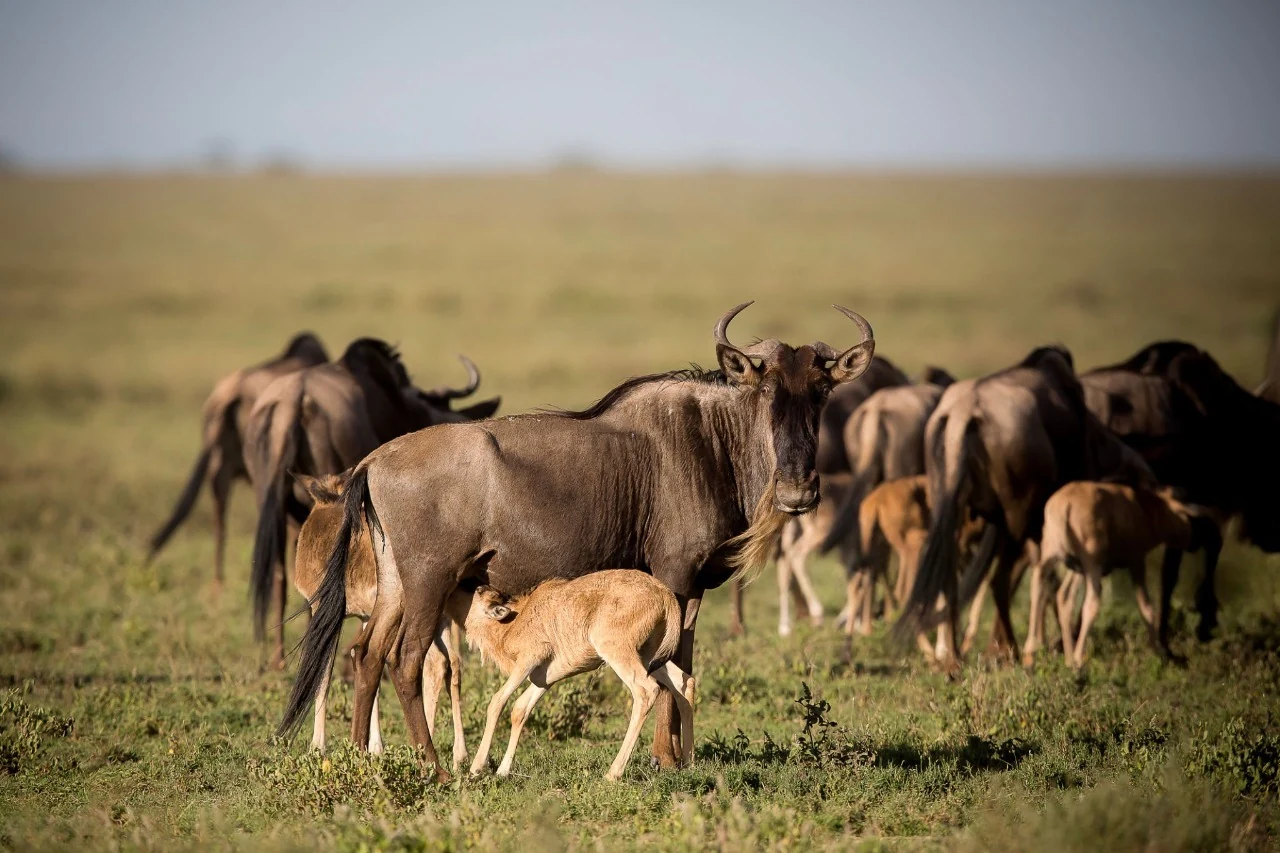
One of the most remarkable characteristics of wildebeest is the speed at which newborn calves develop their ability to move. Unlike many animals that require extended periods of parental assistance before becoming mobile, wildebeest are naturally adapted to life in an environment where movement is essential for survival. Shortly after birth, a calf begins attempting to lift its head, position its legs, and stand upright. Although the first attempts may be unsteady, repeated movements help strengthen its muscles and improve coordination. Within minutes, many calves can stand, and shortly afterwards they begin taking their first steps. During the following hours, they gradually become more confident and can often keep pace with their mothers over short distances. This rapid development is particularly important because migrating herds cannot remain in one location indefinitely. As grazing conditions change, adult animals must continue moving towards areas with fresh vegetation and suitable water sources. Consequently, newborn calves need to develop sufficient strength to travel alongside their mothers. Nursing also plays an essential role in their development because mother’s milk provides the energy and nutrients required for rapid growth. Throughout the first weeks of life, calves become increasingly coordinated and develop greater endurance. Their ability to recognise their mothers through scent, sound, and visual contact also helps them remain connected to the herd. How Young Wildebeest Join the Great Migration is closely connected to this extraordinary physical development, which allows newborn animals to participate in one of the longest and most impressive wildlife journeys on Earth. Visitors watching these early stages during a Serengeti safari can appreciate how instinct, physical adaptation, and maternal care work together to support survival in the African wilderness.
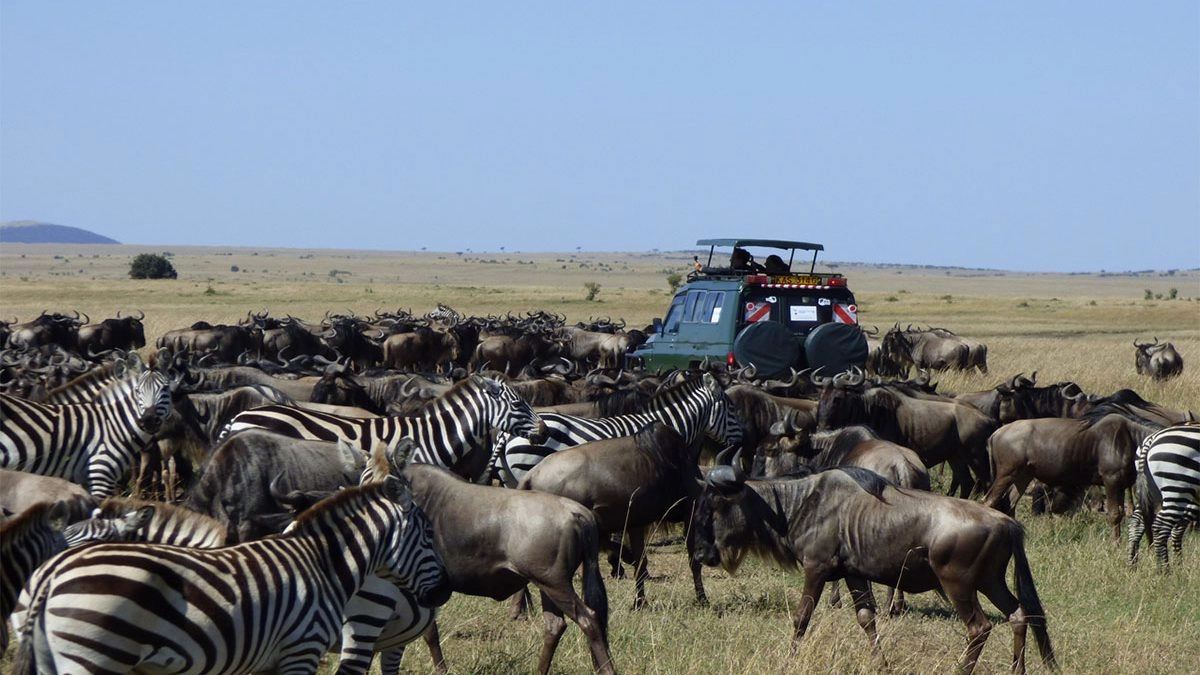
Great Migration
How Do Young Wildebeest Recognise Their Mothers and Stay with the Herd?
Maintaining a close relationship between mother and calf is essential during the early stages of a wildebeest’s life. Immediately after birth, the mother and newborn begin establishing a bond that helps the young animal identify and remain close to the correct adult. Recognition involves several senses, including smell, hearing, and sight. During the first hours and days, calves become familiar with their mothers’ distinctive scent and vocal sounds, helping them locate one another within large groups of animals. This ability is particularly important during the calving season because thousands of wildebeest may be moving and grazing across the same grasslands. Without effective recognition, a calf could easily become separated from its mother and struggle to obtain the nourishment and protection it needs. Mothers regularly remain close to their young, allowing them to nurse and rest while gradually introducing them to the movements of the wider herd. As the calves become stronger, they begin following their mothers during feeding activities and short movements across the plains. Other adult wildebeest provide an additional level of protection simply through their presence in large groups. Although the herd does not guarantee the safety of every individual, moving among numerous animals can make it more difficult for predators to isolate vulnerable calves. Over time, young wildebeest become increasingly familiar with the sounds, movements, and behaviour of the migrating population. How Young Wildebeest Join the Great Migration is therefore not simply a story of physical growth; it also involves maternal bonding, communication, recognition, and social adaptation. During Tanzania Adventures in the southern Serengeti, visitors may observe mothers guiding their calves across the grasslands, nursing them, and responding to potential threats. Such encounters provide valuable opportunities to understand the importance of family relationships in the survival of African wildlife.
How Do Young Wildebeest Survive Predators During Their First Months?
Survival is one of the greatest challenges facing young wildebeest because the Serengeti supports a large population of natural predators. Lions, cheetahs, spotted hyenas, leopards, and other carnivores depend on herbivores for food, and newborn calves can be particularly vulnerable because they have limited experience avoiding danger. Nevertheless, wildebeest possess several natural adaptations that improve their chances of survival. Their ability to stand and run shortly after birth is one of the most important advantages. When danger approaches, a calf can attempt to move with its mother and the surrounding herd rather than remaining helpless on the ground. Additionally, the mother maintains close contact with her newborn, helping it respond to movement and potential threats. Large herds also provide a form of collective protection because predators may find it difficult to isolate a single animal among thousands of moving wildebeest. However, this does not eliminate the risk of predation. Lions may stalk animals from concealed positions, cheetahs can pursue vulnerable calves across open grasslands, and hyenas may take advantage of opportunities created when young animals become separated from their mothers. Environmental conditions also influence survival because healthy grasslands provide the food necessary for adult females to maintain milk production and support calf development. During periods of favourable rainfall, abundant vegetation helps sustain the herds, while drought or reduced grazing conditions can create additional challenges. How Young Wildebeest Join the Great Migration becomes particularly fascinating when travellers observe the relationship between newborn animals, protective mothers, and predators within this natural ecosystem. Watching these interactions with an experienced safari guide helps visitors understand that the migration is not simply a movement of animals but a continuous struggle for survival shaped by instinct, environmental conditions, and natural selection.
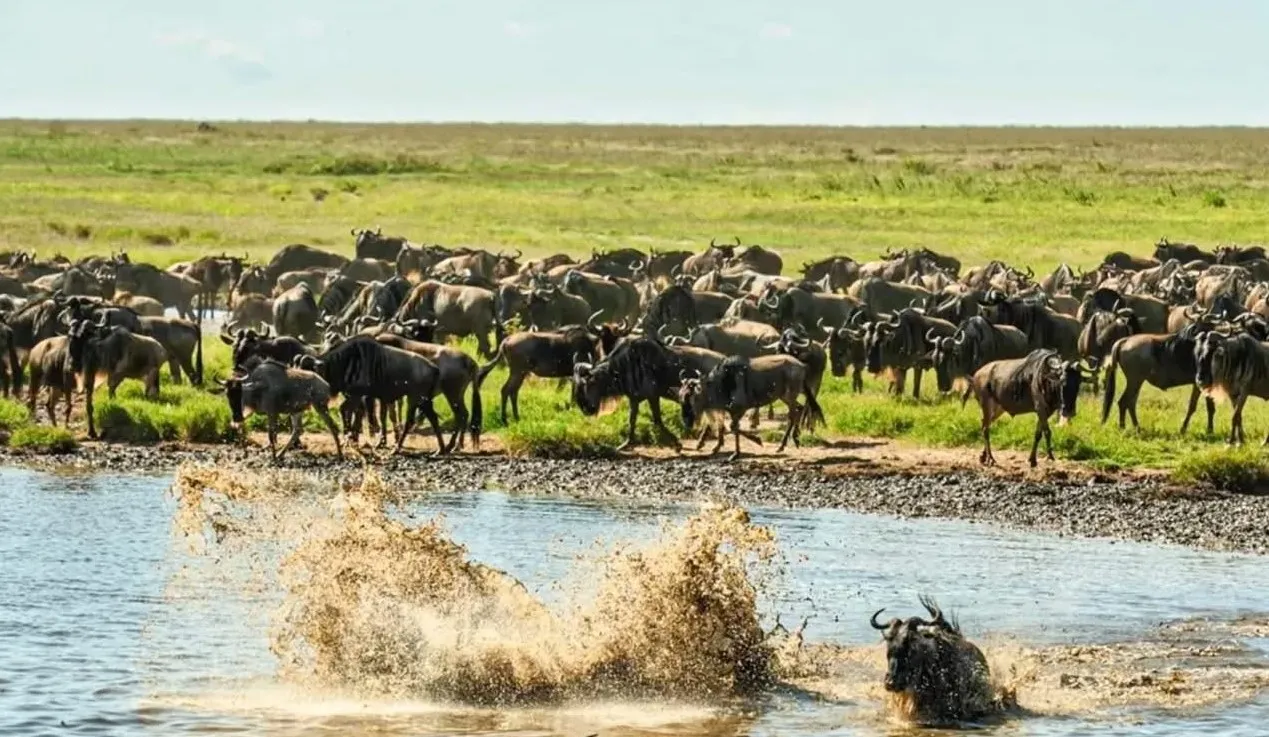 How Do Young Wildebeest Learn to Follow the Great Migration Routes?
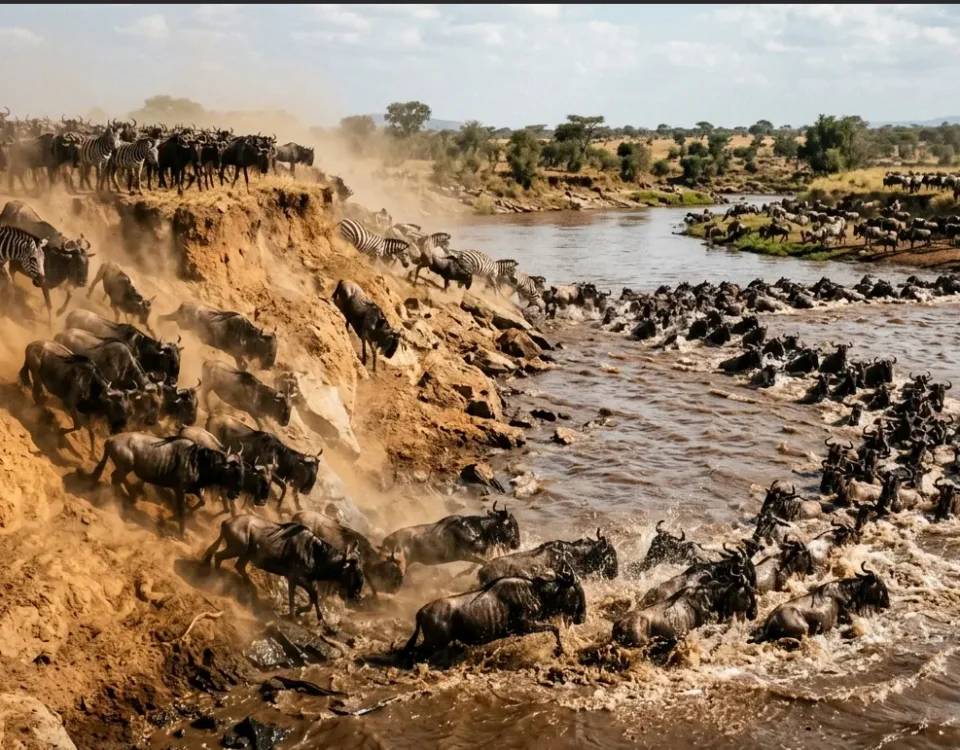
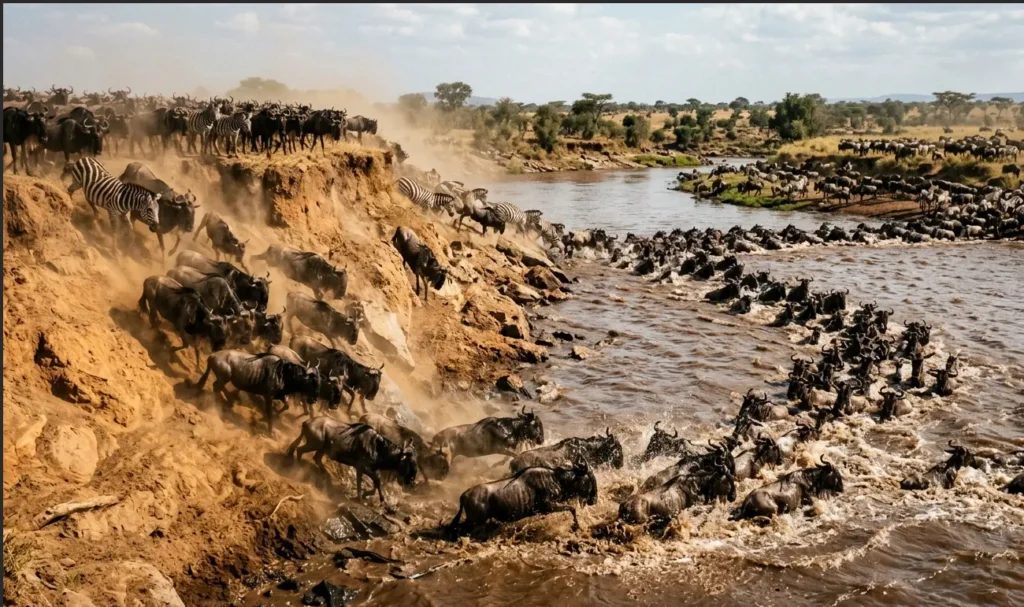
As young wildebeest become stronger, their ability to travel with the migrating herds gradually improves. Initially, calves depend heavily on their mothers for nourishment, protection, and guidance. However, through repeated movement across the grasslands, they begin adapting to the daily activities and seasonal journeys of the wider population. Adult wildebeest respond to changes in vegetation, rainfall, and water availability, moving towards areas where fresh grazing can support large numbers of animals. Young calves follow these movements while developing their physical endurance and familiarity with the environment. Their migration journey is not learned through a formal process but is strongly influenced by natural instincts and social behaviour. By remaining close to their mothers and other herd members, young animals become part of the population’s seasonal movements. During the months following calving, the herds generally begin spreading away from the southern plains as grazing conditions change. Depending on rainfall patterns, some groups move towards the central Serengeti before continuing towards the western corridor and eventually the northern Serengeti. Later in the year, many wildebeest enter Kenya’s Maasai Mara, where they encounter the famous Mara River crossings. These movements are not identical every year, and different groups may follow different routes depending on environmental conditions. How Young Wildebeest Join the Great Migration can therefore be understood as a gradual process in which calves develop alongside the herd, building the strength and experience needed for longer journeys. Travellers exploring Tanzania Safaris during different seasons can witness different stages of this journey, from calving and early development to grazing movements and river-crossing preparations.
What Are the Expectations in a Young Wildebeest Migration Safari?
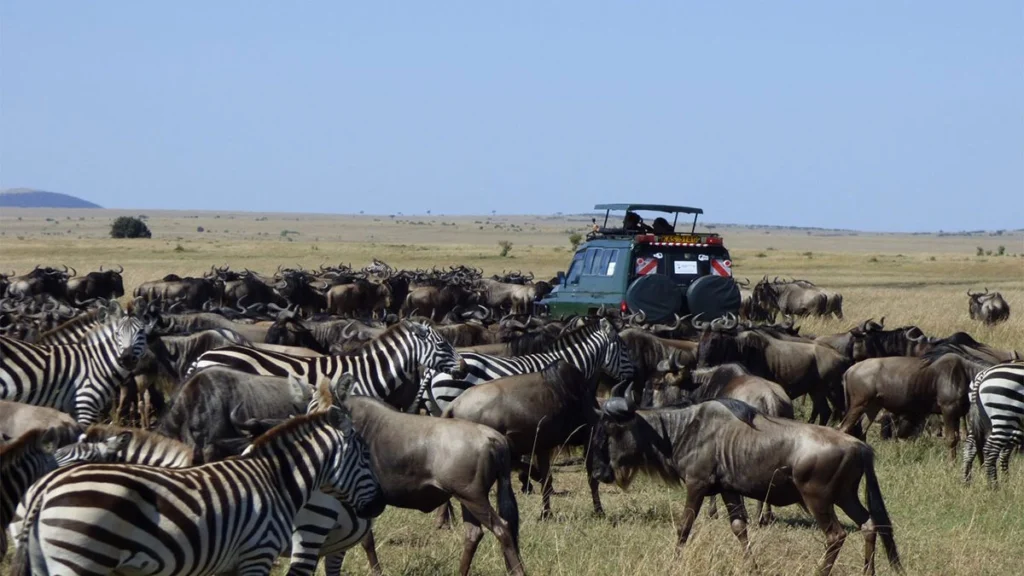
A safari focused on young wildebeest and the Great Migration offers a unique opportunity to observe wildlife development and natural behaviour in one of Africa’s most famous ecosystems. During your visit, you may encounter newborn calves staying close to their mothers, young animals learning to run, and large groups grazing across the southern Serengeti. Depending on your travel dates, you may also witness predator activity, herd movements, and interactions between different grazing species. Game drives are the main activity, allowing visitors to explore several sections of the Serengeti while searching for migrating wildlife. Morning excursions are particularly rewarding because animals are often active during the cooler hours. Afternoon drives provide additional opportunities to observe feeding behaviour, photography subjects, and wildlife interactions. Throughout the experience, professional safari guides explain animal movements, identify different species, and share information about the ecological importance of the migration. Photography enthusiasts can capture beautiful scenes of newborn calves against the expansive grasslands, while birdwatchers may encounter ostriches, vultures, eagles, secretary birds, and other species. Accommodation ranges from comfortable safari lodges to seasonal tented camps positioned near important migration areas. Depending on your preferred travel style, your safari may also include visits to Ngorongoro Crater or Tarangire National Park. How Young Wildebeest Join the Great Migration becomes much easier to appreciate when visitors observe the animals in their natural environment rather than simply reading about their movements. At Terenga Africa Safaris & Travel Ltd, we organise wildlife experiences that allow travellers to explore the Serengeti at a comfortable pace while learning about its remarkable wildlife heritage.
When Is the Best Time to See Young Wildebeest Joining the Migration?
The best time to observe young wildebeest developing and joining the Great Migration is generally during and shortly after the calving season, which takes place between January and March. January and February are particularly rewarding because large numbers of newborn calves can be found across the southern Serengeti and Ndutu plains. During these months, visitors have better opportunities to observe the earliest stages of calf development, including attempts to stand, nursing, and the first movements alongside their mothers. March is also an interesting period because many young wildebeest have become stronger and increasingly capable of following the larger herds. As the season progresses, migrating animals may begin moving towards central Serengeti in response to changing grazing conditions. Travellers interested in seeing older calves participating in the wider migration can also consider visiting between April and June, depending on the annual movement patterns. Later in the year, the herds generally move towards the western and northern Serengeti before many cross into Kenya’s Maasai Mara. Weather conditions should also influence your travel arrangements. January and February generally offer favourable opportunities for exploring the southern plains, although seasonal rainfall can vary. March and April experience a greater likelihood of rain, which may affect road conditions and travel times. How Young Wildebeest Join the Great Migration is therefore best experienced by selecting travel dates according to the particular stage of development you hope to witness. We recommend booking accommodation early, especially for seasonal camps located close to the calving grounds. Our team can help you consider the timing of your visit, migration locations, and accommodation preferences when preparing your Tanzania safari.
 What Should You Pack for a Great Migration Safari?
Preparing suitable clothing and safari equipment helps ensure that your wildlife holiday is comfortable and enjoyable. Since the Serengeti experiences changing temperatures throughout the day, lightweight clothing that can be layered is a practical choice. Neutral colours such as khaki, brown, olive, and beige are recommended for game drives because they blend naturally with the surrounding environment. A lightweight jacket or fleece is useful during early morning excursions, when temperatures can be cooler. Visitors travelling during the rainy season should also carry a waterproof jacket to prepare for occasional showers. Comfortable walking shoes are suitable for moving around safari camps, while sandals are useful for relaxing at your accommodation. Additionally, remember to pack sunscreen, sunglasses, and a wide-brimmed hat to protect yourself from strong sunlight. Wildlife photographers should bring cameras with suitable zoom lenses, spare batteries, and enough memory cards to capture memorable encounters with newborn wildebeest and migrating herds. Binoculars are valuable for observing animals at a distance without disturbing them. Other important items include insect repellent, personal toiletries, prescribed medications, reusable water bottles, and travel documents. A small daypack is useful for carrying frequently needed items during game drives. Travellers using domestic safari flights should confirm luggage restrictions because smaller aircraft often have strict baggage weight limits and require soft-sided bags. How Young Wildebeest Join the Great Migration is an experience worth preparing for carefully, particularly if you want to capture photographs or spend extended periods observing wildlife. At Terenga Africa Safaris & Travel Ltd, we provide pre-travel guidance to help guests prepare for their selected safari season and accommodation arrangements.
Why Choose Terenga Africa Safaris & Travel Ltd for This Particular Safari?
Choosing a knowledgeable safari operator is essential when planning a wildlife holiday focused on the Great Wildebeest Migration. At Terenga Africa Safaris & Travel Ltd, we understand that a rewarding safari requires more than transportation and accommodation. Visitors need reliable information, appropriate seasonal planning, knowledgeable guides, and an itinerary that reflects their wildlife interests. Our approach focuses on creating personalised Tanzania Safaris that allow travellers to explore the Serengeti while learning about its wildlife, ecosystems, and conservation importance. When organising a young wildebeest migration experience, we consider the calving season, expected herd movements, accommodation locations, and the time required to explore productive wildlife areas. Furthermore, we recognise that different travellers have different expectations. Families may prefer comfortable accommodation and relaxed game drives, while wildlife photographers may require additional time in selected locations. Couples and honeymooners may favour private safari arrangements, while budget-conscious travellers may prefer shared or camping experiences where available. Our wider African tourism experience also allows us to arrange Uganda Safaris, Tanzania Adventures, Rwanda wildlife holidays, and multi-country East African itineraries. Guests can combine the Serengeti experience with gorilla trekking in Bwindi, chimpanzee tracking in Kibale, or mountain gorilla encounters in Rwanda. We place importance on transparent communication, responsible wildlife viewing, respect for local communities, and practical travel arrangements. How Young Wildebeest Join the Great Migration is a fascinating subject that deserves knowledgeable interpretation, and our goal is to help you understand and appreciate this extraordinary natural process. We strive to make every journey informative, comfortable, and memorable while encouraging responsible appreciation of Africa’s wildlife heritage.
Experience the Great Wildebeest Migration with Terenga Africa Safaris
The development of young wildebeest is one of the most remarkable stories within the annual Great Migration. From their first attempts to stand after birth to their gradual development into strong members of the migrating herds, these animals demonstrate extraordinary natural adaptation and survival instincts. The southern Serengeti and Ndutu plains provide some of the best opportunities to witness these early stages, particularly between January and March. Beyond the newborn calves, visitors can enjoy encounters with lions, cheetahs, hyenas, zebras, elephants, giraffes, and numerous bird species. Combining your Serengeti adventure with Ngorongoro Crater, Tarangire, or Zanzibar can make your Tanzania holiday even more rewarding. Travellers with additional time can extend their African journey through Uganda Safaris and Rwanda Adventures for unforgettable primate experiences. At Terenga Africa Safaris & Travel Ltd, we are passionate about helping international visitors discover Africa through carefully organised wildlife holidays, knowledgeable guiding, and personalised travel services. How Young Wildebeest Join the Great Migration is an experience that allows you to appreciate the extraordinary relationship between wildlife, nature, and survival. Contact our team today to begin planning your Great Migration safari and experience the incredible wildlife heritage of Tanzania.
Best Trending Tanzania Safari Holidays for 2027/2028
- 12-Day Tanzania Wildlife Safari
- 10-Day Tanzania Wildlife Safari & Zanzibar
- 10-Day Best Tanzania Honeymoon Luxury Safari and Zanzibar Beach Getaway
- 9-Day Ultimate Tanzania Wildlife Safari
- 9-Day Tanzania Adventure Safari
- 8-Day Tanzania Mid-Range Safari
- 8-Day Tanzania Northern Circuit Safari
- 7-Day Tanzania Wildlife Safari
- 7-Day Tanzania Wildlife Wonders Experience Tour
- 6-Day Majestic Tanzania Wildlife Luxury Safari
- 5-Day Kenya Wildlife Budget Safari
- 13-Day Tanzania Wildlife Tour & Zanzibar Beach Holiday
- 12-Day Tanzania Wildlife Safari Itinerary
- 11-Day Tanzania & Zanzibar Safari Adventure
- 11 Days Magical Kenya and Tanzania Safari
- 4-Day Tanzania Safari Extension Itinerary
- 5-Day Tanzania Safari Extension
- 9-Day Tanzania Wildlife Safari Adventure
- 7 Days Tanzania Safari Holiday
- 8 Days Tanzania Safari Holiday Itinerary
 Plan Your Great Migration Safari with Terenga Africa Safaris & Travel Ltd
Website: www.terengasafaris.com
Email: info@terengasafaris.com/ travel@terenga-africasafaris.com
Booking Email: terengasafaris@gmail.com/terengafricaasafaris@gmail.com
Travel in Comfort. Explore in Style. Experience the Adventure of a Lifetime.