April Migration Across the Southern and Central Serengeti
November 11, 2026
What to Expect from the Great Migration in March?
November 12, 2026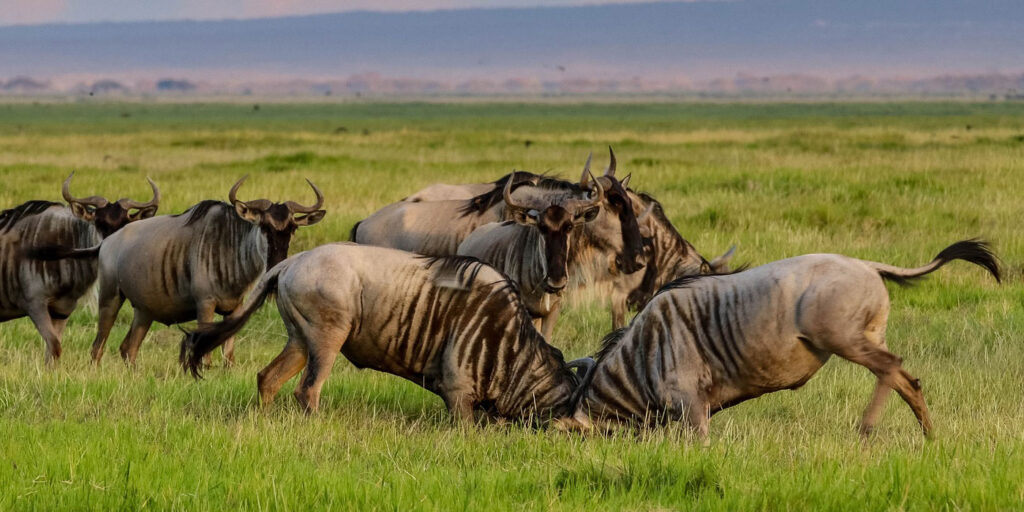
How the Long Rains Affect the Wildebeest Migration?
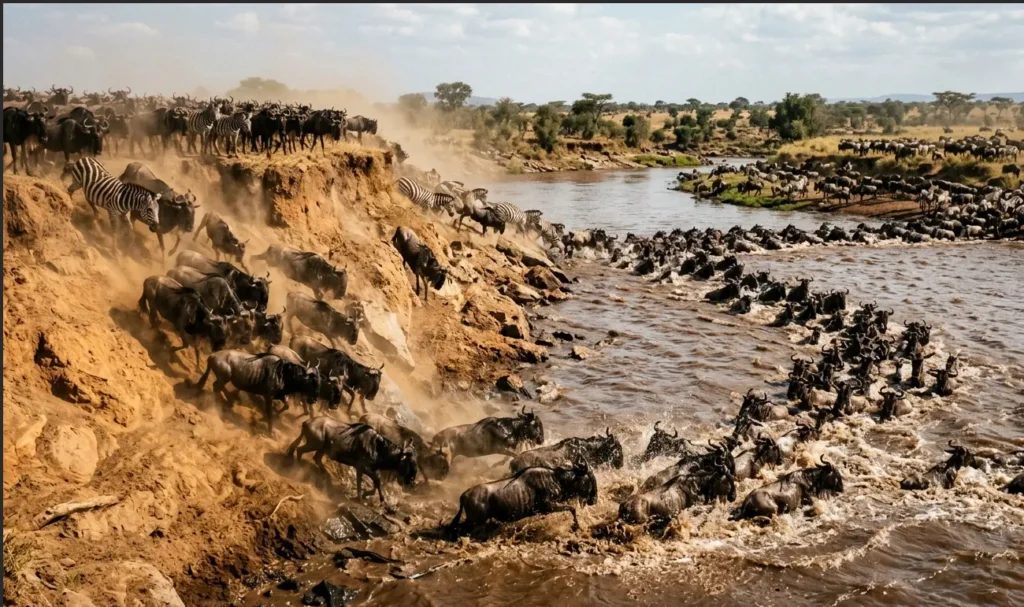
Understanding How the Long Rains Affect the Wildebeest Migration is essential for travellers who want to experience one of Africa’s most extraordinary natural events while appreciating the environmental forces that influence wildlife movements across the Serengeti-Mara ecosystem. Every year, millions of wildebeest, accompanied by zebras and gazelles, travel across vast grasslands in search of fresh grazing and reliable water sources. Although the migration takes place throughout the year, seasonal rainfall plays a particularly important role in determining where the herds move, how quickly they travel and which habitats become attractive for feeding. In Tanzania, the long rains generally occur between March and May, although their timing and intensity can vary between years and geographical areas. During this period, rainwater supports the growth of fresh grasses, replenishes seasonal water sources and transforms sections of the Serengeti into beautiful green landscapes.
These environmental changes influence the distribution of grazing animals, encouraging migrating herds to explore different feeding grounds as vegetation develops. April and May are particularly interesting months because large groups may move through central and western sections of the Serengeti, depending on rainfall patterns and pasture availability. Furthermore, the long rains contribute to increased vegetation growth, which supports numerous herbivores and provides feeding opportunities for different wildlife species. Predators such as lions, cheetahs, leopards and spotted hyenas also benefit from the presence of large concentrations of grazing animals. For international visitors planning Tanzania Safaris, understanding the relationship between rainfall and migration movements helps create realistic expectations and better travel itineraries. At Terenga Africa Safaris & Travel Ltd, we believe that an exceptional wildlife safari should provide more than animal sightings.
How Do the Long Rains Influence the Movement of Wildebeest Herds?
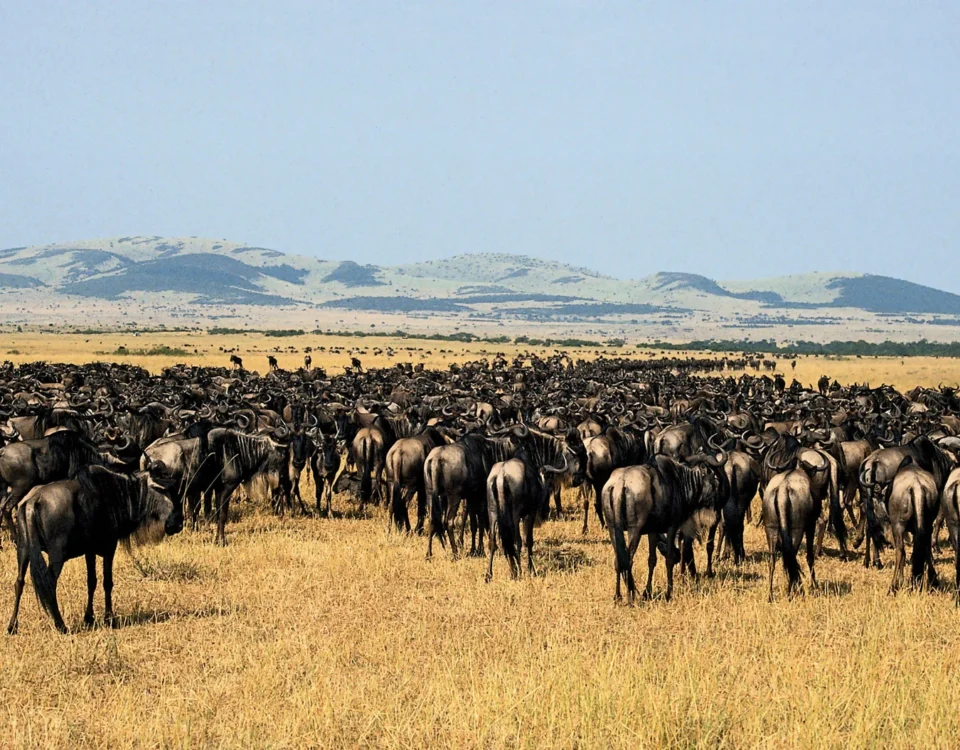
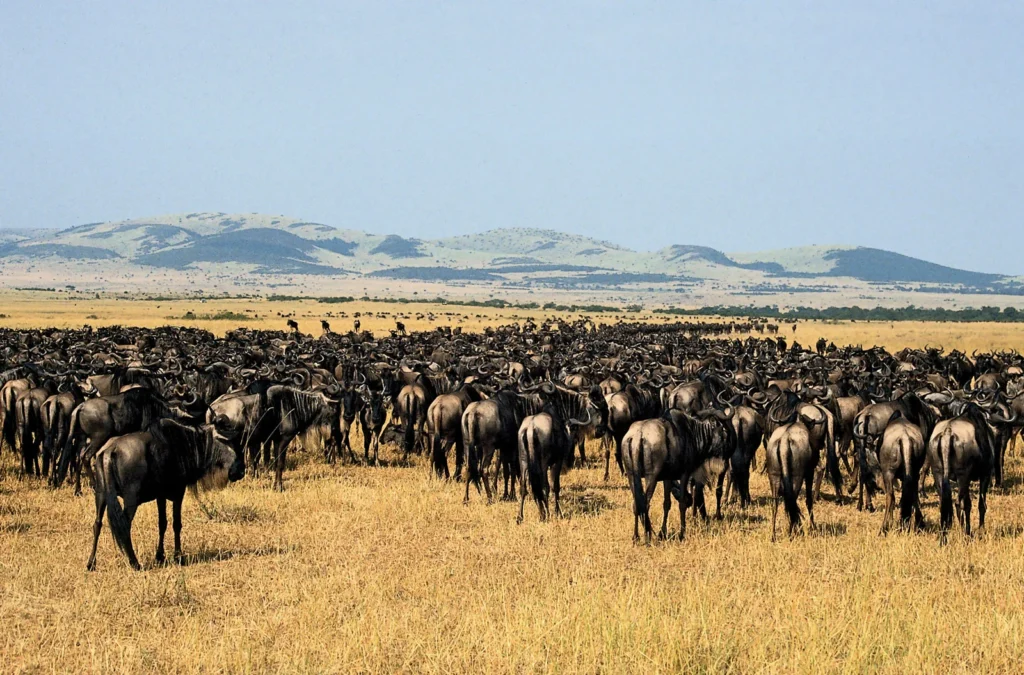
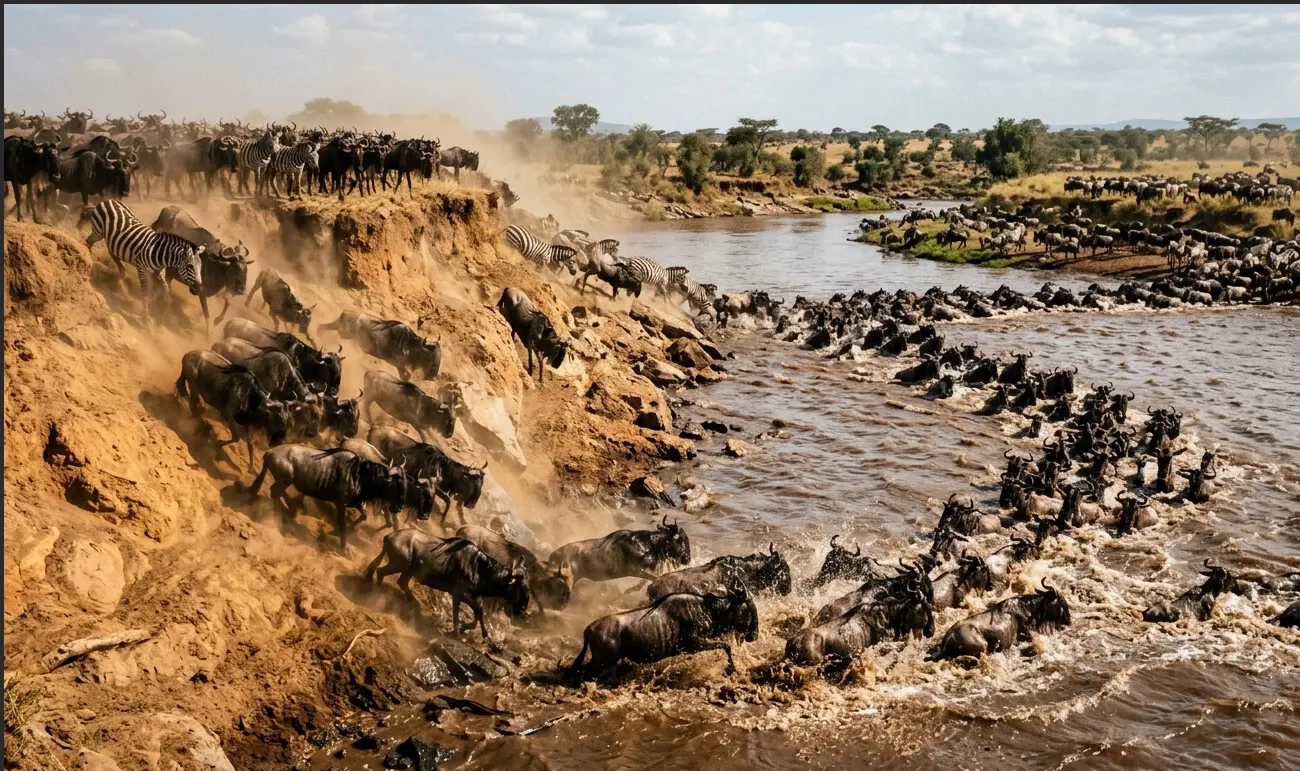
One of the most important aspects of How the Long Rains Affect the Wildebeest Migration is the relationship between rainfall, fresh vegetation and the movement of large grazing herds. Wildebeest depend heavily on nutritious grasslands, and their annual journey is closely connected to the changing availability of suitable pasture across the Serengeti ecosystem. When the long rains begin, rainfall encourages new vegetation to develop across different parts of the landscape, creating feeding opportunities for migrating animals. As grasses grow and water becomes more widely available, the distribution of suitable grazing areas changes, influencing the direction and pace of the herds. During March, April and May, migrating wildebeest generally move away from the southern plains and progressively explore central and western sections of the Serengeti, although their exact locations differ from year to year.
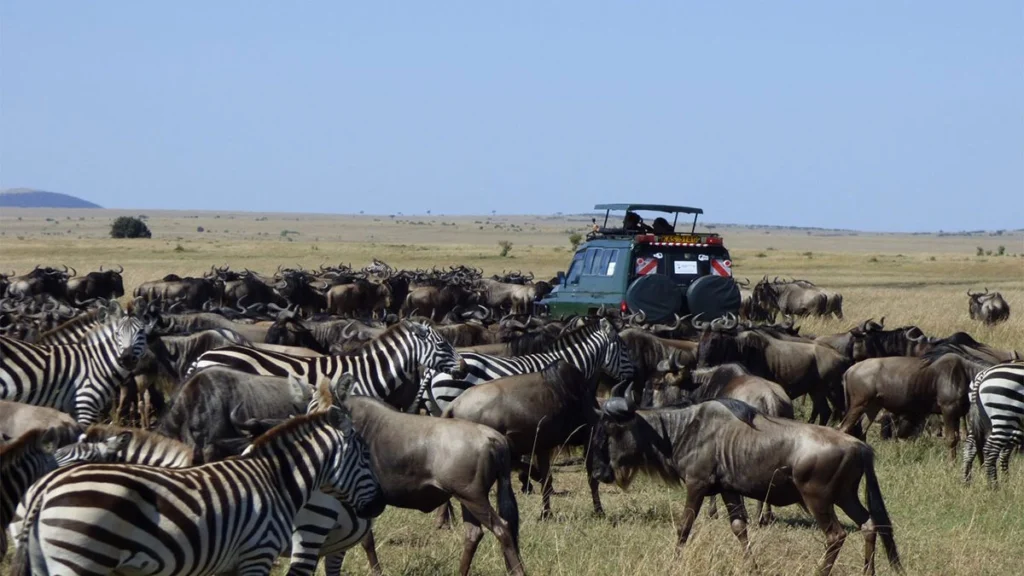
Some groups may remain in areas where grazing conditions continue to be favourable, while others travel considerable distances in search of fresh pasture. Unlike a single organised procession, the Great Migration consists of numerous groups moving independently and sometimes gathering into enormous concentrations. Zebras frequently accompany wildebeest because the two species have different feeding preferences, allowing them to benefit from the same grassland environments. Rainfall also affects the condition of natural water sources, reducing the need for animals to travel as far in search of drinking water. For visitors undertaking Tanzania Adventures, observing these movements offers an opportunity to understand how wildlife responds to changing environmental conditions. Experienced safari guides can explain the significance of seasonal vegetation, identify promising wildlife-viewing locations and help travellers appreciate the migration as a continuous ecological process rather than a predictable event.
13 Days Tanzania Northern Circuit & Botswana Safari
What Happens to the Serengeti Landscape During the Long Rainy Season?
Another fascinating element of How the Long Rains Affect the Wildebeest Migration is the dramatic transformation of the Serengeti landscape. Following seasonal rainfall, sections of the ecosystem develop fresh green vegetation, temporary water pools and flourishing grasslands that create a beautiful natural environment for wildlife. Areas that may appear dry and dusty during other months can become covered with new plant growth, providing important feeding grounds for wildebeest, zebras, gazelles and other herbivores. Seasonal streams and water-filled depressions also become more common, contributing to the replenishment of the wider ecosystem. This transformation supports different forms of biodiversity, including insects, birds and smaller animals that depend on healthy habitats. During April and May, changing cloud formations can create dramatic skies, making the rainy season especially attractive for landscape photographers.
Visitors may experience beautiful contrasts between green plains, scattered acacia trees, distant hills and large concentrations of grazing wildlife. Furthermore, the increased availability of vegetation can influence where different animals spend their time, creating changing wildlife-viewing opportunities across the national park. However, the long rains can also make certain unpaved roads slippery or difficult to navigate, particularly after heavy showers. Some routes may become temporarily inaccessible, requiring safari operators to adjust driving plans according to local conditions. Despite these challenges, the green season offers a rewarding alternative to the traditional dry-season experience. At Terenga Africa Safaris & Travel Ltd, we encourage travellers to appreciate the Serengeti’s seasonal beauty and understand that rainfall is an essential part of the natural processes sustaining its wildlife populations.
How Do the Long Rains Affect Wildebeest Feeding and Survival?
Understanding How the Long Rains Affect the Wildebeest Migration also involves examining the importance of fresh grazing for animal nutrition, reproduction and survival. Wildebeest are specialised grazers that depend on grasslands for their daily food requirements. Seasonal rainfall encourages new grass growth, helping maintain feeding areas across the Serengeti ecosystem. Fresh vegetation can provide important nutrients that support adult animals, pregnant females and mothers raising newborn calves. Following the main calving period, which generally takes place between January and February in the southern Serengeti and Ndutu region, young wildebeest continue developing while moving with their mothers and the wider herds.
As the long rains progress, changing pasture conditions influence where animals spend their time and how far they travel between feeding areas. Adequate rainfall can improve the availability of nutritious grazing, although excessive or uneven rainfall may also affect accessibility to certain habitats. The distribution of vegetation is therefore important because wildlife cannot rely on every section of the ecosystem equally throughout the year. Zebras and wildebeest often graze together, with their different feeding habits allowing them to use grasslands efficiently. Other herbivores, including gazelles, may also benefit from improved vegetation conditions. Healthy grazing environments contribute to the overall strength of the migration because animals need sufficient food and water to maintain their physical condition during long journeys. Nevertheless, rainfall alone does not determine survival. Predation, disease, habitat conditions and natural competition also influence wildlife populations.
How Do the Long Rains Influence Predator Activity During the Migration?
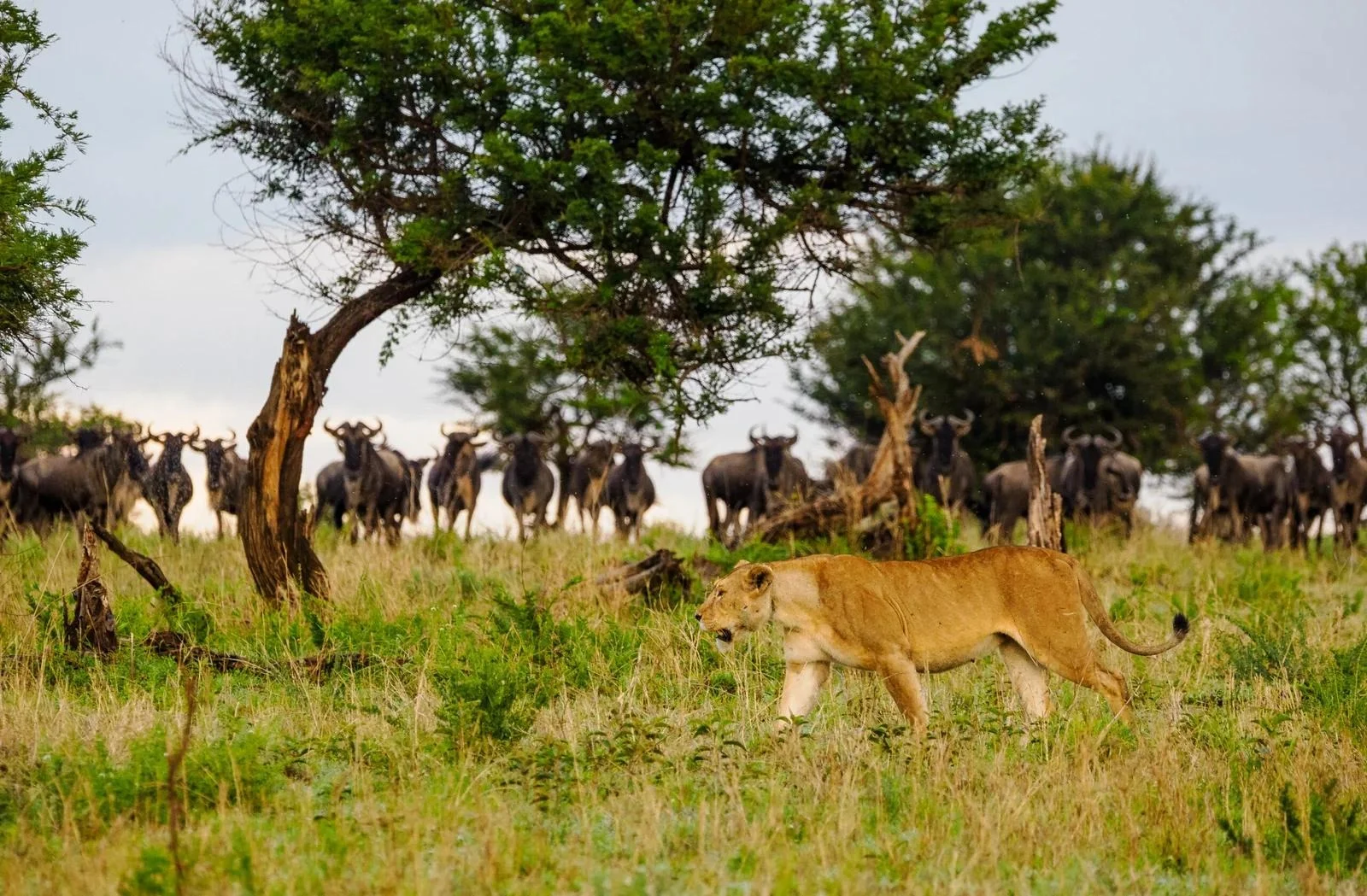
A major reason How the Long Rains Affect the Wildebeest Migration attracts wildlife enthusiasts is the influence of migrating herbivores on predator behaviour. The Serengeti supports important populations of carnivores, including lions, cheetahs, leopards, spotted hyenas and jackals. These predators depend on the availability of prey, and the movement of wildebeest and other grazing animals creates changing feeding opportunities throughout the ecosystem. During the long rainy season, large concentrations of herbivores may move through central and western sections of the Serengeti, attracting predators to areas where food is available. Lions may be observed resting beneath trees, moving through grasslands or hunting in coordinated groups.
Cheetahs often use open plains to search for suitable prey, while leopards tend to favour areas offering cover and opportunities for concealment. Spotted hyenas are highly adaptable carnivores that may hunt independently or in groups, depending on the circumstances. The presence of young grazing animals can also influence predator-prey interactions, although the main wildebeest calving period generally occurs earlier in the year. Importantly, rainfall changes vegetation density and visibility, meaning predators and prey may become easier or more difficult to locate depending on the habitat. Game drives during this period can therefore produce exciting wildlife encounters, although animal behaviour remains unpredictable. Professional guides help visitors identify tracks, interpret animal movements and understand the ecological importance of carnivores. At Terenga Africa Safaris & Travel Ltd, we encourage responsible wildlife viewing that allows predators and their prey to behave naturally without unnecessary disturbance.
16 Days Luxury Kenya and Tanzania Safari
What Are the Expectations During a Wildebeest Migration Safari in the Long Rains?
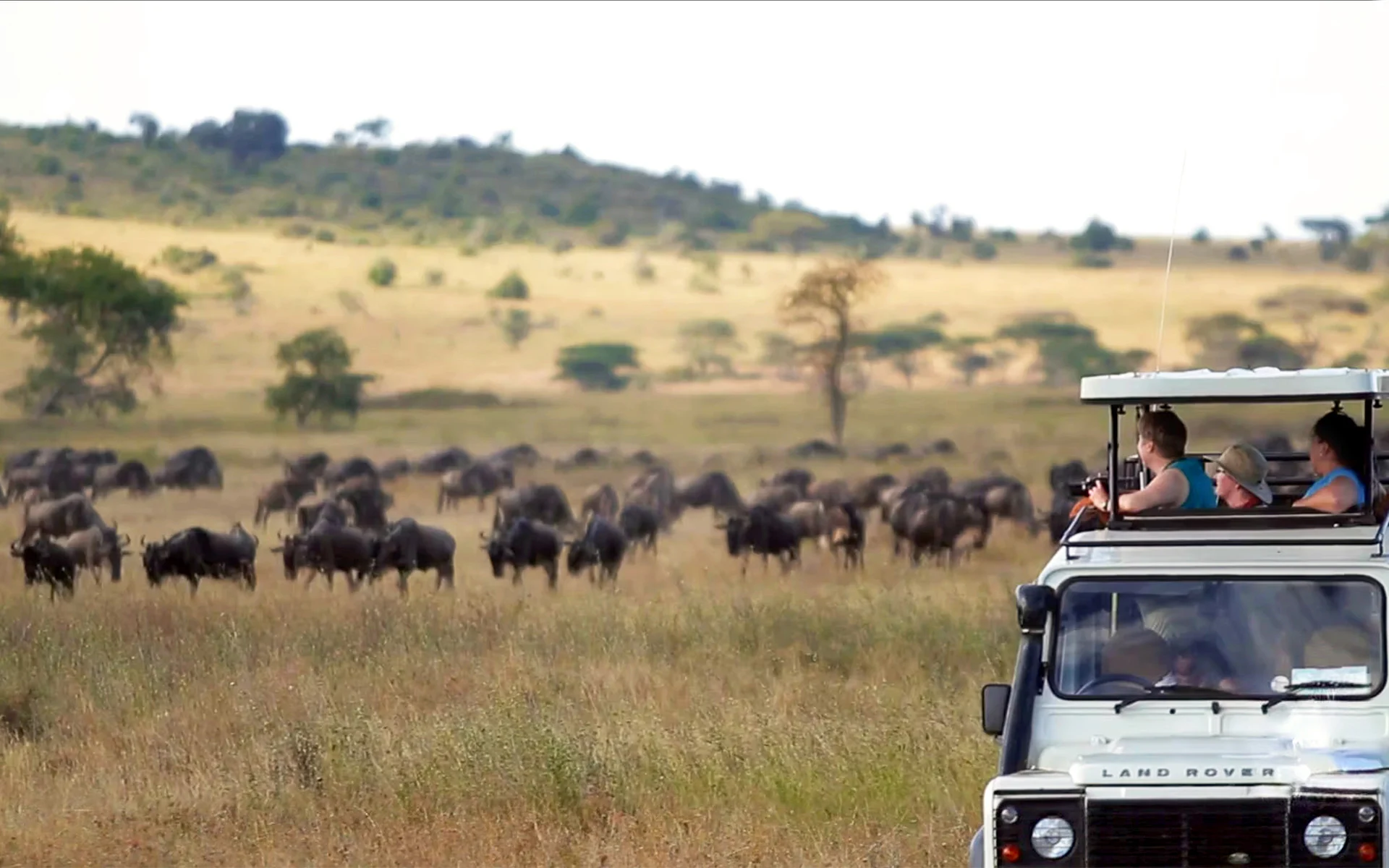
Knowing How the Long Rains Affect the Wildebeest Migration helps travellers prepare for the distinctive experiences associated with visiting Tanzania between March and May. During this period, visitors can expect greener landscapes, changing weather conditions, seasonal water sources and wildlife movements influenced by rainfall and pasture availability. Most safari days begin early in the morning, when temperatures are cooler and animals may be active. Guests travel with experienced driver-guides through selected wildlife areas, searching for migrating herds, resident animals and predators. Depending on the itinerary, full-day game drives may be arranged to provide additional time for wildlife observation and photography. However, the rainy season requires flexibility because showers can affect road conditions and influence which areas are accessible. Certain unpaved routes may become muddy, while temporary watercourses can change the condition of particular tracks.
Before booking, travellers should confirm camp operating dates, facilities and accessibility during the long rains. Wildlife sightings are never guaranteed, and migrating herds may be distributed across several parts of the Serengeti. Consequently, patience and realistic expectations are essential. Visitors should also appreciate the educational side of the experience, including learning about animal behaviour, conservation and the influence of seasonal weather. For international guests, a well-organised green-season safari provides an opportunity to experience Tanzania’s wilderness in a quieter and visually distinctive setting.
When Is the Best Time to Experience the Wildebeest Migration?
When exploring How the Long Rains Affect the Wildebeest Migration, understanding the annual migration calendar is essential for selecting the most appropriate travel dates. The Great Migration occurs throughout the year, but different locations become particularly important as the herds respond to seasonal rainfall and grazing conditions. January and February are generally associated with the wildebeest calving season in the southern Serengeti and Ndutu region. March often provides opportunities to observe the continuation of calving-season activity and the gradual movement of herds towards other grazing areas. April and May fall within Tanzania’s long rainy season, when migrating animals may move through central and western sections of the Serengeti. During June and July, herds generally continue their journey towards northern areas, with possible concentrations in the western corridor and northern Serengeti.
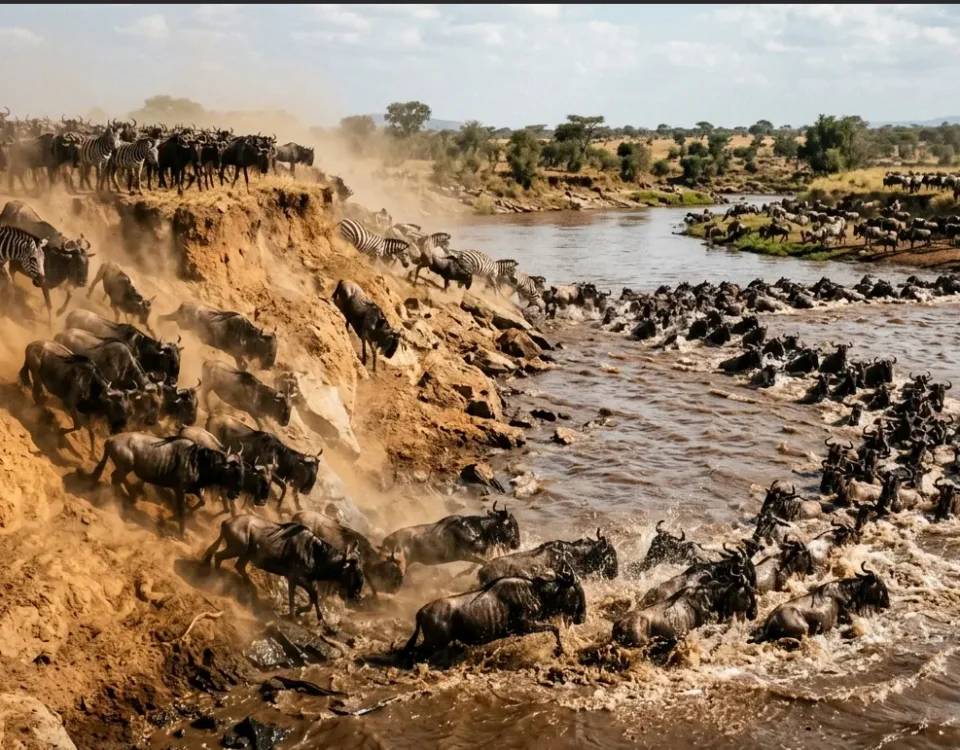
Between approximately July and October, travellers may have opportunities to witness the famous Mara River crossings, although these events are unpredictable and cannot be guaranteed on specific dates. November and December often involve the gradual return of migrating animals towards the southern plains as short rains encourage fresh vegetation growth. Visitors interested in experiencing green landscapes and the movement of herds during the long rains may consider April or May. Those seeking newborn wildebeest should generally prioritise January and February, while travellers hoping to see possible river crossings should investigate the later dry-season months. At Terenga Africa Safaris & Travel Ltd, we recommend choosing travel dates according to the wildlife experiences you value most rather than relying on a fixed migration timetable.
Which Areas Are Best for Experiencing the Migration During the Long Rains?
Understanding How the Long Rains Affect the Wildebeest Migration also requires selecting the right safari destinations within the wider Serengeti ecosystem. Central Serengeti, particularly the Seronera region, is an important wildlife destination because it supports resident animals throughout the year and may provide opportunities to observe migrating herds during parts of the rainy season. The western corridor becomes increasingly relevant as many migrating animals gradually move westward in search of suitable grazing. Depending on rainfall and herd distribution, visitors may also encounter wildlife across sections of the southern Serengeti and neighbouring conservation areas. Ndutu is especially recognised for the earlier calving season, although some migrating animals may remain in the wider southern ecosystem during the transition into the long rains. Each area offers different wildlife habitats and photographic opportunities.
Central Serengeti is known for its combination of open grasslands, rocky outcrops and woodland environments, while the western corridor features riverine habitats and extensive plains. The southern plains offer wide-open landscapes that are particularly attractive for photographing grazing herds. Travellers should understand that the most suitable location can change during the season, making up-to-date local information important when choosing accommodation. Tanzania Tours can also be extended to other northern circuit destinations, including Ngorongoro Conservation Area and Tarangire National Park. Visitors wishing to explore more of East Africa may consider combining Tanzania Safaris with Kenya Safaris, creating a broader journey through different wildlife habitats and conservation areas. Careful itinerary planning allows travellers to appreciate the diversity of East African wildlife while making the most of their available holiday time.
What Should You Pack for a Wildebeest Migration Safari During the Long Rains?
Proper preparation is important when considering How the Long Rains Affect the Wildebeest Migration, particularly because weather conditions can change throughout the day. Travellers visiting Tanzania between March and May should pack lightweight clothing that can be layered according to temperature and rainfall. Neutral colours such as khaki, olive, beige and brown are suitable for safari activities, while breathable shirts and comfortable trousers help during extended game drives. A waterproof jacket, rain poncho or lightweight raincoat is particularly useful when showers occur. Closed shoes with good grip are recommended because pathways and outdoor areas around camps may become muddy. Early mornings can be cool, so carrying a fleece or warm jacket is advisable. Photography enthusiasts should bring camera equipment with appropriate protective covers, telephoto lenses, spare batteries and additional memory cards.
Waterproof camera bags and lens-cleaning materials help protect valuable equipment from moisture and dust. Binoculars are also useful for observing wildlife across distant grasslands. Other essential items include sunscreen, sunglasses, insect repellent, a wide-brimmed hat, reusable drinking water bottles and personal medication. Important travel documents should include a valid passport, relevant visa documentation, travel insurance and any required health certificates. Visitors travelling on small domestic safari aircraft should confirm luggage restrictions because baggage allowances may be limited. Before departure, check your accommodation facilities and consult your safari operator about current weather conditions, road accessibility and recommended clothing. Thoughtful packing ensures that you remain comfortable and prepared while concentrating on the wildlife encounters and beautiful landscapes that make Tanzania’s long rainy season special.
Why Choose Terenga Africa Safaris & Travel Ltd for Your Wildebeest Migration Safari?
Choosing an experienced safari operator is an important consideration when learning How the Long Rains Affect the Wildebeest Migration and planning a successful wildlife holiday. At Terenga Africa Safaris & Travel Ltd, we understand that seasonal safari experiences require careful preparation, reliable destination information and realistic expectations. Every traveller has different interests, whether the goal is to photograph migrating wildebeest, observe predators, discover birdlife or appreciate the transformation of the Serengeti during the rainy season. Our approach focuses on helping visitors select appropriate destinations, understand seasonal conditions and develop itineraries that match their individual travel preferences. The long rains require particular attention to accommodation locations and road accessibility because certain wildlife areas may become more challenging to reach following heavy rainfall. Knowledgeable guidance and flexible game-drive arrangements are therefore important elements of a rewarding experience.
Clear communication about safari arrangements, accommodation standards, travel distances and possible weather conditions helps international guests make informed decisions before departure. Travellers interested in broader African experiences can also discover Kenya Safaris, where the Maasai Mara and Amboseli offer different wildlife encounters. Meanwhile, Tanzania Adventures can include cultural experiences, scenic landscapes and visits to other remarkable national parks. Our objective is to help visitors discover the natural and cultural richness of East Africa through meaningful, carefully organised journeys. With a commitment to informative travel planning and responsible wildlife experiences, Terenga Africa Safaris & Travel Ltd aims to make every safari memorable while celebrating the ecological importance of Tanzania’s extraordinary wilderness.
Conclusion: Discover How the Long Rains Affect the Wildebeest Migration with Terenga Africa Safaris & Travel Ltd
Understanding How the Long Rains Affect the Wildebeest Migration reveals the important relationship between seasonal rainfall, fresh vegetation, wildlife movements and the ecological balance of the Serengeti-Mara ecosystem. From the development of green grasslands and changing water sources to the movement of wildebeest herds and the behaviour of predators, the long rainy season influences almost every aspect of this extraordinary natural spectacle. Although April and May may bring occasional rainfall and challenging road conditions, they also provide opportunities to experience Tanzania’s wilderness from a distinctive seasonal perspective. Whether you are a first-time safari visitor, a wildlife photographer or an experienced nature enthusiast, the green season offers valuable opportunities to discover the beauty and complexity of African wildlife. At Terenga Africa Safaris & Travel Ltd, we are passionate about helping international travellers explore Tanzania through professionally planned safaris, responsible wildlife encounters and informative travel experiences.
 Plan Your Wildebeest Migration Safari with Terenga Africa Safaris & Travel Ltd.
Explore the Serengeti, discover the influence of seasonal rainfall and experience the remarkable wildlife movements that make Tanzania one of Africa’s most treasured safari destinations.