The Complete Serengeti Great Migration Cycle Explained
August 22, 2026
What Is the Serengeti Great Wildlife Migration?
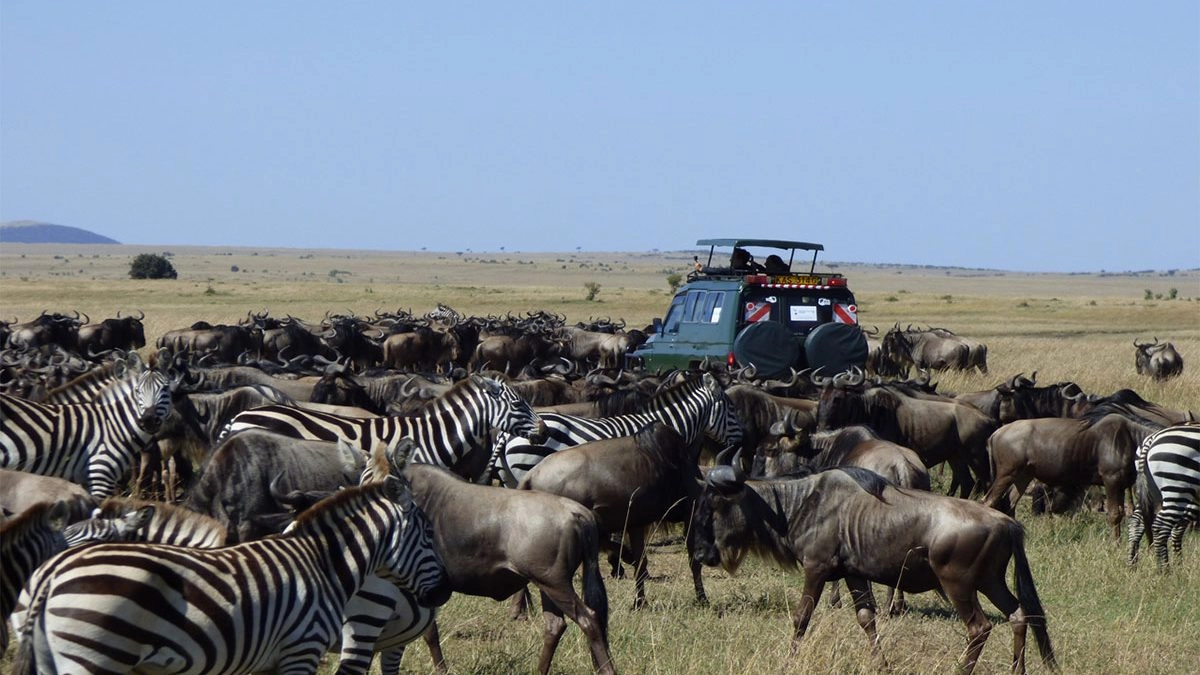
What Is the Serengeti Great Wildlife Migration? It is a vast annual movement of herbivores across the Serengeti-Mara ecosystem. Millions of wildebeest move alongside hundreds of thousands of zebras and gazelles.
The animals travel between Tanzania and Kenya while following seasonal rainfall, fresh grass, and available water. Their circular journey covers roughly 1,000 kilometers across the wider ecosystem.
Therefore, the migration does not represent one single event. Instead, it forms a continuous ecological cycle that changes throughout the year.
The Serengeti provides the heart of this extraordinary natural system. Its expansive savannah supports large herbivore populations and numerous predators.
A Tanzania safari focused on migration requires careful timing and flexible planning. The herds respond to rainfall rather than fixed calendars.
Moreover, the migration creates opportunities for exceptional wildlife photography. Travelers can witness calving, predator activity, mass movement, and dramatic river crossings.
At Terenga Africa Safaris and Travels Ltd, we approach migration safaris with realistic expectations. We focus on wildlife behavior, seasonal patterns, responsible viewing, and quality travel experiences.
What Is the Serengeti Great Wildlife Migration? It is nature operating through movement, survival, reproduction, and seasonal change.
What Is the Serengeti Great Wildlife Migration? Understanding the Scale
Millions of Hooves on the Move
What Is the Serengeti Great Wildlife Migration? It is one of the world’s largest terrestrial wildlife movements.
UNESCO describes the Serengeti migration as an annual circular trek involving more than one million wildebeest and hundreds of thousands of other ungulates.
Current descriptions often place the wider herd around two million wildebeest, alongside large numbers of zebra and gazelles. Population estimates vary between sources and years.
This enormous movement stretches across a connected ecosystem. The route includes Tanzania’s Serengeti and Kenya’s Maasai Mara.
Wildebeest form the dominant force within the migration. Zebras and gazelles travel through overlapping areas and follow similar seasonal resources.
Furthermore, predators follow the herds. Lions, cheetahs, leopards, hyenas, crocodiles, and wild dogs benefit from the enormous concentration of prey.
Consequently, the migration influences the entire food web. Grazing animals support predators, scavengers, and other ecosystem processes.
A Tanzania wildlife safari during migration can therefore reveal much more than moving herds. It reveals a complete ecological system working across enormous landscapes.
What Is the Serengeti Great Wildlife Migration? Why Do the Animals Move?
Following Rain and Fresh Grass
What Is the Serengeti Great Wildlife Migration? The simplest explanation involves survival.
Wildebeest, zebras, and gazelles follow changing vegetation and water availability. Rainfall determines where fresh, nutritious grass emerges across the Serengeti-Mara landscape.
The animals therefore respond to environmental conditions rather than human calendars. Rainfall patterns can shift, which means herd locations can change.
The southern Serengeti provides important short-grass plains during the breeding season. These areas offer nutritious grazing for pregnant females and newborn calves.
Later, the herds move north as grass conditions change. They pass through central Serengeti areas before reaching the Western Corridor.
Eventually, many herds approach the northern Serengeti and Kenya’s Maasai Mara. The animals continue searching for fresh grazing as conditions change.
This constant movement creates the famous migration cycle.
For travelers, this pattern carries one important lesson. Tanzania safaris focused on migration should remain flexible.
What Is the Serengeti Great Wildlife Migration? Understanding the Annual Cycle
A Journey Without a Fixed Schedule
What Is the Serengeti Great Wildlife Migration? It is a year-round process rather than a short annual spectacle.
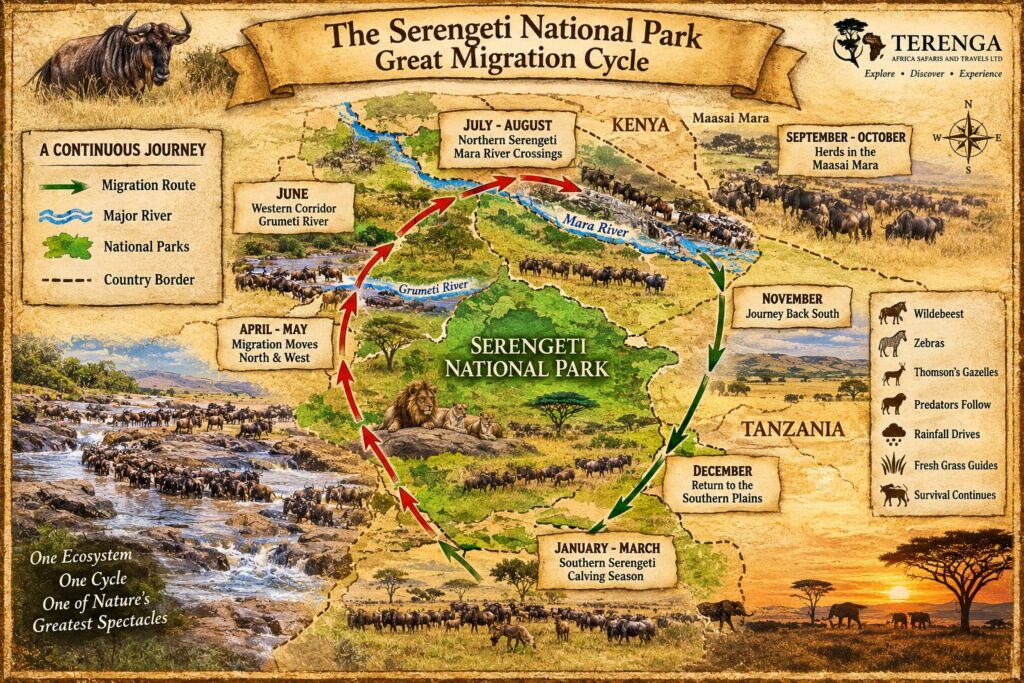
The cycle usually begins in the southern Serengeti and neighboring Ngorongoro ecosystem. Green grass and favorable conditions attract large herds into the area.
Calving usually occurs between January and February. Some sources extend the broader calving period into the following months.
During calving, large numbers of calves enter the ecosystem. This creates opportunities for predators because vulnerable young animals provide abundant prey.
As the season progresses, the herds gradually move northward. They pass through central Serengeti and then approach the Western Corridor.
By midyear, the herds can reach the Grumeti region. Later, many animals continue toward northern Serengeti and the Maasai Mara.
Eventually, the cycle turns south. Returning rains encourage fresh vegetation, drawing the herds toward Tanzania again.
Weather can alter this pattern. Therefore, travelers should avoid treating migration months as rigid guarantees.
What Is the Serengeti Great Wildlife Migration? The Calving Season
Witness New Life on the Southern Plains
What Is the Serengeti Great Wildlife Migration? It is also a remarkable story of reproduction.
The southern Serengeti provides important calving grounds during the early part of the annual cycle. Vast grasslands offer nutritious grazing for mothers and newborn calves.
Calving commonly peaks around January and February. National Geographic notes that hundreds of thousands of calves can arrive during this period.
A Tanzania wildlife tour during this period can deliver powerful wildlife experiences.
Newborn calves quickly face predators. Lions, cheetahs, hyenas, and other predators remain close to productive grazing areas.
Nevertheless, the calving season does not consist only of predator drama. Travelers can also observe strong maternal behavior and rapid development among young animals.
Photographers often value this season for intimate wildlife moments. Soft grasses and dramatic skies can also create attractive landscape compositions.
A Tanzania safari during calving season suits travelers who prefer wildlife behavior and photography. It does not require a river crossing to become memorable.
What Is the Serengeti Great Wildlife Migration? The Journey North
Moving Toward New Pastures
What Is the Serengeti Great Wildlife Migration? It is a continuous search for suitable grazing.
After the southern calving period, large herds begin moving north. The journey gradually takes them through the central and western Serengeti.
Central Serengeti provides important habitat and wildlife opportunities throughout the year. Seronera also offers strong general wildlife viewing.
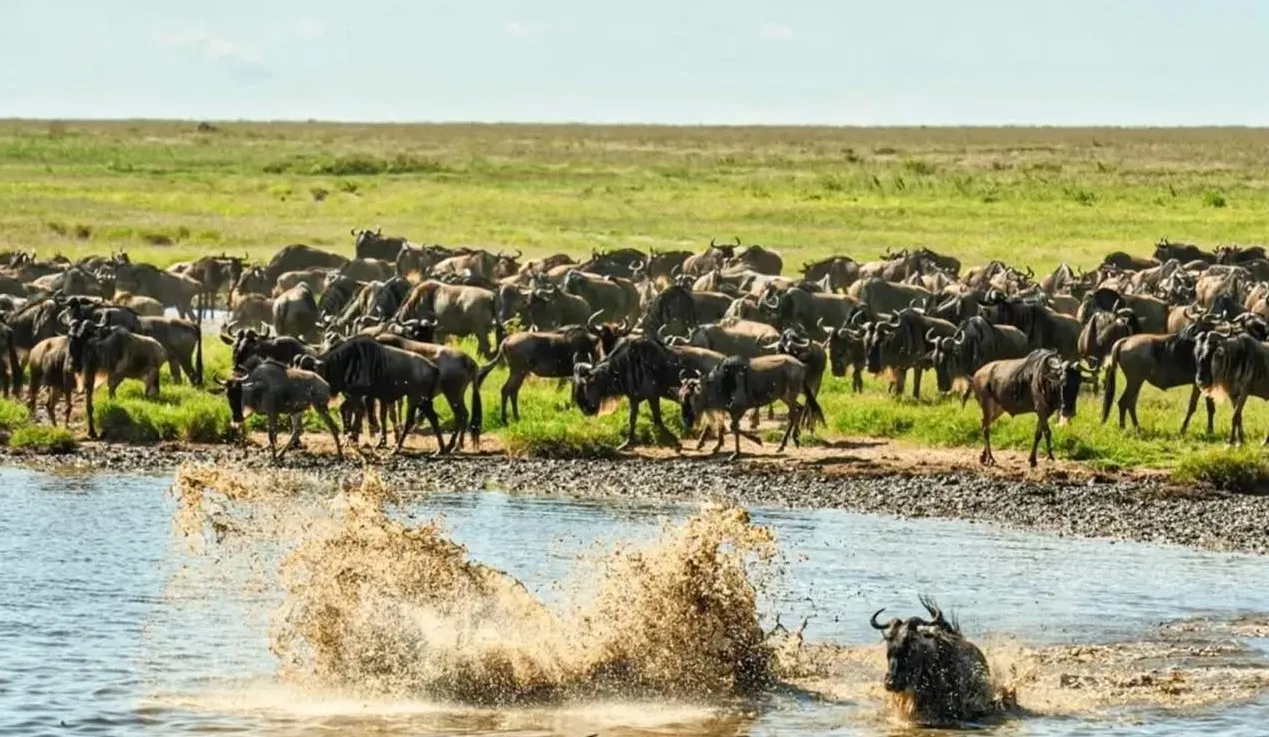
Later, the herds enter the Western Corridor. Here, the Grumeti River creates one of the migration’s significant natural obstacles.
The official Tanzania tourism portal highlights the movement north from southern breeding grounds. It also identifies the Grumeti River as a major crossing area.
River crossings can become dramatic. However, they represent only one part of the larger migration.
Travelers should therefore avoid focusing exclusively on crossings. Herd movement across open plains can provide equally powerful experiences.
A well-planned Tanzania wildlife safari should follow the broader ecological story.
What Is the Serengeti Great Wildlife Migration? Grumeti River Crossings
One of the First Major Obstacles
What Is the Serengeti Great Wildlife Migration? It includes challenging river crossings along the route.
The Grumeti River lies within the Western Corridor. Some migrating animals cross this river while continuing toward northern grazing areas.
Crocodiles inhabit the river system, creating a genuine natural hazard. The river also contains currents, steep banks, and uneven terrain.
A Tanzania safari in the Western Corridor can provide opportunities to observe migration activity. However, crossing dates depend on rainfall and herd movements.
Not every herd crosses simultaneously. Different groups may take different routes and respond differently to changing conditions.
Consequently, travelers need patience. A herd may gather near a river for hours before committing to the crossing.
Responsible guides position vehicles carefully. They also maintain distances and avoid behaviors that could disturb animals.
What Is the Serengeti Great Wildlife Migration? It is nature without choreography.
What Is the Serengeti Great Wildlife Migration? Mara River Crossings
The Most Iconic Migration Scene
What Is the Serengeti Great Wildlife Migration? Many travelers associate it with the famous Mara River crossings.
The northern Serengeti provides access to the Mara River. Migrating herds may cross toward Kenya’s Maasai Mara or move through northern Serengeti areas.
National Geographic identifies July through early November as a broad period for Mara and Sand River crossings.
Recent guidance also identifies August and September as strong periods for northern river-crossing opportunities. Weather can still shift the timing considerably.
A Tanzania adventure safari during this period can produce unforgettable wildlife scenes. Herds gather near riverbanks before choosing when to cross.
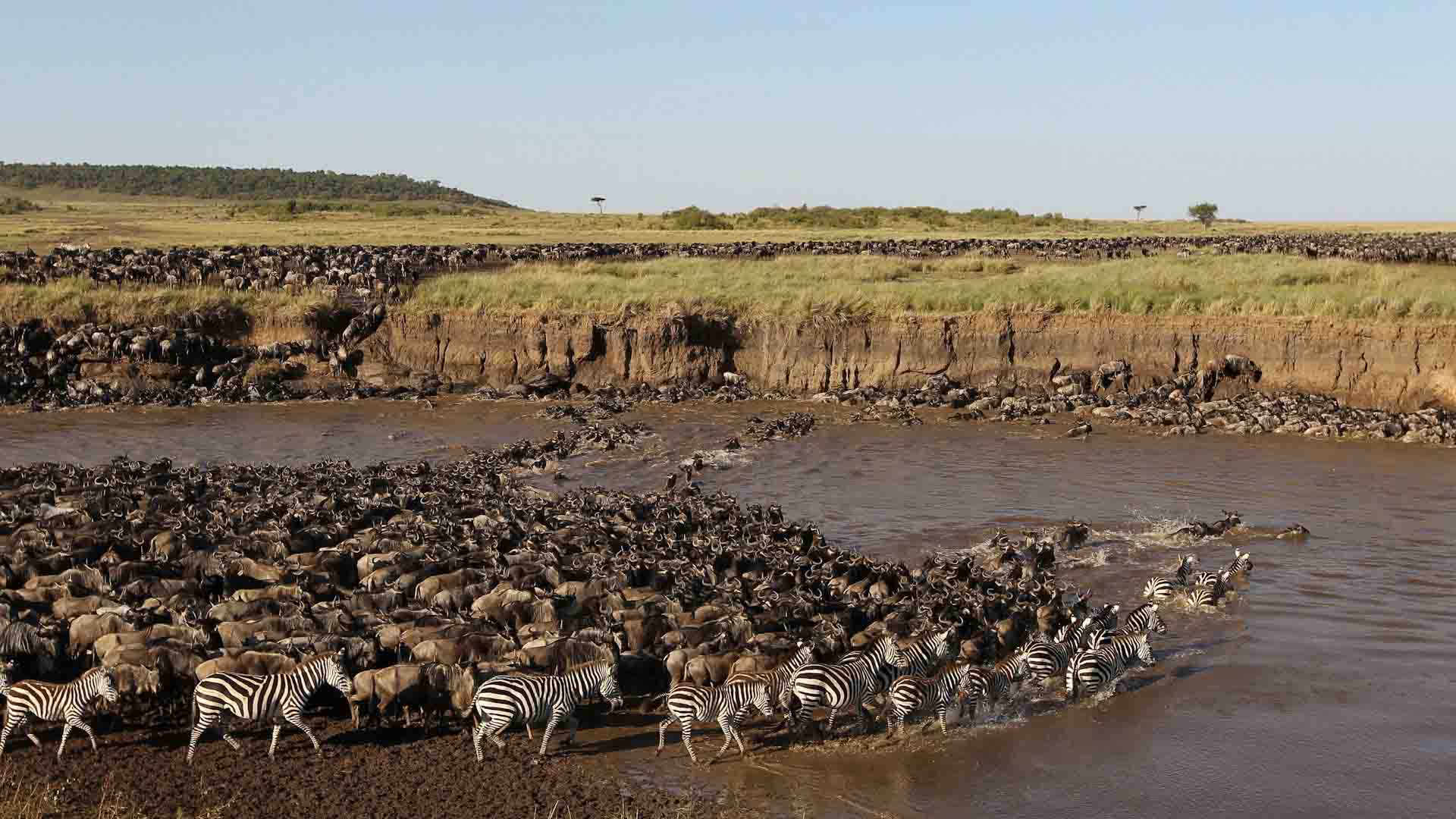
The actual crossing can happen quickly. Animals may suddenly rush down steep banks and enter turbulent water.
Crocodiles add another layer of danger. The crossing remains completely natural and unpredictable.
Therefore, travelers should never expect a guaranteed crossing on a particular day.
What Is the Serengeti Great Wildlife Migration? Predators and Survival
The Food Chain in Motion
What Is the Serengeti Great Wildlife Migration? It is also an enormous predator-prey system.
The migrating herds provide food for numerous predators. Lions, cheetahs, leopards, hyenas, and crocodiles all benefit from increased prey availability.
Predators can target young, weak, injured, or isolated animals. River crossings create additional opportunities for crocodiles.
However, predators do not simply follow the herds everywhere. They respond to habitat, prey availability, territorial needs, and seasonal conditions.
This complexity makes a Tanzania wildlife safari especially educational.
Guides can explain predator behavior and relationships between grazing species.
Furthermore, scavengers contribute to ecosystem function. Vultures, jackals, hyenas, and other scavengers process remains and return nutrients to the environment.
The migration therefore supports a much larger ecological network.
What Is the Serengeti Great Wildlife Migration? It is a living system where survival connects every species.
What Is the Serengeti Great Wildlife Migration? The Role of Zebra and Gazelles
More Than a Wildebeest Migration
What Is the Serengeti Great Wildlife Migration? It is not only about wildebeest.
Zebras and gazelles form a major part of the wider movement. UNESCO identifies wildebeest, gazelles, and zebras as dominant migrating herbivores.
These animals use the landscape differently. Their feeding patterns can overlap while their dietary preferences vary.
Zebras can move ahead or alongside wildebeest. Gazelles often follow areas with nutritious grasses.
A Tanzania safari therefore offers opportunities to observe several herbivore species together.
The diversity also improves the visual experience. Herds create layered scenes across the plains, especially during broad movements northward.
Photographers can capture zebras, wildebeest, gazelles, and predators within one frame.
A complete Tanzania wildlife tour should therefore focus on the whole migrating community.
What Is the Serengeti Great Wildlife Migration? Why the Serengeti Matters
The Ecosystem Behind the Spectacle
What Is the Serengeti Great Wildlife Migration? It is possible because the Serengeti-Mara ecosystem remains large and interconnected.
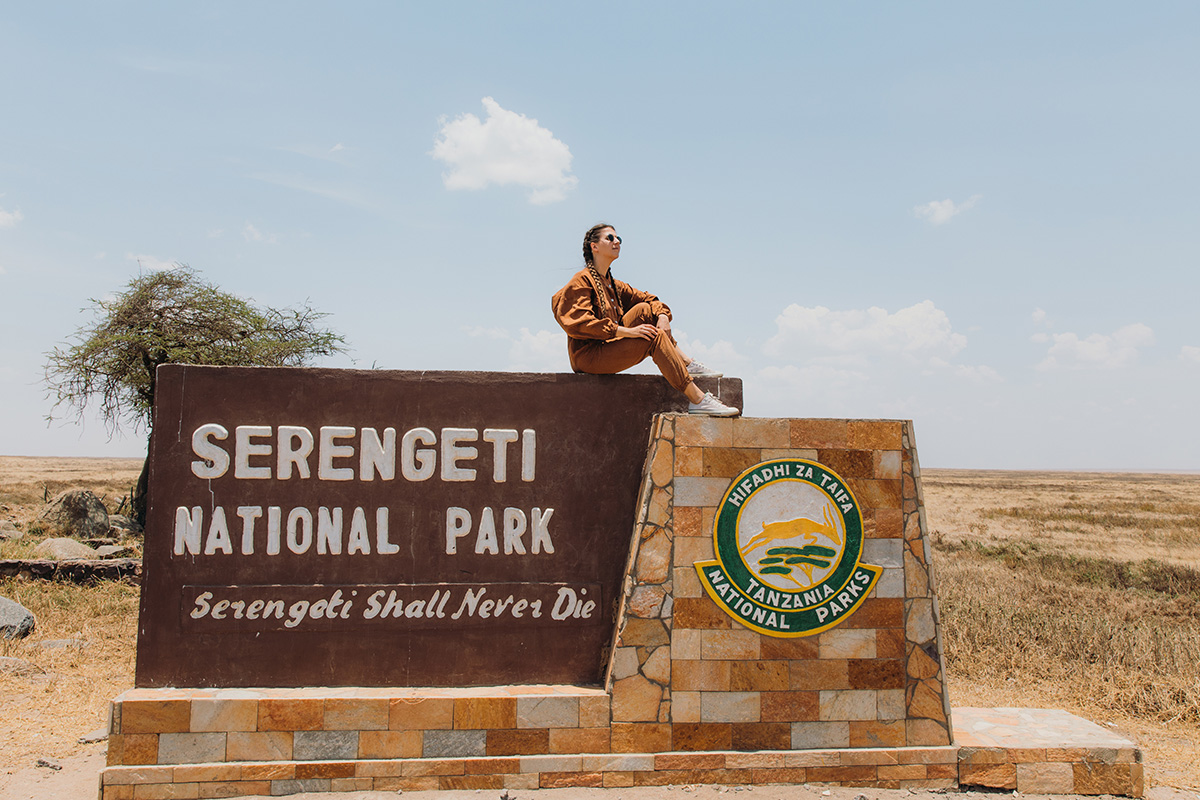
Serengeti National Park covers about 1.476 million hectares. UNESCO recognizes its vast savannah, biodiversity, and extraordinary animal migration.
The broader ecosystem also includes Ngorongoro, Maswa, Grumeti, Ikorongo, Loliondo, and Kenya’s Maasai Mara.
This connectivity allows animals to move between seasonal habitats.
Fragmentation can threaten migration routes. Roads, land conversion, resource pressure, and other disturbances can affect ecological connectivity.
Therefore, conservation requires cooperation across protected areas and national borders.
A Tanzania safari supports this conservation story when travelers choose responsible operators and follow park regulations.
Tourism can create economic value around protected landscapes. Sustainable practices help keep wildlife tourism compatible with long-term conservation goals.
What Is the Serengeti Great Wildlife Migration? Cultural Experiences Around Safari Lodges
Meet the People of the Serengeti Region
What Is the Serengeti Great Wildlife Migration? It is also part of a broader human landscape.
Maasai communities live within the wider Serengeti-Ngorongoro region. UNESCO recognizes Indigenous Maasai people within the Serengeti-Ngorongoro biosphere reserve.
Travelers can include respectful cultural experiences around suitable safari lodges and community programs.
These experiences may include village visits, traditional crafts, local food, music, dance, and community-led storytelling.
Some lodges can also arrange guided cultural walks. Such experiences can introduce visitors to local knowledge about livestock, plants, and landscapes.
A Tanzania safari becomes richer when visitors understand the relationship between conservation and communities.
Travelers should always choose culturally respectful experiences. Ask permission before photographing people, homes, ceremonies, or private activities.
Supporting community enterprises can also strengthen local tourism benefits.
What Is the Serengeti Great Wildlife Migration? Choosing a Safari Lodge
Stay Near the Right Herds
What Is the Serengeti Great Wildlife Migration? It is a moving target.
Therefore, lodge location matters greatly during a migration-focused safari.
Southern Serengeti accommodation works well during calving periods. Central Serengeti provides strong general wildlife viewing and useful access routes.
Western Corridor lodges can position travelers closer to Grumeti activity. Northern Serengeti camps provide better access to potential Mara River crossings.
Recent National Geographic guidance highlights the importance of positioning near Kogatende during northern river-crossing periods.
Mobile camps can provide another advantage. They can move between regions according to seasonal herd patterns.
A Tanzania wildlife safari therefore benefits from strategic accommodation planning.
Terenga Africa Safaris and Travels Ltd can match lodge locations with your preferred migration experience.
What Is the Serengeti Great Wildlife Migration? The Best Time to Visit
Match the Season With Your Goals
What Is the Serengeti Great Wildlife Migration? It changes throughout the year.
For calving experiences, January and February offer strong opportunities in southern Serengeti areas.
From April, herds generally begin moving north. May and June can bring movement toward central and western areas.
The Grumeti region can become important around May and June. Northern migration areas become increasingly relevant later.
July through October provides strong opportunities for northern movements and potential river crossings.
However, rainfall can alter actual timing. Climate variability can also make traditional migration calendars less predictable.
Consequently, no date guarantees a specific event.
A well-planned Tanzania safari should allow flexibility and adequate time.
What Is the Serengeti Great Wildlife Migration? Responsible Tourism
Protect the Migration Experience
What Is the Serengeti Great Wildlife Migration? It is a natural process that requires responsible tourism.
Travelers should remain inside designated routes and follow guide instructions.
Vehicles should maintain safe distances from wildlife. Drivers must avoid blocking migration routes or forcing animals toward difficult terrain.
River crossings require particular care. Excessive vehicle concentration can disturb animals and create unsafe viewing conditions.
Photography should never compromise wildlife welfare.
Furthermore, visitors should minimize waste during safari activities. Reusable bottles can reduce unnecessary plastic.
Choosing responsible accommodation also matters. Look for lodges that value conservation, community relationships, and environmental management.
A Tanzania wildlife tour can support conservation when travelers make thoughtful choices.
What Is the Serengeti Great Wildlife Migration? Photography Opportunities
Capture the Journey Responsibly
What Is the Serengeti Great Wildlife Migration? It is one of Africa’s greatest photography subjects.
Open plains provide expansive compositions. Herds create strong patterns across the landscape.
Calving season offers intimate photographs of mothers and newborns. River crossings create action-filled scenes.
Meanwhile, northern Serengeti landscapes provide dramatic backgrounds for migrating animals.
A Tanzania adventure safari can also include a hot-air balloon experience where available. Tanzania’s official tourism portal lists balloon safaris among Serengeti activities.
From above, travelers can appreciate herd movement across vast plains. However, balloon operations must follow applicable aviation and wildlife regulations.
Ground-based photography remains equally rewarding. Patience often produces better images than rushed pursuit.
Professional guides can help position vehicles responsibly.
What Is the Serengeti Great Wildlife Migration? Planning Your Safari
Build a Flexible Itinerary
What Is the Serengeti Great Wildlife Migration? It is a journey that requires strategic planning.
First, identify your preferred experience. Calving, general herd movement, Grumeti crossings, and Mara River activity require different locations.
Next, select accommodation that matches those seasonal priorities.
A strong Tanzania safari can combine Serengeti with Ngorongoro Conservation Area. This creates greater wildlife and landscape diversity.
Travelers can also add Tarangire or Lake Manyara depending on time.
Moreover, a post-safari extension to Zanzibar can provide relaxation and cultural exploration.
Plan several nights within migration areas. One or two nights can limit opportunities because wildlife moves continuously.
Terenga Africa Safaris and Travels Ltd focuses on flexible itineraries and realistic expectations. We build journeys around travel goals rather than fixed assumptions.
Serengeti Great Wildlife Migration
Safari Inclusions
- Airport transfers
- Safari accommodation
- Meals as specified
- Professional safari guide
- Ground transportation
- Park entry fees
- Game drives
- Migration-focused safari activities
- Drinking water during safari activities
- Cultural experiences where included
- Balloon safari where included
- Government taxes and applicable levies
Safari Exclusions
- International flights
- Visa fees
- Travel insurance
- Alcoholic beverages
- Tips and gratuities
- Personal expenses
- Optional activities
- Laundry services
- Additional accommodation
- Balloon safari unless included
- Personal shopping
- Items of a personal nature
Why Choose Terenga Africa Safaris and Travels Ltd?
Expertise for Your Migration Journey
What Is the Serengeti Great Wildlife Migration? Understanding it requires more than knowing famous crossing months.
Successful planning depends on ecology, geography, seasonal movement, accommodation, driving distances, and realistic wildlife expectations.
Terenga Africa Safaris and Travels Ltd creates personalized Tanzania safaris around these considerations.
Our approach connects travelers with suitable Serengeti regions during relevant seasonal periods.
We also integrate cultural experiences where appropriate. Local communities, food, crafts, and traditions can complement wildlife activities.
Furthermore, we prioritize responsible tourism. Wildlife should remain the focus, while tourism should respect ecosystems and communities.
Clear communication remains essential throughout planning.
What Is the Serengeti Great Wildlife Migration
Final Thoughts: What Is the Serengeti Great Wildlife Migration?
What Is the Serengeti Great Wildlife Migration? It is a year-round ecological journey across the Serengeti-Mara ecosystem.
Millions of wildebeest move with zebras and gazelles. They follow rain, fresh grass, and water across Tanzania and Kenya.
Predators follow the herds. Rivers create natural obstacles. Calving creates new life, while seasonal movement continually reshapes the landscape.
Therefore, What Is the Serengeti Great Wildlife Migration? It is much larger than a dramatic river crossing.
The migration includes months of movement across open plains. It includes calving, grazing, predator encounters, river crossings, and the eventual return south.
A Tanzania wildlife safari can reveal different parts of this cycle throughout the year.
Meanwhile, Tanzania adventure safaris can combine migration viewing with balloon flights, cultural encounters, scenic drives, and other experiences.
Terenga Africa Safaris and Travels Ltd focuses on helping travelers experience this extraordinary ecosystem responsibly.
For travelers seeking one of Africa’s most powerful wildlife experiences, the Serengeti Great Migration remains an exceptional choice.
What Is the Serengeti Great Wildlife Migration? It is Africa’s living rhythm of movement, survival, renewal, and endless pursuit of greener pastures.