
17-Day Grand Mozambique Safari Holiday
Mozambique stretches across 2,700 kilometres of coastline and holds some of Africa’s wildest interior. Our 17-Day Grand Mozambique Safari Holiday covers the full length of that story, north to south. You begin in Maputo, a capital shaped by Portuguese, Arab, and African hands over centuries. Afterwards, the journey flies deep into Niassa Special Reserve, one of Africa’s largest and least visited wilderness areas. Then you reach Ilha de Moçambique, a UNESCO World Heritage island once the capital of Portuguese East Africa. The Quirimbas Archipelago follows, with its coral reefs, dhows, and centuries-old trading towns. Gorongosa National Park adds one of the continent’s great conservation recovery stories. Finally, the Bazaruto Archipelago closes the route with dugongs, dunes, and calm turquoise water.
Every stage of the 17-Day Grand Mozambique Safari Holiday combines serious wildlife with genuine cultural depth. You meet silversmiths on Ibo Island, fishermen in Niassa, and historians on Ilha de Moçambique. Meanwhile, expert guides explain ecology, history, and community partnership in plain, useful language. Our team has walked these reserves, sailed these channels, and slept in every lodge on this route. Consequently, we recommend only camps that treat their staff and communities fairly. Small groups, private vehicles, and unhurried scheduling protect both your experience and the places involved. Furthermore, this itinerary was built specifically to show Mozambique at full scale, not in fragments. Travellers from Europe, North America, Asia, and across Africa join this route each year. Above all, the 17-Day Grand Mozambique Safari Holiday suits guests who want the complete country. Read the day-by-day detail below, then talk to us about your preferred travel dates.
17-Day Grand Mozambique Safari Holiday
17-Day Grand Mozambique Safari Holiday Highlights
Day |
Activities |
Accommodation |
|---|---|---|
| 1 | Arrival in Maputo, city orientation drive | Polana Serena Hotel, Maputo |
| 2 | Flight to Niassa Special Reserve via Lichinga | Lugenda Wilderness Camp |
| 3 | Full-day game drive and guided bush walk | Lugenda Wilderness Camp |
| 4 | River safari and community fishing visit | Lugenda Wilderness Camp |
| 5 | Flight to Nampula, transfer to Ilha de Moçambique | Terraço das Quitandas, Ilha de Moçambique |
| 6 | Fortress, chapel, and old town heritage tour | Terraço das Quitandas, Ilha de Moçambique |
| 7 | Transfer to Pemba, boat crossing to Ibo Island | Ibo Island Lodge, Quirimbas |
| 8 | Dhow safari and island hopping, sandbank picnic | Ibo Island Lodge, Quirimbas |
| 9 | Mangrove kayaking, reef snorkelling, silversmith visit | Ibo Island Lodge, Quirimbas |
| 10 | Flight to Beira, road transfer into Gorongosa | Muzimu Lodge, Gorongosa |
| 11 | Sunrise and sunset game drives, Urema floodplain | Muzimu Lodge, Gorongosa |
| 12 | Mount Gorongosa hike, coffee project visit | Muzimu Lodge, Gorongosa |
| 13 | Flight to Vilanculos, boat transfer to Benguerra Island | Azura Benguerra Island |
| 14 | Two Mile Reef snorkelling, dugong and dolphin search | Azura Benguerra Island |
| 15 | Dune walk, island village visit, sunset dhow sail | Azura Benguerra Island |
| 16 | Flight to Maputo, Mafalala heritage walk, craft markets | Polana Serena Hotel, Maputo |
| 17 | Final breakfast, airport transfer, departure | — |
Detailed: 17-Day Grand Mozambique Safari Holiday
Day 1: Arrival in Maputo
Your 17-Day Grand Mozambique Safari Holiday begins the moment you land at Maputo International Airport. A Terenga Africa Safaris and Travel Ltd representative meets you inside the arrivals hall. Afterwards, a short private transfer carries you to the Polana Serena Hotel above the ocean. This 1922 landmark still holds polished wooden floors and long sea-facing verandas. Settle in, swim, and shake off the flight at your own pace. Later, your guide offers an orientation drive along the Marginal, the city’s coastal road. Jacaranda trees and Art Deco façades set an elegant tone for the weeks ahead.
Maputo repays curiosity, so we build culture into your very first evening. Walk through the Mercado Central, an iron-framed market from 1901 selling cashews and piri-piri. Nearby, the Iron House and the cathedral show two very different colonial ambitions. Musicians across the city play marrabenta, a rhythm born in Maputo’s suburbs during the 1950s. Consequently, many restaurants pair grilled prawns with live guitar and shaker percussion. Try matapa, a rich stew of cassava leaves, peanut, and coconut milk. Our guides introduce you to vendors and artists they have known for years. Therefore, your first night feels like an introduction rather than a transaction.
Day 2: Flight into Niassa Special Reserve
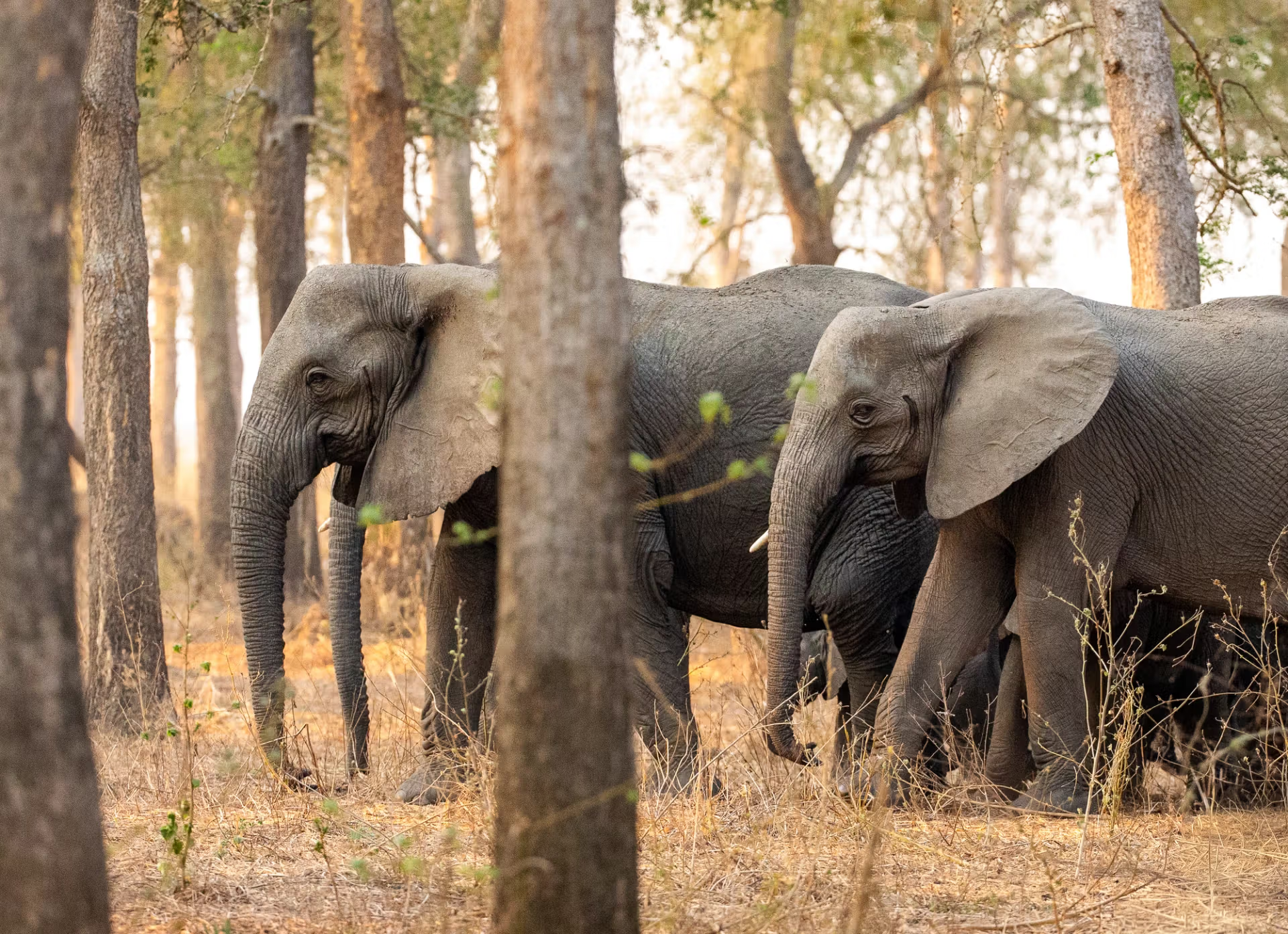
This morning brings a flight north to Lichinga, then a smaller aircraft into Niassa Special Reserve. Niassa covers over 42,000 square kilometres, making it one of Africa’s largest protected wilderness areas. Miombo woodland, granite inselbergs, and the Lugenda River define this remote landscape. Very few travellers reach Niassa, and that scarcity shapes the entire experience. Lugenda Wilderness Camp sits on a private river bend, built from local materials with a light footprint. Arrive in time for an afternoon walk along the riverbank near camp. Elephant, sable antelope, and African wild dog all move through this ecosystem.
Communities across Niassa have coexisted with wildlife for generations, and that relationship still shapes conservation here. Roughly 40,000 people live within the reserve’s boundaries, mostly Yao and Makua families. Visit a nearby village to see cassava farming, beekeeping, and traditional grain storage methods. Elders explain how human-wildlife conflict management now involves entire communities directly. Meanwhile, community scouts form the backbone of Niassa’s anti-poaching effort. Women’s cooperatives produce honey and craft goods that support household income. Your visit as part of the 17-Day Grand Mozambique Safari Holiday contributes directly to that local economy. Dinner under an open sky closes a long, rewarding travel day.
14-Day Mozambique Grand Wildlife Safari
Day 3: Walking and Driving Niassa’s Wilderness
Niassa rewards patience, and today gives you a full day to experience its scale. Set out early with an armed guide and a skilled local tracker. Walking safaris here move slowly, reading tracks, dung, and broken branches for clues. Sable antelope, a Niassa specialty, graze in small herds across open woodland. Meanwhile, elephant families move between waterholes as the heat builds through the morning. Lion and leopard both range widely here, though sightings require genuine patience. Breakfast happens beside the Lugenda River, cooked over coals as hippos grumble nearby.
Afternoon shifts to a longer game drive across granite hills called inselbergs. These ancient rock formations rise abruptly from the woodland, creating dramatic photographic backdrops. Furthermore, your guide explains how Niassa connects to Tanzania’s Selous ecosystem across the Ruvuma River. That connection makes Niassa part of one of Africa’s largest transboundary conservation landscapes. Wild dog packs occasionally cross your path, and Niassa holds a genuinely important population. Sundowners on a rocky outcrop close the day with sweeping views. Back at camp, the absence of artificial light reveals an overwhelming number of stars. Days like this explain why the 17-Day Grand Mozambique Safari Holiday dedicates real time to Niassa.
Day 4: River Safari and Fishing Communities
A boat safari along the Lugenda River gives you a different perspective on Niassa today. Hippos, crocodiles, and fish eagles line the banks throughout the gentle drift downstream. Kingfishers dive repeatedly, and their electric-blue flash never quite loses its thrill. Meanwhile, your guide points out elephant crossing points worn smooth over decades of use. Riverine forest here holds different birdlife than the surrounding woodland, so the list grows quickly. Midday brings a picnic on a sandbank shaded by ancient sycamore figs.
Afternoon introduces you to a fishing community living along the Lugenda’s banks. Families here have fished these waters using hand-woven traps for generations. Watch fishermen repair nets while children practise casting lines from the shallows. Consequently, conversations turn naturally to conservation, drought, and the balance between tradition and protection. A local cooperative now manages sustainable fishing quotas in partnership with reserve authorities. Women demonstrate grain pounding and traditional clay pot firing near the village centre. Purchases here support families directly rather than passing through intermediaries. Your final evening in Niassa closes with drums and storytelling around the fire. Tomorrow, the 17-Day Grand Mozambique Safari Holiday turns toward the coast and deep history.
Day 5: Ilha de Moçambique
Fly south this morning from Niassa toward Nampula, then transfer to Ilha de Moçambique. This tiny coral island served as the capital of Portuguese East Africa for over 400 years. UNESCO inscribed the island as a World Heritage Site in 1991. Narrow streets, coral-stone buildings, and Swahili trading history layer over every corner. Terraço das Quitandas, a restored mansion overlooking the harbour, becomes your base. Settle in, then take a slow walk before the afternoon heat fades. Fishing boats crowd the harbour exactly as they have for centuries.
History here runs unusually deep, and the island rewards a full afternoon of exploration. Arab, Indian, Portuguese, and African traders all shaped this small stretch of coral rock. The Palace and Chapel of São Paulo now house a fine museum of colonial-era artefacts. Meanwhile, the Stone Town and Macuti Town divide the island along old lines of status. Local guides, many descended from island families, explain that history with unusual candour. Furthermore, Makua traditions remain strong in Macuti Town, especially around fishing and boat building. Try a plate of caril de camarão, prawn curry rich with coconut and turmeric. Evening light on the harbour makes this one of Mozambique’s most photogenic stops. Guests on the 17-Day Grand Mozambique Safari Holiday often extend their stay here voluntarily.
Day 6: Fortress and Old Town Heritage
A full day exploring Ilha de Moçambique reveals layers most visitors never see elsewhere. Begin at the Fort of São Sebastião, completed in 1558 and still remarkably intact. This star-shaped fortress ranks among the oldest European buildings anywhere south of the equator. Climb the ramparts for views across the channel toward the mainland mangroves. Afterwards, walk to the Chapel of Nossa Senhora de Baluarte, built in 1522. Historians consider it possibly the oldest European building in the southern hemisphere. Your guide weaves these dates into a story of trade, conquest, and resilience.
Culture continues beyond the monuments, and Macuti Town holds the island’s living heart. Visit boat builders shaping small craft using tools passed down across generations. Meanwhile, silversmiths and woodcarvers work from small workshops near the market. Women wear mussiro, a white bark paste applied as sun protection and adornment. This tradition connects Ilha de Moçambique to the wider Makua cultural world along the coast. Sample fresh oysters harvested from the surrounding reef flats at midday. Later, a sunset walk along the old jetty closes the day beautifully. Consequently, the 17-Day Grand Mozambique Safari Holiday treats this island as essential, not optional, context. Tomorrow the route turns north toward the Quirimbas Archipelago.
Day 7: Transfer to Ibo Island
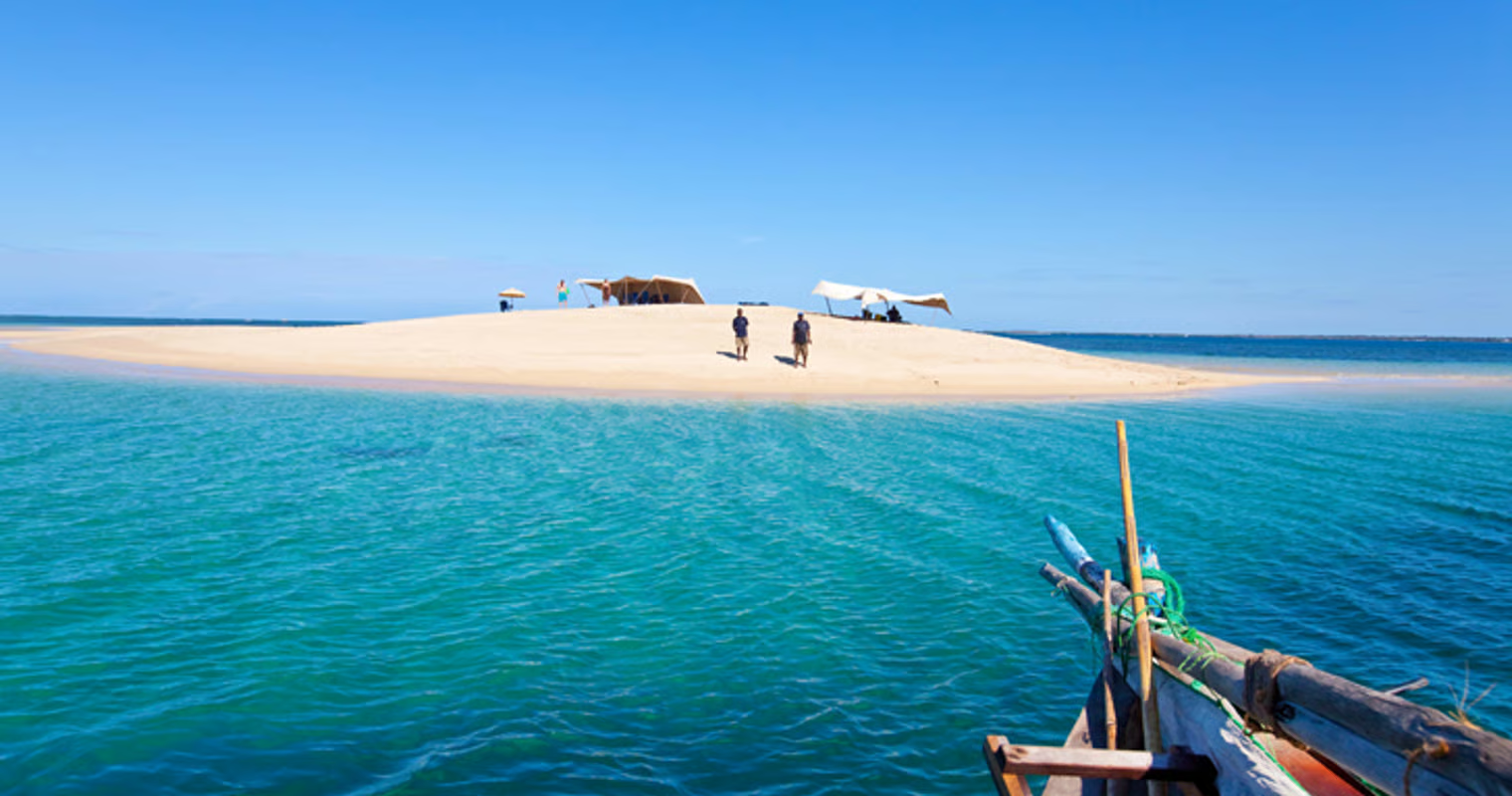
Travel north this morning toward Pemba, gateway to the Quirimbas Archipelago. From Pemba, a boat carries you across open water to Ibo Island. Thirty-two coral islands stretch along this coastline toward the Tanzanian border. Ibo sits at the archipelago’s historic heart, shaped by a thousand years of trade. Ibo Island Lodge occupies three restored mansions along the waterfront, with wide shaded verandas. Walk the coral-stone streets past crumbling villas, baobabs, and quiet churches. The Fort of São João Baptista, completed in 1791, still guards the harbour in star-shaped silhouette.
Silversmiths work inside that fort every afternoon, and their craft defines modern Ibo. Artisans melt scrap silver, then hammer and file delicate filigree jewellery without machinery. Watch a piece take shape, then commission something to carry home. Furthermore, local guides explain Ibo’s difficult role in the Indian Ocean slave trade with honesty. History here includes hard chapters, and the 17-Day Grand Mozambique Safari Holiday never sanitises them. Makua women across the island wear mussiro in patterns similar to Ilha de Moçambique. That visual echo across two islands tells its own story about a shared coastal culture. Evening brings grilled fish, coconut curry, and conversation on the veranda under lantern light.
Day 8: Dhow Safari Through the Quirimbas
Sailing forms the natural way to explore these northern islands. Board a traditional dhow after breakfast and ride the tide toward Quirimba or Matemo Island. Mangrove channels open into clear lagoons and endless white sandbanks. Dolphins often follow the boat, and turtles surface beside the hull without alarm. Land on a deserted sandbank for a picnic with the crew and your guide. Snorkelling here reveals healthy coral, reef fish, and occasional reef sharks in the channels. Quirimbas National Park protects over 7,500 square kilometres of land and sea, which explains the abundance.
Island communities give the day its human texture. On Quirimba Island, families still manage coconut plantations first planted during the colonial era. Elsewhere, fishermen repair nets and traps beneath palm shade while children play nearby. Visit a village school or a small mosque, always with permission and always accompanied. Swahili culture runs strong across this coast, and the local language reflects centuries of exchange. Boat builders on Ibo shape new dhows using only adzes, saws, and memory. Meanwhile, cooks prepare fresh octopus, coconut rice, and cassava over open fires. Days like this make the 17-Day Grand Mozambique Safari Holiday far more than a wildlife trip.
Ibo Island
Day 9: Mangroves, Reefs, and Craft Traditions
Your final full day in the Quirimbas mixes gentle adventure with quiet exploration. Launch a kayak at high tide and paddle through dense mangrove forests around Ibo. Mangroves nurse juvenile fish, trap sediment, and shield the coast from storm surge. Kingfishers, herons, and crab plovers hunt along the tangled roots throughout the morning. Later, a boat carries you to deeper reef sites for snorkelling or diving. Manta rays visit cleaning stations here, and humpback whales pass offshore between July and October. Guides record sightings for the park’s marine monitoring programme, so your day contributes real data.
Afternoon offers time for slower pleasures back on Ibo Island itself. Take a guided walking tour through the old quarter with a historian from the island. Colonial warehouses, the Church of Our Lady of the Rosary, and coral-lime workshops line the route. Join a cooking class to master coconut fish curry and peri-peri marinades. Alternatively, simply swim, read, and watch the tide rearrange the harbour slowly. Sunset at Fort São João Baptista draws residents and guests alike every evening. Musicians sometimes play tufo, a percussion-led dance performed by women in bright capulanas. This last northern night closes the coastal chapters of the 17-Day Grand Mozambique Safari Holiday.
Day 10: South to Gorongosa National Park
Fly from Pemba to Beira, then drive inland toward the southern arm of the Great Rift Valley. Gorongosa National Park spreads across roughly 4,000 square kilometres of floodplain, woodland, and mountain. Civil war devastated its wildlife between 1977 and 1992, reducing large mammals by more than ninety percent. Since 2004, an ambitious restoration partnership has rebuilt the park and its surrounding communities. Today, waterbuck, buffalo, sable, elephant, and lion move across the Urema floodplain again. Muzimu Lodge becomes your base, set among fever trees with wide views over the grassland. Arrive in time for an afternoon drive as light softens across the plains.
Gorongosa treats conservation and community development as one single project, not two. Health workers, farmers, and teachers all form part of the park’s long-term plan. Visit a nearby village where sustainable agriculture programmes have replaced slash-and-burn cultivation. Farmers explain crop rotation, beekeeping, and cashew processing with obvious pride. Meanwhile, girls’ education clubs keep thousands of young women in school across the buffer zone. Local Sena and Ndau traditions remain strong here, especially in music and storytelling. Drummers and dancers often perform at the lodge, and guests join in without ceremony. Few destinations on the 17-Day Grand Mozambique Safari Holiday feel this genuinely hopeful.
Day 11: Wildlife on the Urema Floodplain
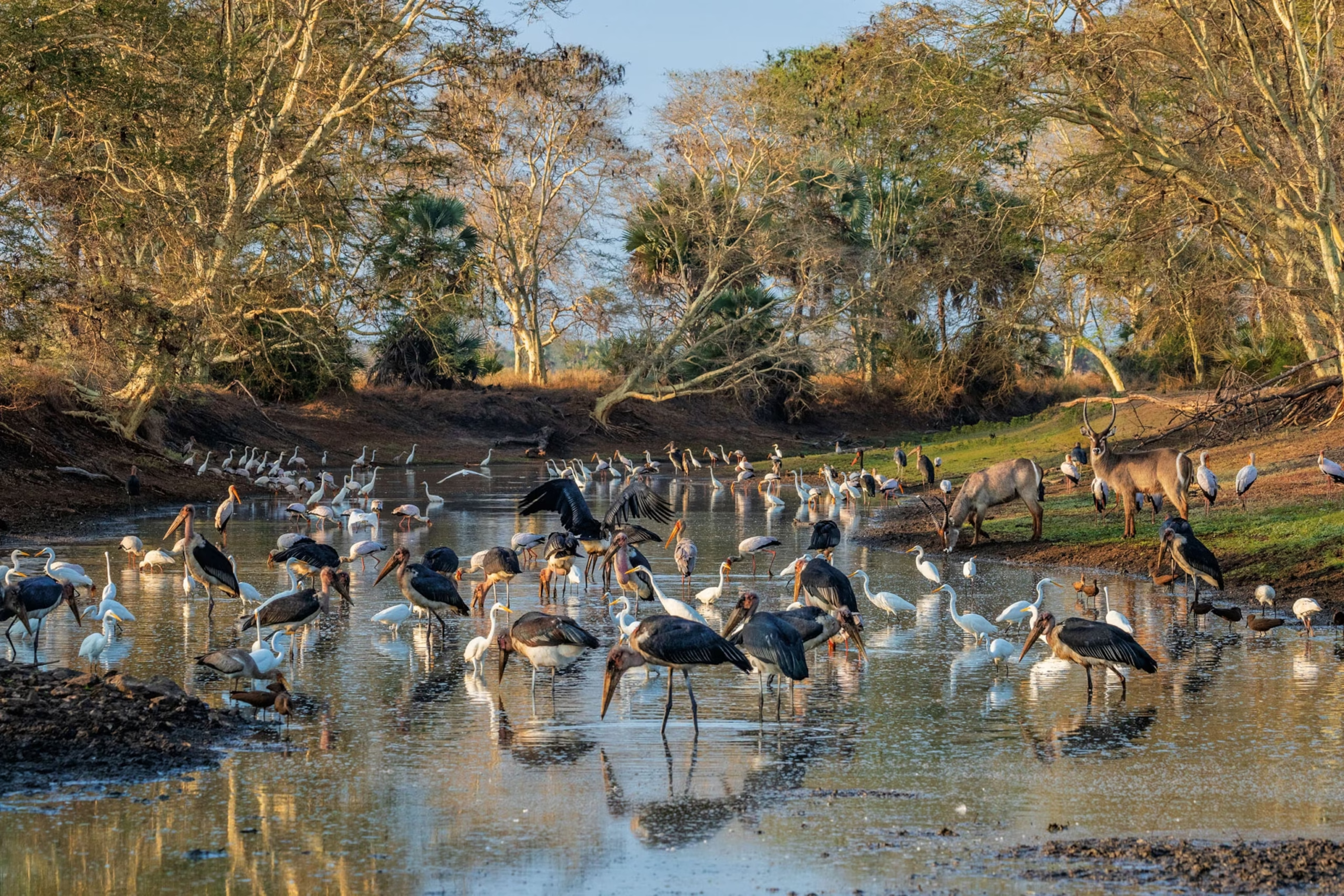
Dawn game drives in Gorongosa National Park reward early risers generously. Mist lifts off the Urema floodplain as thousands of waterbuck graze in loose herds. This park now holds the densest waterbuck population anywhere on the continent. Lions have recovered strongly, and prides hunt openly across the open grassland. Elephant families move between palm islands and thick miombo woodland at the park’s edge. Wild dogs returned in 2018 after a long absence, and sightings grow more frequent each season. Birders record hundreds of species, including the striking Böhm’s bee-eater and green-headed oriole.
Afternoons offer a choice of activities depending on season and interest. Visit the E.O. Wilson Biodiversity Laboratory, where Mozambican scientists study everything from bats to ants. Researchers describe new species here regularly, which reveals how little we still know. Alternatively, take a boat trip on Lake Urema during the wetter months. Crocodiles, hippos, and fish eagles gather along the shrinking shoreline as the dry season advances. Sundowners on a termite mound close the day beautifully. Afterwards, dinner at Muzimu Lodge comes with frog calls and distant lion contact roars. Evenings like this show why the 17-Day Grand Mozambique Safari Holiday includes three nights here.
9 Days Uganda Wildlife Safari Experience
Day 12: Mount Gorongosa and the Coffee Project
Mount Gorongosa rises to 1,863 metres and creates its own weather system entirely. Rainforest cloaks the upper slopes, feeding the rivers that sustain the entire park below. Set out early for the hike toward Murombodzi Waterfall through montane forest and grassland. Butterflies, orchids, and endemic birds accompany you along the route. The green-headed oriole lives nowhere else in Mozambique, so birders watch carefully here. Guides from nearby villages lead every walk and read the forest with total confidence. Consequently, the day works as both a hike and a masterclass in local ecology.
Coffee explains much of this mountain’s recent transformation. Deforestation once threatened the watershed, so the park introduced shade-grown coffee as an alternative livelihood. Farmers now tend hundreds of thousands of coffee plants beneath native hardwood trees. Visit the nursery, the drying beds, and the roastery to follow the whole chain. Taste the finished cup while growers describe their harvest year and their plans. Mount Gorongosa also holds deep spiritual meaning for Ndau communities, who treat certain groves as sacred. Respect for those sites forms part of every visit we arrange. This day often becomes the intellectual centre of the 17-Day Grand Mozambique Safari Holiday.
Day 13: South to the Bazaruto Archipelago
Fly south today from Beira toward Vilanculos on the Inhambane coast. The journey carries long views over green farmland and the Mozambique Channel. From Vilanculos, a boat or helicopter transfer carries you across to Benguerra Island. Turquoise shallows, white sandbanks, and dark seagrass beds slide past beneath you. Azura Benguerra Island welcomes you with hand-built villas, each one crafted by local artisans. Bazaruto National Park protects these waters, so marine life here remains unusually rich. Settle into your villa, swim, and let island time take over completely.
Benguerra holds around one thousand residents who farm, fish, and build boats by hand. Walk inland with a village guide to see cassava plots, coconut palms, and freshwater wells. Boat builders shape dhow hulls using tools and techniques passed down across generations. Meanwhile, women collect shellfish on the flats using knowledge that no chart records. Visit the island school and clinic that lodge guests have helped fund since 2007. Evening light draws fishermen home, and their songs carry across the channel. Dinner combines Portuguese, Indian, and Mozambican influences, which sums up this coast neatly. Guests on the 17-Day Grand Mozambique Safari Holiday often call Benguerra a fitting finale.
Day 14: Marine Safari in Bazaruto National Park
Wildlife viewing moves underwater today, and the shift feels dramatic after weeks on land. Depart by boat for Two Mile Reef, a shallow coral system near Benguerra Island. Visibility often exceeds twenty metres, which reveals extraordinary colour and structure. Snorkellers drift above potato bass, blue-spotted rays, and vast shoals of fusiliers. Certified divers explore deeper walls where giant trevally and reef sharks patrol. Bazaruto also shelters East Africa’s last viable dugong population, so your skipper scans the seagrass constantly. Humpback whales pass through between July and October on their annual migration.
Midday finds you anchored beside a shifting sandbank for a private lunch. Afterwards, the crew explains how tides, currents, and moon phases shape daily fishing decisions. Their knowledge represents generations of observation rather than formal training. Later, visit a fishing camp where families dry their catch in the sun. Conversations here cover conservation, quotas, and the balance between tourism and tradition. Park fees from the 17-Day Grand Mozambique Safari Holiday support ranger patrols across these islands. Return at golden hour, when the dunes glow orange above the water. Few marine experiences in Africa match this combination of wildlife, culture, and scale.
Day 15: Dunes, Villages, and Sunset Sailing
A slower final full day suits the rhythm of the archipelago perfectly. Begin with a horseback ride along the beach, or paddle a kayak through the shallows. Alternatively, take a guided walk to Benguerra’s inland lakes where Nile crocodiles still live. Birders find flamingos, crab plovers, and green coucals within easy reach of the lodge. Around midday, join a cooking session with the kitchen team at Azura Benguerra Island. Learn to prepare matapa, coconut rice, and piri-piri prawns the way island families do.
Late afternoon delivers the classic image of this coastline: a dhow under full sail. Climb aboard as the crew raises the lateen sail and catches the offshore breeze. Sailing dhows carried goods along this coast long before Vasco da Gama arrived in 1498. Consequently, every hull, mast, and knot reflects an old Indian Ocean trading world. Your crew sings while working, and the rhythm keeps the whole boat in time. Sunset turns the sandbanks pink, then purple, then silver under early stars. Back ashore, a beach dinner closes the island chapter of the 17-Day Grand Mozambique Safari Holiday. Tomorrow the journey returns to Maputo to complete the full circuit.
Day 16: Return to Maputo
Fly south from Vilanculos to Maputo, where your Mozambican journey began seventeen days earlier. The city feels different now, because you understand the country behind it. Check back into the Polana Serena Hotel and enjoy a relaxed lunch. Afterwards, join a guided heritage walk through Mafalala, one of Maputo’s most storied neighbourhoods. Mafalala produced poets, footballers, musicians, and independence leaders across the twentieth century. Local guides raised in the district lead every walk and share its history directly. Reed houses, small churches, and busy lanes reveal a side of Maputo that tourists rarely see.
Shopping and food fill the rest of the afternoon pleasantly. FEIMA craft market in Polana sells woodcarvings, capulana fabric, basketry, and Makonde sculpture. Artists sit beside their work, so you buy directly and hear the story behind each piece. Nearby, the Núcleo de Arte studio has nurtured Mozambican painters and sculptors since 1936. The Fish Market at Costa do Sol lets you choose your seafood, then have it grilled. Order prawns, calamari, or crab with garlic, lemon, and piri-piri. Live marrabenta music usually starts as the evening cools. A farewell dinner with your guide closes the 17-Day Grand Mozambique Safari Holiday properly.

Day 17: Departure
Your last morning stays deliberately unhurried. Enjoy a long breakfast on the hotel terrace with the Indian Ocean below. Some guests swim, while others revisit the craft market for final purchases. Your guide handles luggage, timings, and airport formalities, so nothing feels rushed. Depending on your flight, we can arrange a late checkout or a day room. Afterwards, a private transfer takes you to Maputo International Airport for your onward journey. Terenga Africa Safaris and Travel Ltd stays reachable until you board.
Seventeen days produce a rare, complete perspective on Mozambique. You have tracked sable antelope through Niassa’s remote miombo woodland and walked colonial streets on Ilha de Moçambique. Moreover, you have sailed a Quirimbas dhow and watched a national park rebuild itself in Gorongosa. You have snorkelled beside dugongs in Bazaruto and heard timbila-style rhythms echo across coastal towns. Silversmiths, rangers, coffee farmers, and fishermen all shared their work with you honestly. Consequently, you return home with genuine understanding rather than merely photographs. Many guests treat the 17-Day Grand Mozambique Safari Holiday as the definitive way to see this country. Few itineraries on the continent cover this much ground with this much care.
Safari Inclusions
- All accommodation as listed in the itinerary
- Daily breakfast, lunch, and dinner from Day 1 dinner to Day 17 breakfast
- All domestic flights within Mozambique
- Airport meet-and-greet and all ground transfers
- Private 4×4 safari vehicle with professional English-speaking guide
- All scheduled game drives, walks, and boat activities
- Dhow sailing excursions in the Quirimbas and Bazaruto Archipelago
- River safari and mangrove kayaking excursions
- Snorkelling equipment and guided snorkelling trips
- All national park, reserve, and marine conservation fees
- Community and cultural visits as described
- Mount Gorongosa hike with local guide
- Fortress and heritage tours on Ilha de Moçambique and Ibo Island
- Drinking water, soft drinks, and house beverages at lodges
- Laundry at all camps and lodges
- Emergency medical evacuation cover
- Government taxes and tourism levies
Safari Exclusions
- International flights to and from Maputo
- Mozambique visa fees
- Travel and medical insurance
- Scuba diving courses, dives, and equipment hire
- Helicopter and private charter upgrades
- Deep-sea fishing charters
- Premium wines, champagne, and imported spirits
- Spa and wellness treatments
- Personal shopping and curio purchases
- Gratuities for guides, drivers, and lodge staff
- Telephone, internet, and data charges
- Vaccinations and antimalarial medication
- Single supplement where applicable
- Any activity described as optional
- Items of a personal nature
Extend Your Adventure With a 4- Days Bwindi Gorilla Trekking safari
After completing the 17-Day Grand Mozambique Safari Holiday, you can extend your African journey with an unforgettable 4-Day Uganda Gorilla Trekking Safari. This extension creates an extraordinary combination of Tanzania’s open savannah wilderness and Uganda’s ancient tropical forests.
The journey takes travelers toward Bwindi Impenetrable National Park, one of Africa’s most important mountain gorilla destinations. Instead of endless grasslands, Uganda introduces misty forests, rolling hills, and beautiful green landscapes. Gorilla trekking provides the main highlight of this extension. Travelers enter the forest with experienced guides and trackers in search of a habituated mountain gorilla family.
The journey through Bwindi becomes an adventure itself. Dense vegetation, forest sounds, colorful birds, and changing trails create an exciting atmosphere. Eventually, visitors spend valuable time observing mountain gorillas in their natural environment.
The extension can also include cultural experiences around Bwindi. Travelers may discover local traditions, crafts, music, food, and community life. A Batwa cultural experience can provide further insight into the human heritage connected to Uganda’s ancient forests. Combining the17-Day Grand Mozambique Safari Holiday with a Uganda gorilla trekking safari creates an exceptional East African journey.
Optional Safari Extension: 4- Days Bwindi Gorilla Trekking safari in Uganda
Day |
Activities |
Accommodation |
Day 1 |
Flight from Beira International Airport to Kigali airport and have afternoon Kigali city tour | Kigali: chez lando hotel
Meal Plan: Bed and Breakfast |
Day 2 |
Morning road transfer to Bwindi impenetrable forest (Rushaga sector) and afternoon relaxation at the lodge | Ichumbi Gorilla Lodge
Meal: Lunch, Dinner, Breakfast, Drinking Water |
Day 3 |
Go mountain gorilla trekking in Bwindi impenetrable forest and afternoon enjoy batwa cultural experience with community involvement | Ichumbi Gorilla Lodge
Meal: Breakfast, Lunch, Dinner, Breakfast, Drinking Water |
Day 4 |
Road transfer to Kigali international airport Rwanda for a flight back home | None
Meal: Breakfast, Lunch, Breakfast, Drinking Water |